A lopsided crown or a mask that slips off quickly can ruin the fun. You’re not just printing a costume; you’re creating an experience. The real problem isn’t the dragon or the space pirate—it’s a bad seam or elastic that hurts.
We’ve all faced the issue of a mask slipping or a crown pinching. The elastic can even hurt a child’s ears. Good design means more than just a cool look. It’s about the right eye-hole spacing and a nose bridge that doesn’t fog up glasses.
It’s not just about printing a mask PDF and hoping it works. It’s about using wisdom in dress-up design. We focus on elastic safety—soft materials and adjustable fits for comfort. It’s all about finding the perfect fit for saving the day.
Forget the cheap, flimsy costumes. This is about templates made for real kids on real adventures. Let’s dive into the world of awesome design.
Paper vs Foam vs Felt: Material Choices by Age
Paper, foam, or felt? This isn’t just a craft supply question—it’s a strategic decision with real-world consequences. Choosing material for a child’s mask or crown requires the diplomatic finesse of a UN negotiator. Each option represents a different philosophy of play, durability, and, frankly, parental sanity.
Let’s be brutally honest about paper. It’s the democratic candidate of materials—accessible, inexpensive, and universally available. Perfect for that single, glorious photo where everything aligns. But paper has the structural integrity of a political promise in an election year. One enthusiastic hug, one spilled drink, and your carefully crafted fox mask becomes a sad, pulpy abstraction.
For the under-five demographic, paper is a temporary delight. It teaches scissors skills and color theory. Yet it fails the durability test that active preschoolers administer daily. This is where we pivot to more resilient options.
Enter foam—specifically the soft, forgiving foam used in quality bookmark kits and similar products. This material is the consensus builder. It’s safe for tiny hands, resistant to the inevitable taste-test phase, and remarkably durable. Unlike paper’s tragic single-act play, foam performs for an entire season.
The beauty of foam lies in its simplicity and safety. It doesn’t require sharp tools for modification. Children can decorate it with paint pens or markers. Most importantly, it addresses critical elastic safety concerns by being flexible yet firm enough to hold shape without dangerous tension.
Then we have felt, the reliable workhorse of the textile world. Felt is what you choose when the costume piece transitions from photo prop to essential playground equipment. It’s slightly more premium, yes, but it withstands washing, rough play, and the intense scrutiny of a child who believes their firefighter helmet is genuine PPE.
Felt works best for children aged six and up. These are the kids who understand property rights (“my dragon mask”) and have the fine motor skills for more detailed decoration. Felt accepts appliqué, embroidery, and repeated wear without complaining.
| Material | Ideal Age Range | Key Advantages | Limitations |
|---|---|---|---|
| Paper | 3-5 years (with supervision) | Low cost, excellent for one-time use, teaches basic crafting skills | Fragile, not waterproof, poor durability for active play |
| Foam | 2-7 years | Soft and safe, durable, forgiving for young children, addresses elastic safety concerns | Limited detail, can compress over time |
| Felt | 6-12 years | Premium durability, washable, accepts detailed decoration, long-lasting | Higher cost, requires better cutting tools, less flexible |
Your choice should align with the child’s developmental stage and how the piece will be used. A toddler’s first crown? Go with foam. A school-aged child’s cherished hero helmet? Invest in felt. That quick classroom activity for twenty students? Paper remains the efficient, democratic choice.
Consider this material selection through the lens of early childhood standards. The ECERS-3 Materials Checklist emphasizes safe, durable, and age-appropriate resources. Your material choice directly impacts whether a mask becomes a beloved artifact or a disappointing memory.
When working with printable mask PDFs, remember that your material selection determines the final product’s success. A beautifully designed template printed on flimsy paper is like a brilliant policy paper with no implementation plan. The medium must match the message—and the child’s reality.
Foam, in particular, represents that sweet spot of safety and simplicity that works across age groups. It’s the material equivalent of a bipartisan bill—something everyone can agree on. It’s durable enough for play, safe enough for the youngest users, and versatile enough for creative expression.
Ultimately, the material debate isn’t about craft supplies. It’s about matching resources to developmental needs. It’s about creating positive experiences, not frustration. Choose wisely, because the right material turns a simple mask PDFs download into a cherished childhood memory.
Print Scaling & Head Circumference Chart
Forget the one-size-fits-all fantasy. In the kingdom of dress-up, a crown that pinches or, worse, tumbles into a child’s eyes is a failed coronation. This isn’t just about paper and scissors; it’s about the geometry of the head. This section is your blueprint for a perfect, regal fit. We’re moving beyond the guesswork with a simple chart and a foolproof method to ensure your crown templates are scaled for a perfect, comfortable, and majestic fit for every head.
Sizing for Success
Think of a crown like a pair of glasses or a hat. It needs to fit. The one-size-fits-all approach is a myth, as it doesn’t work for a four-year-old versus a ten-year-old. This is where your at-home tailor’s kit comes in. All you need is a soft measuring tape. Gently wrap it around the widest part of the head, just above the eyebrows and ears. No tape? No problem. Use a piece of string and a ruler. This number is your golden measurement.
Once you have the head circumference, our scaling cheat sheet makes the math disappear. The chart below translates head size into the perfect print scale for our crown templates. No more squinting at percentages in a print dialog box.
The Crown-to-Head Ratio
This is the secret sauce. It’s not just about the band’s length, but its proportion to the head. A good crown has a slight overlap for a secure, comfortable fit. Our templates are designed with a built-in “sweet spot” for overlap. The goal is a snug, but not tight, fit that allows the crown to sit proudly without constant adjustment. Think of it as the engineering behind the elegance.
To make this foolproof, use this simple reference chart. Find the head circumference and follow the recommended print scale for our standard templates.
| Head Circumference (in.) | Child’s Approx. Age | Recommended Print Scale | Template Fit Note |
|---|---|---|---|
| 19″ – 20″ | 2-3 years | 85% | Perfect for toddlers; snug for active play. |
| 20″ – 21″ | 4-6 years | 90% | Ideal for preschool and kindergarten. |
| 21″ – 22″ | 7-9 years | 95% | Standard kid size, great for most school-age children. |
| 22″ – 23″ | 10+ years to Adult S | 100% (Print at 100%) | Full-size adult small or large child. |
| 23″+ | Adult M/L | 110% | Scale up for larger heads or voluminous hair. |
Remember, these are starting points. A quick test print on scrap paper is your best friend. Simply print the crown band (the headband part) of the template at the suggested scale, form it into a ring, and test the fit. This two-minute step saves paper, frustration, and ensures your little ruler’s regalia is perfectly proportioned for their reign.
Template Set 1: Animals (Fox, Cat, Dragon, Owl)
Welcome to the character creation screen. Here, a piece of cardstock and imagination turn into a new persona. Forget generic costumes; we’re crafting a character. Is your child sly, aloof, chaotic, or wise? The animal kingdom awaits, and we’re blueprinting personalities.
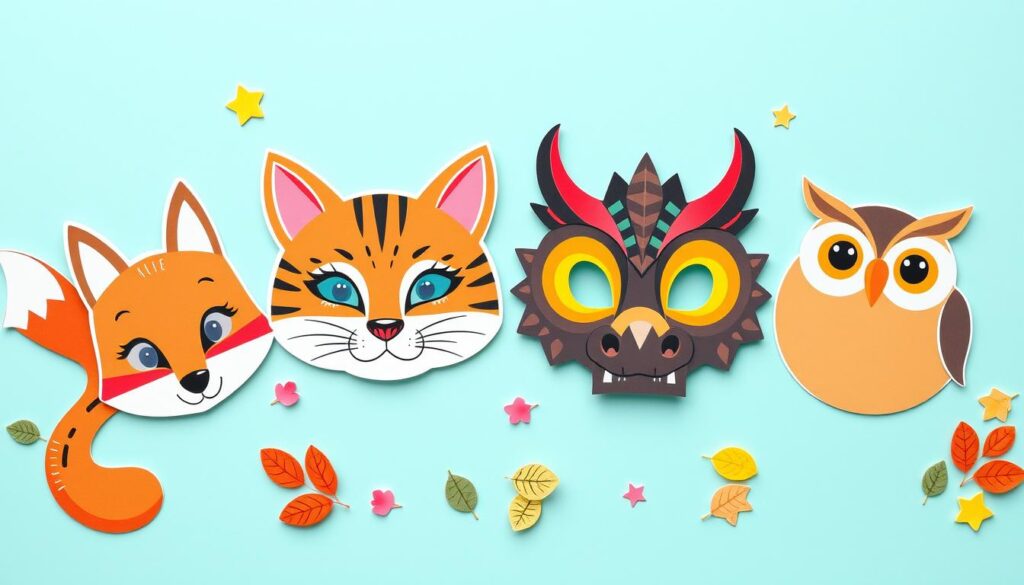
This set is your toolbox for transformation. Think of these mask PDFs as modular blueprints. Each animal’s design is a study in archetypes, with mix-and-match components.
Fox Template
The fox is the strategist. This design is for the clever planner, the quick-witted, and the sly. Its large, perky, and sharply pointed ears are defining features.
When you print the mask PDF, you’ll see the fox’s design is all about clever angles. The snout is a separate, pointed piece that slots perfectly into the faceplate. This modularity turns a simple printout into a three-dimensional character. It’s a great project for talking about shapes and geometry.
Cat & Dragon Templates
Where the fox is sly, the cat is aloof, and the dragon is whimsical. These two designs share a common thread of mythical and regal energy.
- The Cat: This template is all about elegant, curved lines. The ears are more rounded and less severe than the fox’s, and the overall shape is designed to look aloof and observant. It’s a mask for the quiet child who sees everything.
- The Dragon: This is your chaos-bringer. The template includes dramatic, horn-like ear or fin shapes, and a jawline that can be menacing or goofy, depending on the color choices. It’s a lesson in scale and silhouette, teaching that a few sharp angles can transform a simple mask into a legendary beast.
Assembling these, you’ll notice the design for assembly is intuitive. The dragon’s frills and the cat’s cheek pieces are designed to be folded and slotted, a lesson in following a 3D puzzle. It’s engineering disguised as play.
Owl Template
If the fox is clever and the dragon is fierce, the owl is wise. This template is a masterclass in layering. The owl’s face is all about concentric circles—the iconic, large, forward-facing eyes are the centerpiece.
The crown templates for the owl often feature a layered feather effect around the eyes, using simple, overlapping circles of different sizes. This is a perfect opportunity to talk about patterns in nature and optics. Why do owls have such large, forward-facing eyes? This mask isn’t just a craft; it’s a zoology lesson.
Each of these animal mask PDFs is a starting point. The fox’s ears can be lengthened, the dragon’s horns can be scaled up, and the owl’s feathers can be layered with different colored paper. This isn’t just a craft; it’s a character design workshop.
Template Set 2: Where Imagination Earns Its Badge
Forget the simple paper hat. The templates in this set are more than costumes. They’re the first step in a child’s journey to becoming a hero. They turn a simple craft into a badge of honor.
We’re not just cutting and gluing. We’re printing the first line on a resume of the imagination. This set isn’t about playing dress-up. It’s about trying on a future.
Pilot Helmet Template: Your First Class Ticket
The pilot’s helmet is a dream come true. It’s not just a hat; it’s a flight deck. The template includes a visor and chin strap for a perfect fit.
The design, with its iconic shapes and sturdy chin strap, turns cardstock into a cockpit. It’s the first step in a child’s mind from the living room to the flight line.
Firefighter & Scientist Badges
These badges are more than paper. They’re symbols of bravery and discovery. The firefighter’s badge is a shield of honor. The scientist’s badge shows a quest for knowledge.
These aren’t just decorations. They’re credentials. In a world where educational services aim to coach and prepare, these badge printables are the first credential a child can earn. They are displayed with pride, adding a sense of rank and achievement.
Consider the design logic. The firefighter badge might have a raised, foil-like star. The scientist’s badge features a subtle molecular structure watermark. These aren’t random shapes; they’re visual shorthand for a story the child is about to tell.
They move beyond simple role-play into the realm of identity. This concept trademark gazettes for coaching and educational services aim to foster: building identity through play.
| Role | Key Template Feature | Imaginative Play Value |
|---|---|---|
| Pilot | Goggle & Chin Strap Design | Commands the cockpit, navigates imaginary skies. |
| Firefighter | Shield-shaped Badge with Star | Emblem of bravery and community service. |
| Scientist | Beaker/Helix Insignia | Represents discovery and experimentation. |
This set moves beyond the page. It’s about the act of creation. The careful cutting, the assembly, the moment a child looks in the mirror and sees themselves as a pilot, firefighter, or scientist.
It’s early career exploration, powered by cardstock and glue. These badge printables are more than crafts. They’re the first step in a lifelong journey of trying on futures.
Crown Bands & Insets (Velcro Join, No Metal)
Every aspiring ruler needs a crown that fits right. The playroom has no patience for crowns that are off-center or uncomfortable. Our solution is a system of crown bands and insets that adjust easily and are safe for kids.
Those days of one-size-fits-all crowns are over. Our crown templates use a simple, two-part closure system. This makes them the most democratic in the kingdom.
The Velcro Advantage
We’ve replaced staples, paper clips, and flimsy tape with Velcro. This is the Velcro Advantage.
The system has soft, fuzzy loops and tiny hooks. When pressed together, they hold a crown securely but are easy for kids to open and close. It’s great because it adjusts to fit different sizes, growing with the child.
Metal-Free Safety
We’ve banned all metal from our crowns. No more scratchy clasps, sharp brads, or metal grommets. The whole thing is soft and safe for even the most sensitive scalps. This focus on elastic safety means kids can play without worry.
Here are the benefits:
- Universal Fit: One band fits many head sizes, from toddlers to adults, with just a pull and re-stick of the Velcro.
- Kid-Powered: Kids can put on and take off their crowns by themselves, promoting independence.
- Durability: Unlike staples or tape, Velcro can be opened and closed many times without losing its hold.
- Safety First: The elastic safety of a fabric-based, metal-free closure is key for young children, avoiding choking hazards and sharp edges.
The result is a crown template system that’s more than a craft. It’s a tool for play, designed for real children. It’s safe, adaptable, and encourages imagination.
Badge Board: Reward & Story Play System
The Badge Board is more than just a reward system. It’s a way to turn achievements into stories and play into lasting memories. We’re moving away from simple “good job” stickers. Instead, we’re creating a tactile storyboard that makes every achievement a chapter in a story.
It’s like gamification you can touch. The wall becomes a canvas for your child’s journey. Each badge earned is a chapter in felt and paper. It’s not just craft; it’s a way to shape behavior with a smile.
The Badge Board Concept
So, what is it? Imagine a dedicated board—a piece of felt, cork, or even a decorated poster board. This is your child’s hall of fame. Each badge printable is unique, matching the masks and crowns they’ve made.
For example, wearing a dragon mask earns the “Scale of Bravery” badge. Solving a puzzle in scientist glasses gets you the “Lens of Curiosity” badge. This system creates a loop where costumes lead to play, and play earns badges, motivating more adventures.
It’s tactile dopamine. A child doesn’t just hear praise; they get to pin a tangible symbol of their achievement to a board everyone can see. The board tells a story of their growing skills. This method is similar to a token board for autism, but here, we add rich narrative context.
Integrating Badges into Play
The magic happens when badges become part of the story. Don’t just give the Firefighter’s Medal for wearing the helmet. Create a quest. “The stuffed animals are trapped in a blanket fort ‘fire.'” The helmet is worn, the rescue mission is done, and then the badge is earned as a medal of honor.
Each badge printable is a micro-achievement in a larger story. You’re not just tracking chores; you’re following a hero’s journey. The board evolves from a collection of items into the epic tale of a hero.
Here’s how different badges can function within your play ecosystem:
| Badge Printables Catalog | Core Purpose | Earned When… | Narrative Role |
|---|---|---|---|
| Owl’s Wisdom Badge | Reward curiosity & problem-solving | Asking a great question or finding a hidden item during play | The “Knowledge Token” in a mystery quest |
| Dragon’s Scale of Bravery | Encourage courage & trying new things | Facing a pretend fear or performing for family | The talisman that protects the hero |
| Pilot’s Navigation Star | Reinforce focus & direction | Completing a multi-step craft or following a map | The guide that leads to the next story chapter |
| Scientist’s Lens of Discovery | Celebrate observation & experimentation | Making a prediction that comes true or mixing “potions” (safe ones!) | The tool that reveals hidden clues |
Start simple. Introduce one badge linked to one mask. Frame it as a special mission. The act of placing the badge on the board is a ritual—a moment of recognition more powerful than words alone.
Your collection of badge printables grows with your child’s interests. New masks and crowns mean new badges and quests. The board becomes a living record, a conversation starter about past adventures and a launchpad for future ones. It turns passive play into directed achievement and simple crafts into a lasting legacy you can point to on the wall.
Assembly Methods (Glue, Brads, Stitch)
Assembling your printable templates is the moment of truth. It’s where your plans meet the real world. You’re not just sticking paper; you’re engineering. You have to choose between glue, brads, and stitch. Your choice affects the durability and soul of the final piece.
The Permanent Bond: Glue
Glue is the decisive choice. It’s the “forever” option, saying this fox mask or pilot’s helmet is final. For mask PDFs with layers, like a fox’s snout, strong, fast-drying craft glue is key. Remember, less is more.
A gooey seam isn’t stronger; it’s a mess. Aim for a clean, permanent seam. This is best for large, flat surfaces or fixed elements.
The Articulated Joint: Brads
When your design needs movement, brads are the answer. They’re not just fasteners; they’re tiny hinges. Need a dragon’s jaw that opens? A knight’s visor that flips? Brads are your solution.
They provide a satisfying pivot that holds parts together while letting them swivel. For a mask with a moving jaw or a crown with a spinning emblem, brads are the way to go.
The Heirloom Finish: Stitch
For those who see their creation as a legacy piece, stitching is the only choice. It’s a slow, meditative method that turns a craft into an heirloom. Using a simple running stitch, you create a durable and beautiful join.
It’s the artisanal choice, saying, “I made this, and it will last.”
| Method | Speed | Strength | Flexibility | Best For |
|---|---|---|---|---|
| Glue | Fast (with drying time) | Permanent & Strong | None (Rigid) | Permanent seams, flat assemblies, badges |
| Brads | Very Fast | Moderate (pivot point) | High (Articulated) | Moving parts (jaws, visors, spinners) |
| Stitch | Slow, Deliberate | Very Strong, Durable | Low (Fixed, but flexible seam) | Heirloom pieces, badges, reinforcing stress points |
Elastic Safety: The Non-Negotiable
No assembly guide is complete without talking about elastic safety. The elastic is the only thing between your creation and a sudden, dramatic unveiling. Elastic safety isn’t a suggestion; it’s a design requirement.
Never rely on glue to hold a stretched elastic band. Instead, use the mask’s structure. Create a small paper or cardstock “sandwich” or a fabric tab as an anchor point. Secure the elastic through multiple layers and with multiple fastening methods. A simple knot or a glued end will fail. A secure anchor point ensures your superhero’s mask survives their most heroic landing.
Decor Ideas: Paint Pens, Felt Appliqué
So, you’ve printed and cut your project. You’ve put it together and maybe even worn it. Now, it’s time to add the final touches: the art. This is where your printable templates become a reflection of your personality. It’s the “mix” in our mix-and-match kit.
We’re moving beyond basic coloring. We’re adding dimension, texture, and personality. Forget flat color; we’re creating a world you can touch.
Paint Pen Techniques: The Art of the Dot and Line
Paint pens are your new best friend for fine details. They’re perfect for the small details on your printable masks, like the owl’s feathers or the scientist’s badge.
Why they’re great for details: Their ink is water-based, quick-drying, and waterproof. This means no smudging when you add more colors. The fine nibs are great for dot-work, fine lines, and patterns.
Use a white or metallic paint pen for highlights. A single white dot in a dragon’s eye or a streak of silver on a pilot’s badge adds believable dimension. It makes the image come alive.
Felt Appliqué for Texture
Felt appliqué turns your mask PDFs into 3D sculptures. It adds a luxurious, tactile element that invites touch.
Think of your template as a blueprint. Cut your felt pieces to match specific sections. Add dozens of small, individual felt scales to your dragon mask. Suddenly, it has a real hide.
Here’s a pro-tip table for felt success:
| Felt Type | Best For | Adhesive Tip |
|---|---|---|
| Wool Blend Felt | Premium projects, heirloom pieces. It’s thicker and holds shape. | Use a strong fabric glue or a thin line of hot glue for quick, kid-friendly assembly. |
| Craft/acrylic felt | Most projects, including kids’. It’s affordable and comes in every color. | Fabric glue or hot glue works. For extra security, a few hidden stitches with embroidery floss adds durability. |
| Stiffened Felt | Creating rigid parts like a crown’s peak or a mask’s snout. | Use a strong, fast-grab craft glue and clamp or weigh it down while drying. |
You can use elements from your badge printables as templates. Trace the badge shape onto felt, cut it out, and it becomes a fuzzy, touchable patch of accomplishment.
This is more than decoration; it’s world-building. Add a felt flame to a firefighter’s helmet or soft, fluffy feathers to an owl mask. You’re not just decorating; you’re creating an experience. So grab your paint pens and felt scraps—your printable template is just the beginning of the story you’re about to tell.
Cleaning, Storage & Classroom Batch Tips
After the glitter settles, you’re left with a mess. It’s not just about cleaning; it’s about managing resources. We’re moving to the world of maintenance and logistics. This guide will help keep your crown templates ready for the next event.
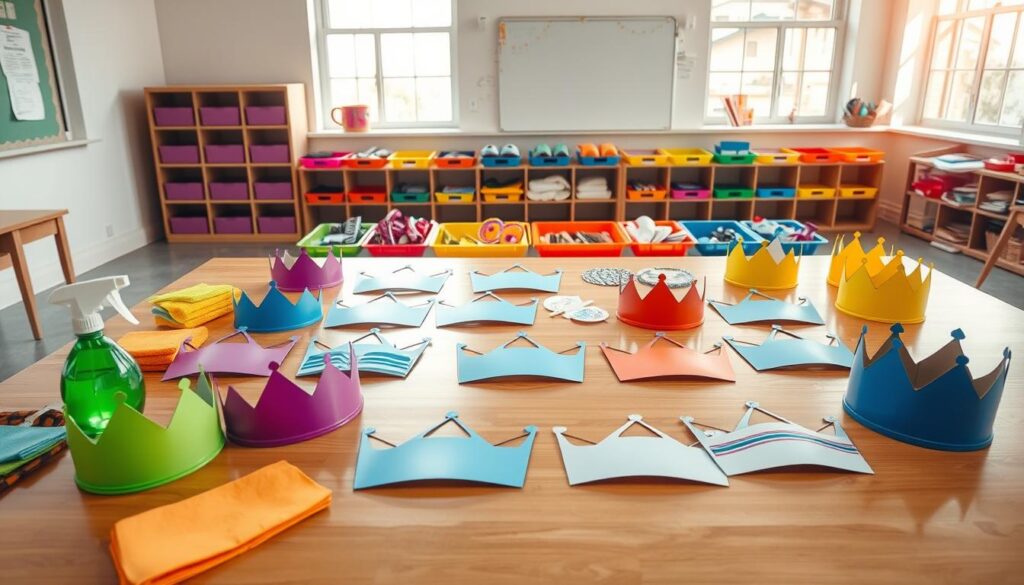
Germs are a big concern. Masks and crowns can spread germs. A quick clean between uses is essential. You want to clean without damaging the materials.
Sanitizing Between Uses
Start with a simple wipe-down. For laminated materials, choose a gentle disinfectant. The goal is to clean, not harm.
| Material | Cleaning Agent | Method | Elastic/Band Safety |
|---|---|---|---|
| Laminated Paper/Foam | Isopropyl Alcohol (70%) or Clorox/Lysol wipes | Dampen a cloth, wipe surface, air dry. | Spot-test on a small area first. |
| Felt or Felt-Like Material | Mild soap + warm water solution | Damp cloth wipe, then air dry completely. | Avoid saturating; felt holds moisture. |
| Cardstock (Unlaminated) | Not recommended for wet cleaning. | Use a dry, soft-bristled brush to dust. Consider laminating for future use. | N/A |
For elastic or fabric bands, use a fabric-safe spray or a sanitizing cloth. This keeps them safe from germs. Never soak the elastic to avoid damage.
Bulk Assembly Line Tips
Running a classroom or camp? Batch processing is key. Forget making each crown one at a time. Think IKEA for royal headwear.
Set up stations for cutting, decorating, and assembly. Pre-tying knots or pre-sticking Velcro saves time. For 30 kids, pre-cutting and punching holes saves over an hour.
Storage: The Grand Archive
Don’t just dump everything in a bin. Use a labeled, organized system. Clear bins for different crown templates sets work well. Store crowns in envelopes with the child’s name.
For elastic or headbands, use hooks or separate compartments. This keeps them organized and prevents tangles. It’s a sign of respect for the craft and the creator.
Download Index & License Note
Your backstage pass to the kingdom of imagination is printed below. This is your index, the map to your creative territory. No fine-tooth comb required.
The Fine Print (That Isn’t Fine Print)
Our license is different from the usual trademark rules. It’s a simple, two-way contract. We give you the keys, and you promise not to sell the map.
You’re free to print, cut, and create. Use these mask PDFs for a school play, the crown templates for a royal birthday, or the badge printables for a scout troop’s reward system. You can use them for your PTA, classroom, or living room. Just remember, don’t sell the templates as your own.
The download includes every mask PDF, crown template, and badge printable. It’s all there.
The greatest elastic safety isn’t just in the physical materials. It’s in the freedom to create, to have a plan go delightfully wrong, and to start again. That’s the real stretch, the safe space to experiment. So go ahead. Download, create, and own the beautiful mess. Your imagination is the final piece of the template.