The world of independent costume creators on Etsy and Instagram is full of wonder. Here, artists turn fabric and dreams into unique, wearable art you can’t find anywhere else.
But, you might wonder, how do you know your dream costume will arrive safely and look as good as the pictures? This is a big concern.
We aim to give you a clear, professional guide. It’s not just about shopping. It’s about making smart choices when you commission a piece.
We’ll show you how to check a creator’s maker credentials and understand your buyer protection options. You’ll learn to judge quality from photos and communicate effectively.
Think of this as your go-to guide for exploring these lively markets with confidence. Let’s start.
Marketplace Landscape
The digital costume bazaar is filled with creators, from skilled artisans to casual makers. Knowing this landscape is key to a successful purchase. Each seller has their own way of doing business. This affects your experience, budget, and what you get.
The marketplace is like a community with different levels of involvement. Some sellers are deeply dedicated, while others focus on quick production. Knowing who you’re buying from helps set the right expectations.
| Seller Type | Customization Level | Typical Turnaround Time | Quality Control | Best For |
|---|---|---|---|---|
| Custom Makers (Bespoke) | Fully personalized, made-to-measure | Longest (weeks to months) | Highest; handcrafted, multiple fittings | Unique characters, perfect fit, heirloom pieces |
| Small Ateliers (Small Batch) | Limited options, semi-custom sizes | Moderate (several weeks) | High; small-scale production oversight | Quality with slightly faster delivery |
| Print-on-Demand Services | Minimal; often just size selection | Shortest (days to a week) | Variable; depends on print provider | Last-minute needs, low-cost options |
| Rental Houses | None; stock items for temporary use | Immediate (shipping time only) | Professional maintenance, but wear varies | One-time events, high-end looks on a budget |
Custom makers offer top-notch personalization. They work closely with you to create a unique piece. This process takes time, but it ensures a one-of-a-kind item.
Small ateliers produce small batches of designs. You can choose from a few options or provide specific measurements. They balance uniqueness with faster production, keeping quality high.
Print-on-demand sellers focus on speed and low cost. But, customization is limited, and material quality can vary. Always check for material certificates or fiber content.
Rental houses offer a different value. You pay for temporary access to high-cost costumes. This is great for a single event. Make sure to read rental agreements carefully.
Your project’s needs will guide you to the right seller. For quick delivery, consider rentals or print-on-demand. For a custom-fit piece, makers or ateliers are worth the wait. Always check a seller’s business model through their portfolio and policies.
This knowledge helps you ask the right questions. It ensures the seller’s timeline is realistic. Next, we’ll explore how to research and vet these sellers.
Custom makers, small ateliers, print‑on‑demand, rental houses
Choosing the right costume seller starts with understanding four main business models. Each model works differently, affecting how they create, sizing, and deliver costumes. Knowing which model fits your needs is key for setting realistic expectations on cost, fit, and delivery time.
A custom maker creates your costume from scratch, based on your exact measurements and design. This is a made-to-order, collaborative process.
Typical Process: You’ll have a consultation, multiple fittings with a mockup (toile), and then the final construction. The sizing is completely tailored to you.
- Strengths: You get a perfect fit, a unique design, high-quality materials, and direct artist collaboration.
- Key Considerations: It takes a long time (often months). True custom work can’t be rushed, so rush fees are rare or very high. Good communication is essential.
The Small Atelier (Design House)
Small ateliers make small batches or limited runs from their own patterns. They mix custom touches with pre-designed grading.
Typical Process: You pick a design, and they make it in your size from their graded pattern system. Sizing uses a standard chart with some minor adjustments.
- Strengths: They offer high craftsmanship, a unique style, and better consistency than one-off custom.
- Key Considerations: You have less flexibility for big design changes. Rush fees for quick production are more possible here than with full custom work, but it depends on their schedule.
Print-on-Demand (POD) Services
POD vendors print designs on pre-made, generic garment blanks. This is common for themed t-shirts, leggings, and simple costumes.
Typical Process: You choose a design and a stock size from their chart. The item is printed after purchase and shipped directly.
- Strengths: It’s low-cost, has a wide design selection, and there’s no inventory risk for the seller.
- Key Considerations: Sizing is limited to the blanks used—fit can be inconsistent. Quality is often lower. Rush fees for faster printing and shipping are commonly offered and can be a good option for tight deadlines.
Costume Rental Houses
Rental houses have an inventory of finished costumes for temporary use, usually for theater, film, or events.
Typical Process: Browse available inventory, reserve a size, and return after the rental period.
- Strengths: It’s cost-effective for one-time use, offers access to high-end pieces, and professional maintenance.
- Key Considerations: Sizing options are limited to what’s in stock. Alterations are usually minor or not allowed. Rush fees for last-minute bookings are standard practice.
| Vendor Type | Typical Sizing Approach | Rush Fee Feasibility |
|---|---|---|
| Custom Maker | Fully custom, from your measurements | Low. Often not possible due to workflow. |
| Small Atelier | Graded pattern with standard size chart | Medium. Possible for an added cost if schedule allows. |
| Print-on-Demand | Standard size charts on stock garments | High. Commonly offered for expedited service. |
| Rental House | Limited to inventory stock sizes | High. Frequently applied to last-minute reservations. |
Choosing the right vendor type from the start avoids frustration. Need a perfect-fit, heirloom piece? A custom maker is worth the wait. Need a good-enough costume for a party next week? POD or rental with a rush fee might be your best bet. This knowledge turns your search from a shot in the dark into a targeted mission.
Pre‑Purchase Research
Think of yourself as a detective gathering evidence. The quality of your pre-purchase research directly affects your satisfaction and safety. This phase moves you from casual browsing to informed buying. It’s your best defense against poor craftsmanship, misleading sellers, and financial loss.
Your investigation should focus on four key pillars:
- Portfolio Depth & Quality
- Inside-Garment Construction Photos
- Work-in-Progress (WIP) Posts
- Authentic Reviews Audit
Start with the maker’s portfolio. A deep, varied portfolio shows experience and skill. Look for consistency in quality across multiple projects and years. This is a core part of verifying maker credentials. Just as a visible history in a fan community builds trust, a long-term, active online presence for a seller signals stability.
Examine their social media feeds, blog, or website “About” page. A maker who shares their journey, training, or inspirations is often more invested in their craft and customer relationships.
Next, seek out “inside garment” photos. These are key. They reveal the hidden construction—the seams, linings, boning channels, and finishing. Quality work is tidy on the inside, too. Also, value work-in-progress posts. They show the maker’s process, problem-solving skills, and transparency. They make the garment come to life, which builds confidence.
Lastly, move beyond the star rating. Conduct a thorough reviews audit. You are looking for patterns, authenticity, and how the seller handles feedback.
| What to Look For | Superficial Review Check | In-Depth Reviews Audit |
|---|---|---|
| Focus | Overall star rating only. | Patterns in written feedback across multiple platforms. |
| Authenticity | Accepts all reviews at face value. | Flags reviews that are too generic, lack detail, or appear templated. |
| Criticism Response | Ignores negative comments. | Analyzes how the maker responds to and resolves critical feedback. |
| Review Recency | Looks at the total number of reviews. | Notes the frequency and consistency of reviews over time. |
| Evidence | Reads a few top reviews. | Seeks reviews with customer photos of the received item. |
This investigative work builds a case for the seller’s reliability. Your goal is to piece together a trustworthy narrative before you ever click “buy.” For a deeper dive into building this case, explore our guide on comprehensive pre-purchase vetting. Solid research turns risk into informed confidence.
Portfolio depth, inside‑garment photos, work‑in‑progress posts; review authenticity checks
Think of portfolio analysis and reviews audit as detective work. Your goal is to find true talent among the pretenders. By examining visual proof and customer feedback, you check if a maker is genuine.
A good portfolio shows a variety of garments. It should include different fabrics, styles, and complexities. This variety indicates the maker’s experience and flexibility.
Inside-garment photos are key for quality checks. You need to see the linings, seams, and hardware. Clean, secure interiors mean the garment is durable, not just pretty.
Work-in-progress (WIP) posts build trust. They reveal the maker’s process, problem-solving, and detail focus. Seeing a costume come together proves it’s original and well-made.
Then, examine customer reviews. A real reviews audit looks beyond the stars. You’re searching for genuine feedback. Be wary of generic praise or many five-star reviews at once.
Look for reviews with buyer photos and specific praise. Reviews that mention positive interactions with the maker are valuable. They show a seller who cares about their customers.
Also, watch how a seller responds to criticism. A professional, solution-focused reply is more telling than perfect reviews. It shows the maker’s commitment to quality and customer satisfaction.
By learning to investigate, you can make informed choices. You buy with confidence, knowing the maker’s skills are real. This approach is based on verified talent and honest feedback, not just looks.
Safety & Materials Disclosure
When it comes to items for kids, knowing what they’re made of is key. A clear materials disclosure is your best ally. It goes beyond looks to check on comfort, lasting power, and health risks.
Terms like “premium fabric” or “high-quality materials” should raise a flag. Good sellers give exact details on materials, like names and sources. If a costume doesn’t say what it’s made of, it’s not transparent. You should know if it has allergens like latex or nickel, or if it has chemicals that can hurt your breathing.
A good maker proactively shares what their items are made of. They don’t wait for you to ask. If they list materials clearly, it shows they care about what they make.
The best sellers also show safety with safety certificates. Look for these:
- OEKO-TEX Standard 100: This checks if fabrics have harmful chemicals. It means the fabrics are safe for skin.
- CPSIA (Consumer Product Safety Improvement Act) Compliance: This is key for kids’ stuff. It makes sure products don’t have too much lead or phthalates.
These certificates mean a seller cares about safety and being open. When a shop shows this, you can shop with more confidence. You know they value your safety and style.
Fabric Lists, Certifications, and Material Specifics
Behind the stunning photos, a costume’s true value lies in its materials. Every buyer deserves to know these details. A professional maker is happy to share this information. This turns a beautiful sketch into a safe, durable garment you can trust.
A detailed fabric list is a good starting point. It should go beyond “shiny satin” or “stretchy velvet.” Look for specifics like fiber content (e.g., 100% cotton, polyester blend) for breathability and care. The weight, often in ounces per square yard, shows durability and drape. The weave or knit type affects the look and feel.
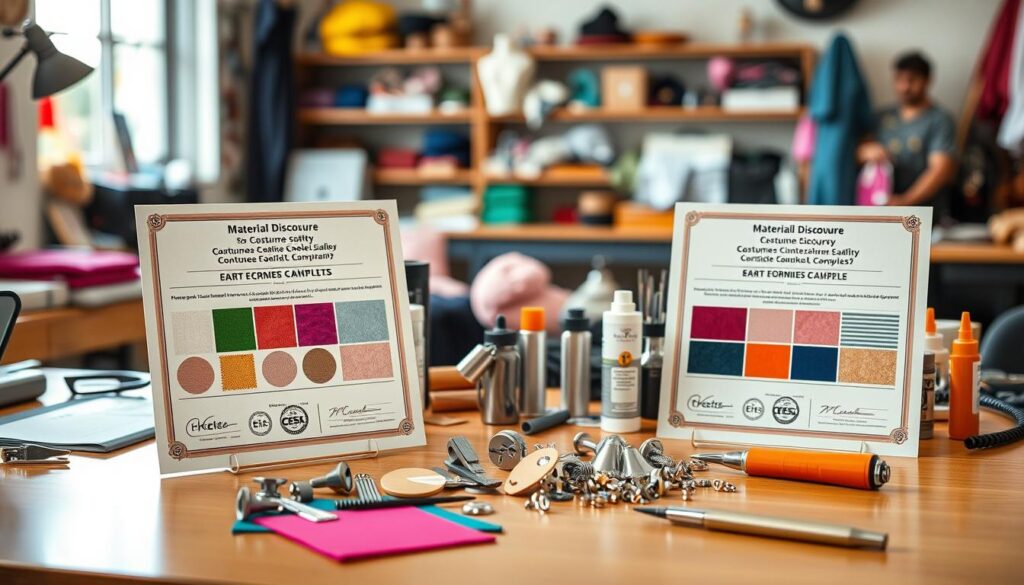
Hardware and adhesives also need careful scrutiny. Nickel-free metals in zippers, grommets, and clasps prevent skin irritation for many. The type of glue or fusible interfacings matters. Solvent-heavy adhesives can cause odors and degrade fabric. Water-based or heat-activated options are often safer and last longer.
Certifications are powerful tools for trusted makers. They are independent checks of a maker’s materials disclosure. Two key certifications for costumes are OEKO-TEX and CPSIA.
| Certification | Primary Focus | What It Tests For | Why It Matters to You |
|---|---|---|---|
| OEKO-TEX Standard 100 | Textile & Material Safety | Harmful substances like heavy metals, carcinogenic dyes, pesticides, and allergens in all fabric components. | Ensures the materials touching your skin are free from known toxins, vital for items worn for long periods. |
| CPSIA (Consumer Product Safety Improvement Act) | Children’s Product Safety (USA) | Lead and phthalates content, plus mandatory tracking labels and compliance certification. | Legally required for kids’ costumes in the US. It’s a non-negotiable safety benchmark for children’s wear. |
| Common Industry Practice | General Material Listing | Vendor-provided information on fiber content and country of origin only. | Offers basic data but lacks independent safety verification. It’s a starting point, not a guarantee. |
An informed buyer doesn’t just hope for quality. They ask for and understand this information. When a shop provides detailed fabric lists and relevant certificates, they show respect for your safety and investment. You have the right to request this materials disclosure. A trustworthy creator will be proud to share it.
Fit & Measurement
A good fit starts with clear communication. You share your measurements, and the seller guides you. This teamwork helps avoid the main reason for customer unhappiness: bad sizing.
It’s your job to give accurate body measurements. Don’t guess or use old sizes. A small mistake can ruin a perfect costume. Many makers won’t fix fit problems if your measurements are wrong.
The maker should give clear measuring instructions. They should also share their sizing basics. Look for sellers who show mockups or have alteration policies. This shows they care about the final fit, not just the sale.
Knowing the difference between standard and custom sizing is key. Most costume shops use one of these:
- Industry Standard Sizing: Uses common charts (like S, M, L). Always check the shop’s size guide, as they vary a lot.
- Custom/Bespoke Measurements: The garment is made just for you with your exact measurements. This is best for complex items like corsets.
See the measurement phase as a critical talk. Ask for help if you’re unsure. A good maker will be happy to chat. This early talk can prevent later problems and make the costume feel made just for you.
How to measure; mockups/toiles; alteration policies
Getting the right fit for a custom garment is a three-step process. First, take precise measurements. Then, check the fit with a prototype. Lastly, have a plan for any needed alterations. This approach helps you feel confident about your custom piece.
Your body measurements are key to a perfect fit. Don’t rely on standard sizes. Use a soft measuring tape and wear your undergarments. A friend’s help is best for accurate results.
Essential Measurements to Take:
- Bust/Chest: Measure around the fullest part.
- Waist: Find your natural waist, just above your navel.
- Hips: Measure around the fullest part of your seat.
- Back Length: From the base of your neck to your natural waist.
- Shoulder to Wrist: For sleeve length.
- Any Other Specifics: Provide measurements for unique pieces like head circumference or thigh girth.
After sending in your sizing data, many makers will make a mockup or toile. This is a test garment, often made from muslin. It checks the fit and pattern before using the final materials.
Mockups show a maker’s thoroughness. They help avoid big fit problems. Always ask if a mockup is included in the quote or if it’s extra.
Understanding Mockup Policies:
| Scenario | What It Means For You |
|---|---|
| Mockup Included | The maker builds a fitting into the process. You may need to cover return shipping for adjustments. |
| Mockup for an Added Fee | You pay extra for this safety step. It’s often worth the investment for complex pieces like corsets or armor. |
| No Mockup Offered | Common for simpler garments or print-on-demand. Your reliance on initial measurements is total. |
The last part of your sizing safety net is the alteration policy. Don’t assume adjustments are free. Before paying a deposit, ask about fit issues.
Ask your maker about alterations. Are minor changes included? Is there a fee for adjustments? Who pays for return shipping? How long do you have to ask for changes after delivery?
A clear policy protects both you and the artist. It sets realistic expectations and offers a clear path to fixing issues. This careful planning turns sizing stress into a professional process.
Contracting & Payments
When you agree to buy a custom costume, you sign a contract, even with a simple message. This contract protects your money and sets clear rules for the maker. It’s like a plan for your whole project together.
Payment plans help both sides feel safe. A non-refundable deposit, 30-50%, keeps your spot and the artist’s promise. For big or complex projects, payments might be in stages.
This means a second payment after you approve a mockup, before the final work is done. The last payment is due before the costume is shipped. The timing of these payments matches the maker’s turnaround time.
Choosing how to pay is key to buyer protection. Always pick methods that can help solve problems if needed.
| Payment Method | Buyer Protection | Reversibility | Best For |
|---|---|---|---|
| Credit Card | Excellent | High (via chargeback) | All purchases, even big ones. |
| PayPal Goods & Services | Very Good | High (via claim process) | Transactions on social media or independent sites. |
| Venmo/Cash App (Personal) | None | Very Low | Only trusted, repeat makers for small balances. |
| Bank Transfer/Wire | None | Extremely Low | Not recommended for costume commissions. |
Be careful of sellers who want “friends and family” payments or direct wire transfers for big amounts. These are hard to get back if problems come up.
Before paying, make sure your contract covers important points:
- Total cost, including all materials and labor.
- Deposit amount and payment schedule.
- Final payment deadline relative to the turnaround time.
- Clear policies for rush fees if you need it faster.
- A detailed description of the item, referencing any approved sketches or photos.
Talking about rush fees upfront avoids surprises. A pro maker will have a set rate or percentage for fast work. Clear talks about these terms show respect and build trust. A clear contract helps both you and the maker.
Deposits, milestones, chargeback‑safe methods; delivery timelines; rush fees
Finalizing the financial and scheduling details is key. It turns a creative idea into a real agreement. Clear terms protect against misunderstandings and keep both sides in sync.
Reputable costume makers often ask for an initial deposit. This is usually 30% to 50% of the total cost. It shows your commitment and lets the maker start working on your project.
For big projects like a mascot suit or elaborate armor, payments are split into milestones. You might pay a deposit to start, another payment after seeing a mock-up, and the last payment before shipping. This way, you see progress and pay for it.
Always use a chargeback-safe payment method. These methods offer buyer protection if you don’t get your item or it’s not as described. Stay away from direct bank transfers or apps with no protection.
- PayPal Goods & Services: Has a strong dispute resolution process.
- Major Credit Cards: Your card issuer might help with undelivered goods.
- Platform-Protected Payments: Etsy and Shopify payments have buyer protection policies.
Always get a written delivery timeline or estimated completion date. Ask for the turnaround time in writing. A professional maker will give you a realistic time frame based on their current work and your project’s complexity.
Sometimes, you need a costume fast. That’s when rush fees come in. A rush fee lets the maker work on your project first, which might mean overtime. Agree on this fee and a new turnaround time in advance. Know what the fee includes.
Being clear about deposits, milestones, safe payments, and turnaround time is essential. Agreeing on rush fees early on avoids surprises. This is about professional buyer protection and peace of mind for everyone.
Policies That Protect You
Think of a seller’s policy page as a blueprint for a safe and fair transaction. A professional costume maker doesn’t see policies as red tape. They view them as key promises to their customers.
When you find clear, accessible policies, you’ve found a seller who’s transparent. This documentation shows they’ve thought of different scenarios and have a plan. It turns uncertainty into clear understanding. Look for these core protective policies:
- A detailed return and exchange policy that outlines conditions, timeframes, and any restocking fees.
- Repair or warranty information specifying what’s covered if craftsmanship fails.
- Clear deposit and payment terms that align with the project milestones discussed earlier.
- Shipping and insurance details stating who bears responsibility during transit.
- Rush fee and alteration cost structures to prevent surprise charges.
These policies lower your financial and emotional risk. A fair return policy gives you a way out if the item isn’t as described. A repair warranty shows faith in the construction quality. Clear payment terms prevent disputes.
Always look for this information before placing an order. A detailed policy page is a strong positive sign. It shows a business partner committed to a smooth process. This foundation of buyer protection lets you enjoy the creative collaboration without worrying about pitfalls.
Returns/exchanges, repair warranties, shipping insurance
Your peace of mind when buying a custom costume depends on the seller’s return policy, craftsmanship guarantees, and shipping insurance. These policies are like a safety net. They tell you what happens if the costume doesn’t fit, a seam breaks, or the package gets lost.
Let’s look at each policy area. You need to know what you’re agreeing to.
The Custom Item Return Policy
Many creators have a no returns rule for custom-made items. But, a good return policy should be in place for certain situations.
Look for clear terms on exchanges for sizing mistakes or if the item doesn’t match the design. Some sellers offer store credit or a remake. While a full refund is rare, the conditions should be clear.
Repair Warranties for Craftsmanship
A repair warranty is a maker’s promise. It covers construction flaws, not normal wear and tear.
For example, a warranty might cover a broken zipper within 90 days or a beadwork seam that unravels. This shows the artist stands behind their work’s quality. Always ask about the warranty duration and what defects are included.
Shipping Insurance and Responsibility
Who bears the risk once the package leaves the studio? This is often overlooked. A professional seller will buy shipping insurance and give a tracking number.
If they don’t, the risk might fall on you once it’s shipped. A lost or damaged package could mean a total loss. Confirm their insurance coverage and their claim process. This is key for your buyer protection.
Understanding these terms is key for informed consent. Don’t assume protection exists. Always read the policy page or ask direct questions before ordering.
| Policy Type | What to Look For | Red Flag |
|---|---|---|
| Returns/Exchanges | Clear conditions for sizing errors or major discrepancies. Option for store credit or remake. | “All sales final” with zero exceptions for any reason. |
| Repair Warranty | Defined duration (e.g., 30-90 days). Covers construction flaws like seam or hardware failure. | No mention of repairs. “You handle all alterations and fixes.” |
| Shipping | Seller purchases insurance, provides tracking, has a claim process. | Risk transfers to buyer at post office. No tracking or insurance offered. |
A solid return policy and warranty framework makes a risky purchase secure. It turns an unknown maker into a trusted partner. Your costume journey should be magical, not stressful.
Red Flags
The most enchanting shopfront can sometimes hide a lack of maker credentials or proper materials disclosure. It’s not about being cynical. It’s about being smart to protect your investment. These warning signs tell you to pause, investigate, or walk away.
How a seller presents their business online is key. A polished mask can hide an unprofessional operation. Look out for signs of their legitimacy.
- No Portfolio or Sparse Examples: A real maker has a deep portfolio. Shops with only a few images might be hiding something.
- Missing “About Me” or Studio Story: Real artisans are proud of their journey. A lack of personal or business history is a big warning sign.
- Inability to Verify Credentials: If they claim training or accolades but provide no proof, their expertise might be fake.
- Copy-Paste Descriptions & Generic Photos: If descriptions lack details or photos appear on other shops, the seller might be a dropshipper, not a maker.
Vague or Evasive Materials Information
Transparency about what goes into your costume is key. Vague details often mean inferior or unsafe components are being used.
- “Faux Leather” or “Sparkle Fabric”: These terms are red flags. Ethical sellers specify material types, like “polyurethane pleather” or “polyester sequin mesh.”
- No Fabric Content Lists: Refusal or inability to list fiber percentages (e.g., 100% cotton, 65% polyester/35% cotton) suggests they don’t know or don’t want you to know.
- Dismissive Answers on Safety: If asked about material certifications (like OEKO-TEX) for items touching skin, a seller responds with “It’s fine” instead of providing documentation.
- Smell of Strong Solvents in Photos/Descriptions: Mentions of “heavy glue smell” or visible stains in work-in-progress shots can indicate poor ventilation and toxic adhesives.
Communication & Contract Warning Signs
The sales process itself can reveal a seller’s true priorities. Pay close attention to how they handle questions and agreements.
- Pressure to Pay Outside the Platform: Any request to use Venmo, CashApp, or wire transfer to “avoid fees” strips you of marketplace buyer protection. This is a cardinal sin.
- Unrealistic Promises or Timelines: Claims of “one size fits all” for structured garments like corsets are physically impossible and demonstrate ignorance.
- Vague or Non-Existent Policies: A professional has clear, written policies for payments, timelines, alterations, and returns. If it’s not posted, it likely doesn’t exist in your favor.
- Defensive or Dismissive Attitude: A professional welcomes questions. If a seller gets irritated when you ask for more detail about construction or materials, consider it a bright red flag.
The Final Gut Check
If you notice multiple red flags from different categories, the risk multiplies. Your instinct is a powerful tool. An atelier that is transparent, detailed, and proud of its work will show it. A seller wearing a mask will eventually reveal cracks in their facade through these inconsistencies.
Walking away from a deal that feels wrong is not a failure—it’s the smartest move a savvy costume shopper can make. Your safety, satisfaction, and budget deserve a seller who operates in the light, not behind a curtain.
No interior shots, vague fiber content, solvent‑heavy glues, “one size fits all corset,” no policy page
A seller’s omissions can be just as telling as their claims. They show big flaws in quality and safety. Knowing these warning signs helps you avoid risky purchases.
Professional costume makers are transparent. When they hide important details, it’s a choice. Here are five major red flags and why they should stop you from buying.
No Interior or Lining Shots
Be cautious if a shop only shows the outside of a garment. The inside shows the quality of construction. Cheap or unfinished seams can be hidden. A good maker is proud of their inside work.
Vague Fiber Content
Terms like “high-quality fabric” or “luxury material” mean nothing. Good materials disclosure lists specific fibers. Vague terms often hide cheap or unstable materials that don’t drape well.
Mention of Solvent-Heavy Glues or Adhesives
Using strong chemical adhesives is a shortcut. They can damage fabrics, leave stains, and release harmful fumes. Real quality uses stitching, boning, and interfacing, not glue.
The “One Size Fits All” Corset
This claim is impossible. A corset must fit your body to be safe and work. It shows the seller doesn’t know the basics.
No Dedicated Policy Page
A professional business has clear rules. Without a page on return policy, deposits, or alteration fees, you’re at risk. This lack of clarity favors the seller, showing unprofessionalism.
Use the table below as a quick guide to spot these warnings and act wisely.
| Red Flag | The Signal | Your Smart Move |
|---|---|---|
| No Interior Shots | Hidden poor construction; unfinished seams. | Request detailed photos of linings and seams before ordering. |
| Vague Fiber Content | Deliberate obscurity; likely uses cheap, unstable materials. | Require specific materials disclosure. Walk away if not provided. |
| Solvent-Heavy Glues | Construction shortcuts; fabric damage and safety issues. | Ask about construction methods. Choose stitched, not glued, garments. |
| “One Size Fits All” Corset | Lack of technical knowledge; garment is decorative, not functional. | Only shop with makers who require and provide a custom measurement chart. |
| No Policy Page | Unprofessional operation; unclear return policy and terms. | Do not purchase. Clear policies are essential for custom work. |
Spotting these red flags makes you a smart buyer. Your money and safety are worth this level of care.
Unboxing & Acceptance Test
When you get your package, it’s a big step. It’s where you make sure your purchase is right. This is your chance to check the quality before you start using it.
This isn’t about ruining the fun. It’s about making sure everything is okay. It’s your first line of defense if there’s a problem. It also makes a clear record before you use the item.
Your first action should always be documentation. Take clear photos and a video of the box before you open it. Keep filming as you open it. This video is very important. It shows the item’s condition when it arrived.
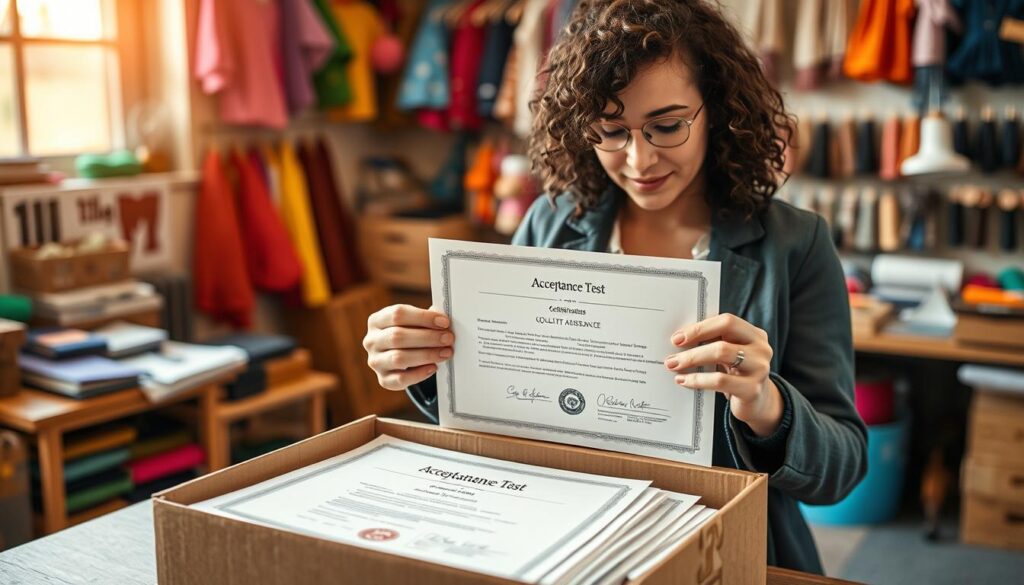
After you have your evidence, do a detailed check. Use a checklist to make sure you don’t miss anything. Do this in good light before you try it on.
- Examine the Packaging: Look for damage, moisture, or mishandling. Note anything odd.
- Initial Visual Scan: Lay the garment flat on a clean surface. Check for stains, discoloration, or misaligned patterns.
- Review Included Documentation: Check for packing slips, care instructions, or material certificates. Official certificates (like OEKO-TEX) prove material safety.
- Inspect Construction Points: Quickly check seams, closures, and embellishments. A detailed test comes later.
- Note Odors: Watch for strong smells. They might mean the materials or storage were wrong.
If you find a problem, stop right there. Contact the seller with your photos and video. Describe the issue clearly. This helps your case if you need to talk about repairs or replacements.
This test is a common practice among professionals. It protects both you and the seller. It gives a solid reason for any talks about fixing or replacing the item.
Thread checks, stain/odor scan, seam stress test, LED/battery inspection
Turn from a passive buyer to an active quality inspector with this step-by-step guide. It’s your last check before you buy. It makes unboxing a success.
Think of it as a professional checklist. You’re the last defense against hidden flaws. A careful check now saves you from future disappointment.
Begin with a Thread and Stitching Check
Look at every seam and hem under bright light. Check for loose threads, missed stitches, or uneven tension. These signs show the work was rushed.
Also, gently pull on decorative trims and appliqués. They should stay in place. Poor stitching can come undone after just one wear.
Focus on high-stress areas like armholes, waistlines, and corset seams. Flaws here can cause quick failure.
Conduct a Thorough Stain and Odor Scan
Unfold the garment fully. Check the interior lining and hidden seams for subtle stains or water spots.
Then, take a careful sniff. A musty smell means poor storage or mold. A strong chemical smell can signal uncured dyes or adhesives.
These smells are more than just annoying. They can show material problems or allergic risks. Your nose is a powerful tool here.
Perform a Gentle Seam Integrity Stress Test
This test checks if seams can handle movement. Don’t pull hard. Use both hands to apply gentle, opposing pressure along a seam.
Listen for any faint popping sounds. Watch for thread stretching or fabric puckering. A well-made seam stays firm and quiet.
Test seams at curves and angles. These are where stress builds up during wear. A gentle test now shows weakness before it breaks.
Verify All Electronic Components
Many modern costumes have LEDs, fiber optics, or motorized parts. Your LED battery check is key for safety and function.
First, check battery compartments. Make sure they’re clean, dry, and closed well. Look for corrosion on battery contacts.
Turn on all lights and moving parts. Watch them for a few minutes. They should work well without flickering or getting too hot.
Also, check if the maker included instructions for battery replacement or charging. Knowing how to care for electronics can extend your costume’s life.
| Inspection Step | Tools Needed | What to Flag | Common Defect Found |
|---|---|---|---|
| Thread Check | Bright light, magnifier | Loose threads, uneven stitches | Skipped stitches at seams |
| Stain/Odor Scan | White surface, your nose | Discoloration, chemical smell | Musty odor in lining |
| Seam Stress Test | Your hands | Popping sound, fabric stretch | Weakness at curved seams |
| LED/Battery Check | Fresh batteries | Flickering lights, loose compartment | Corroded battery contacts |
This table outlines your plan. By following this acceptance test, you empower yourself. You go from hoping for quality to knowing you have it.
Document any problems you find with clear photos. Contact the maker quickly with your evidence. Most good makers will want to fix things.
This final check isn’t about finding faults. It’s about confirming quality. It makes sure the magical costume you dreamed of is the one you now have.
Relationship Building
A successful costume commission starts a valuable professional relationship. Finding a great maker on Etsy or Instagram is exciting. This connection grows from a shared passion for fandom.
As a client, you can do more than just buy. Offer clear, helpful feedback on your costume. Ask to share photos of you wearing it. These photos help the artist and build a community.
Respect the maker’s work by following care instructions. This keeps your costume looking great for a long time. It shows you value their effort.
Being a good client builds trust. Makers often choose reliable clients for future projects. This can lead to working together on bigger projects. The whole process turns a simple transaction into a partnership based on respect.