When a child puts on a fantasy costume, they enter a magical world. For those who make or sell these costumes, safety is key.
Meeting strict standards is more than just following the law. It’s about building brand trust and keeping customers coming back. In this field, making safe costumes means protecting the little ones who wear them.
This guide goes beyond just meeting the minimum. It offers a detailed plan for safety, covering risk, regulations, and more. It talks about the importance of breathable materials and designs that allow for movement.
Knowing these details is vital. It turns a great product into one that parents can trust. It makes sure that the fun of play, like with fairy wings, is safe and secure.
For those starting a business, this knowledge is not optional. It’s the key to building a trustworthy and successful brand in children’s fantasy wear.
Children’s Risk Profile
A professional risk assessment framework shows why kids’ costume safety is so important. It goes beyond just common sense. It looks at how a child’s size, behavior, and surroundings can create dangers when mixed with costume parts.
Children are not just smaller versions of adults. Their bodies and actions change a lot. Costumes need to fit these changes to avoid harm.
Each age group faces different risks. Toddlers put things in their mouths, making small costume parts a choking hazard. Preschoolers are getting more active but are not yet steady on their feet. Long costumes can cause them to trip when they run or jump.
School-age kids are very active and creative. Their costumes must withstand rough play, climbing, and other dynamic activities. A costume that hinders movement or sight can lead to falls. Knowing these risks helps in designing safer costumes.
| Age Group | Key Developmental Risks | Typical Play Scenarios | Safety Priority for Costumes |
|---|---|---|---|
| Toddlers (1-3 yrs) | Oral exploration, poor balance | Limited mobility, supervised play | Eliminate small parts, ensure stable footing |
| Preschoolers (3-5 yrs) | High energy, developing coordination | Running, jumping, role-playing | Prevent tripping, allow full range of motion |
| School-Age (5-10 yrs) | Peak activity, complex imagination | Sports-like play, elaborate games | Durable construction, non-restrictive fit |
Play areas add to these risks. Indoor parties have stairs and sharp corners. Outdoor trick-or-treating has dark paths, uneven sidewalks, and weather. A costume safe for photos might not be safe in real life.
Designing costumes for kids means understanding child development. A sparkly wand is fun for preschoolers but can be dangerous during play. A crown that doesn’t stay on can block a child’s vision.
Understanding child development and costume design is key. Every choice in making a costume must consider the child’s age and how they will use it. True kids’ costume safety starts with this understanding.
Choking, trips, heat, visibility, skin irritation
Choking, trips, heat, visibility, and skin irritation are big safety concerns for kids’ costumes. Knowing these risks helps you make a smart choice for your child’s safety. This guide will help you understand each risk and what to do about it.
The table below gives a quick look at the main hazards, what causes them, and how to stay safe.
| Hazard Category | Common Risk Factors | Key Prevention Check |
|---|---|---|
| Choking | Small detachable parts, loose sequins, broken accessories | Perform a firm pull test on all decorations and fasteners. |
| Trips & Falls | Overlong hems, tangled capes, ill-fitting footwear | Ensure the costume hem is above the ankle for safe movement. |
| Overheating | Non-breathable fabrics, lack of ventilation, excessive layers | Choose costumes made from natural fibers or breathable synthetics. |
| Low Visibility | Dark colors, lack of reflective elements, evening events | Add reflective tape or choose costumes with built-in reflective accents. |
| Skin Irritation | Harsh dyes, rough seams, allergenic materials like latex | Look for labels confirming non-toxic dyes and soft, covered seams. |
Choking Hazards
Small parts are a big worry for kids’ costume safety. Buttons, gemstones, and decorations can fall off. This is a choking hazard for young kids who like to mouth things.
Always check costumes for secure attachments. Pull on any decorations. If they come off easily, it’s not safe. Stay away from costumes with loose glitter or sequins. Choose costumes with embroidery or prints instead.
Trip and Fall Risks
Costumes that are too long or have long capes and skirts can cause trips. This is dangerous on stairs, in crowds, or when running. The right fit is key to avoiding falls.
The hem should be at least an inch off the ground. For capes, go for shorter lengths or designs that break away. Make sure shoes fit well and have non-slip soles. Avoid big, floppy shoes that can get caught.
Overheating Concerns
Many costumes are made from polyester or vinyl, which can trap heat. This can cause discomfort and even heat exhaustion, which is dangerous. It’s important for costumes to breathe.
Look for costumes with mesh panels or cotton blends. If a costume is warm, wear a breathable layer underneath. Kids may wear these outfits for hours at parties or trick-or-treating.
Visibility in Low Light
Evening events like Halloween make it hard to see. Dark costumes can make kids hard to spot for drivers. Making them more visible is a simple but important step.
Add reflective tape to the front, back, and sides of the costume. Choose accessories like wands or hats with reflective parts. Glow sticks or a small flashlight can also help after dark.
Skin Irritation and Allergies
A child’s skin is very sensitive. Harsh dyes, rough seams, and certain materials can cause rashes or allergic reactions. The quality of the materials is very important for comfort.
Choose costumes with soft linings. Look for labels that say the dyes are non-toxic and hypoallergenic. Wash new costumes before wearing them to remove chemicals. Avoid masks that can rub against the face or block breathing.
By focusing on these five areas, you can make costumes safer. This way, the fun of dressing up is safe and enjoyable for everyone.
Laws & Labels
Every safe children’s costume follows strict rules. These rules cover toxins and trims. For designers, manufacturers, and retailers, knowing these rules is key. It’s not just about avoiding fines. It’s about keeping the child safe.
Understanding these rules can be tough. Let’s make it simple and clear.
CPSIA: Tracking Labels & Substance Limits
The Consumer Product Safety Improvement Act (CPSIA) is key for kids’ product safety in the U.S. For costumes, CPSIA compliance means tracking labels and limits on harmful substances.
Costumes for kids 12 and under need a permanent tracking label. This label has the maker’s name, location, and when it was made. It helps with recalls if a safety issue is found.
The CPSIA also limits toxic materials. These include:
- Lead: Must be less than 90 parts per million (ppm) in coatings and substrates.
- Phthalates: These plastic softeners are allowed in only 0.1% of any part that kids can touch.
Using safe fabrics and trims is a must. It’s not just a good idea. It’s the law for all kids’ wear, including fantasy costumes.
Drawstring Rules for Costumes
Drawstrings and cords can be a danger. The Consumer Product Safety Commission (CPSC) has rules for kids’ upper wear.
These rules apply to jackets and coats, but also to costumes with hoods, capes, or cloaks. For sizes 2T to 12, no drawstrings are allowed in hoods and necks. Waist and bottom drawstrings must be very short and not work.
The best thing is to not use drawstrings in kids’ costumes. Use snaps, hook-and-loop, or elastic instead.
Age Grading & Warning Labels
Age grading is important for safety, not just size. A label saying “For age 3+” means it’s not safe for younger kids. Wrong labels can cause choking hazards.
Warning labels must be clear, easy to see, and stay on forever. Costumes might need labels about:
- Flame resistance (or lack thereof).
- Choking hazards from small parts.
- The need for adult supervision.
These labels warn parents of real dangers. They’re a key part of your product’s safety message.
Seeing CPSIA compliance, drawstring rules, and clear labels as essential business practices does more than follow the law. It builds trust with customers and makes the world safer for kids.
Fabric & Trim Choices
Choosing the right fabric and trim is key to safety, not just looks. For those making kids’ fantasy wear, picking the right material is essential. It’s about more than just how it looks; it’s about how it performs and keeps kids safe.
When picking fabric, consider four important things: how it burns, breathability, durability, and chemical safety. A fabric might be good in one area but not another. You need to find a balance based on how the costume will be used.
Natural fibers like cotton, linen, and wool are great for comfort and look. They breathe well, keeping kids cool during play. But, they can catch fire easily and might not last long in rough play. They’re perfect for photo shoots.
Modern synthetic blends and treated fabrics offer better performance. Polyester and nylon blends are tough and wrinkle-free. They can also be made flame-resistant, which is important for costumes near fire. But, they might not breathe as well, which is bad for active play.
| Fabric Type | Best For | Safety Pros | Safety Cons |
|---|---|---|---|
| Cotton/Linen | Static wear, mild weather | Breathable, hypoallergenic, soft | Can be flammable, wrinkles easily |
| Wool Blends | Cold-weather costumes | Naturally insulating, flame-retardant | Can be itchy, requires special care |
| Flame-Resistant Polyester | General play, events with candles | Durable, wrinkle-free, treated for safety | Less breathable, can retain odors |
| Stretch Knits (with spandex) | Active play, dance costumes | Allows full mobility, comfortable fit | Thin materials may tear easily |
Think about the child’s activities when choosing fabric. A costume for a child who loves to run needs strong, flexible fabric. A princess gown for a quiet party can focus on natural fibers for beauty.
Trim choices need careful thought too. Things like sequins, beads, and glitter must be safe to avoid choking. Choose non-shedding glitter and printed designs over loose ones. Make sure all dyes and colorants are safe, as kids might put them in their mouths.
Doing your homework on suppliers is key. Ask about flame resistance, breathability, and dye safety. This careful planning turns a beautiful costume into a safe one, protecting kids and your brand’s reputation.
Soft linings, covered seams, non‑shedding glitter, reflective accents for night wear
When it comes to fantasy outfits, safety and comfort come from the details. These details turn a good costume into a great one. They affect how the costume feels and performs during play.
The Hidden Features That Make a Difference
Breathable linings are essential for comfort. A soft inner layer, often cotton or moisture-wicking, keeps skin cool and safe. It stops chafing and overheating, perfect for long wear.
Soft seams are also key. Look for flat-lock stitching or covered seams. These hide the fabric’s edges, avoiding itchiness. They also make the costume last longer for more adventures.
Glitter adds magic, but it can be dangerous. Loose glitter can choke or irritate eyes. Sealed, non-shedding glitter solves this problem. It’s glitter-infused vinyl or heat-sealed glitter prints that sparkle without the mess.
For evening wear, like trick-or-treating, safety is critical. Reflective trim on hems, capes, or bags makes kids visible in car lights. For more safety, consider costumes with LED elements. They’re a smart mix of safety and creativity.
Details like embroidered patches and appliqués should be securely attached. They add flair without risks. Every choice, from lining to sequins, should focus on the child’s safety and spark their imagination.
Fit & Mobility
The right fit in a children’s fantasy costume is key for safety. A costume that doesn’t fit right can quickly become dangerous. Costumes that are too long can cause tripping, while those too tight can restrict movement and cause discomfort.
Assessing fit goes beyond just age labels. It involves checking body measurements and design elements. This ensures the costume looks great and allows for safe play. For makers and buyers, these standards are essential.
Key measurement points to evaluate include:
- Shoulder Width: Allows for arm movement and layering underneath.
- Chest/Bust: Provides room for breathing and active play.
- Waist to Ankle (for dresses & robes): Prevents tripping over excess fabric.
- Inseam (for pants): Ensures comfortable stride without binding.
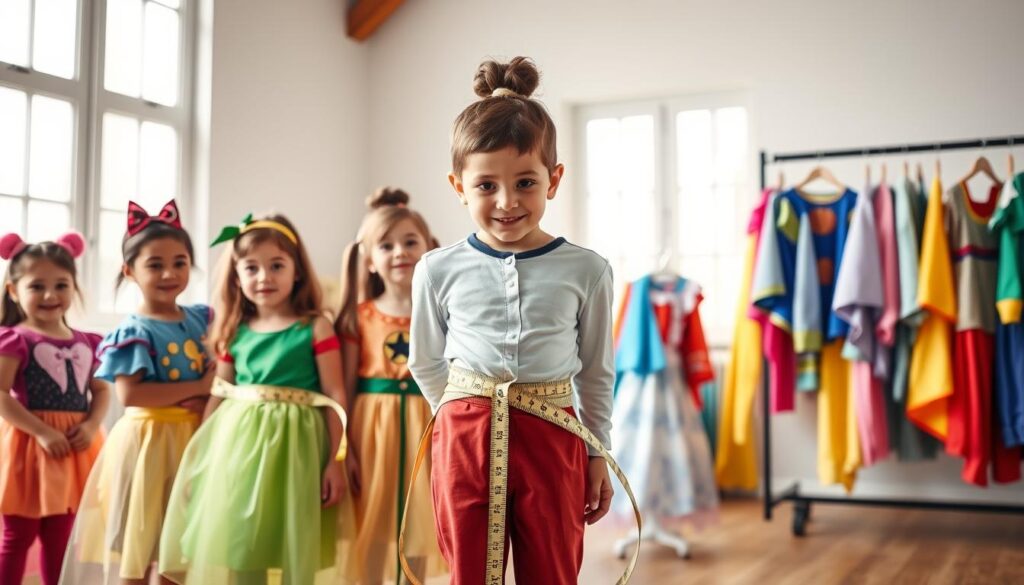
Adjustable closures are vital for safety. Features like elastic waistbands and lace-up sides fit different body types. They ensure a secure fit that won’t move during play, which is critical for kids’ costume safety.
Designing for full range of motion is essential. Can a child raise their arms to cast a spell? Can they run freely without the costume riding up or twisting? The costume should allow for kneeling, jumping, and spinning without constraint. A simple “activity test” during the design or selection phase is invaluable.
When creating specifications or choosing wholesale products, prioritize designs that build in ease through adjustable features and generous cut. The goal is a costume that looks enchanting but feels like second skin. This empowers every little royal to play with confidence and security.
Hem lengths, elastic comfort, adjustable closures; footwear considerations
Comfort and safety depend on three key things: hem management, closure systems, and good footwear. Getting these right makes a costume ready for adventure.
Hem Lengths & Tripping Prevention
Long sleeves and pant legs can trip kids up. A good hem lets them move freely without getting caught.
Here are some tips:
- Sleeves: They should hit the wrist bone when the arm is bent. No dangling cuffs.
- Pants & Skirts: The hem should be at least 1 inch off the ground when standing. This prevents tripping.
- Capes & Long Coats: These should not go past the knees. This stops them from getting caught while moving.
For growing kids, look for costumes with adjustable hems. Or ones with extra seam allowance for letting down.
Elastic & Closure Comfort
Waistbands and closures touch the skin a lot. Bad design can cause pinching and chafing, upsetting kids.
Elastic Waists are safe and popular. But not all elastic is good. Choose wide, flat elastic (at least 1 inch) covered in soft fabric. This spreads out pressure and prevents digging. The elastic should be tight enough to keep the garment up without leaving marks.
Adjustable closures are the most flexible. Here’s a comparison of common types:
| Closure Type | Best For | Safety & Usability Notes |
|---|---|---|
| Hook-and-Loop (Velcro®) | Young children, quick changes, adjustable fit. | Easy for small hands. Ensure tabs are securely stitched and loops don’t catch on hair or other fabrics. |
| Buttons | Older children, structured looks. | Must be securely attached (pull-test!). Can be hard for young kids. Avoid small, decorative buttons that pose a choking risk. |
| Zippers | Older children, full-coverage costumes. | Metal teeth can pinch skin. Look for plastic zippers with a covered top stop and a large pull tab. A fabric guard behind the zipper adds comfort. |
Regardless of the closure, check that all seams are finished and soft. This prevents irritation during long wear.
Footwear Considerations
Costume slippers or plastic boots may look good, but they’re not made for activity. Badly fitting or slippery shoes are a big fall risk.
Look for these features:
- Traction: Soles should be rubber or non-slip. Avoid smooth plastic or leather soles, which are slippery.
- Support: The shoe should have a defined heel cup and some arch support. Flimsy, flat slippers offer no stability.
- Fit: Costume footwear must fit like real shoes—snug at the heel with room to wiggle toes. Never size up dramatically “to grow into” for a single event.
A safe choice is to wear comfortable, supportive sneakers or boots in a coordinating color. Safety is key, even for a fairy tale.
When every detail, from hem to sole, is well thought out, the costume is safe and comfy. It’s built for the child’s active world.
Capes, Wands & Crowns
Accessories like capes and wands spark imagination but come with safety risks. Making a costume safe is more than just looking good. It’s about designing each piece with kids’ costume safety in mind.
Think differently about your props. Design a cape that breaks away easily. Use a flexible wand with a soft tip. This way, the magic stays safe.
Capes: A flowing cape looks powerful but can cause problems. Make it safe by adding a breakaway feature. This way, it detaches if pulled, avoiding strangulation or falls.
Use Velcro or clips for fastening, not long ties. Choose fabrics that are light and won’t catch fire.
Wands & Scepters: Pick soft materials for these props. Use foam or plastic, not wood or metal. The tip should be rounded and smooth.
Decorations like glitter should be safe and securely attached. A wand should bend a bit if hit, making it safer.
Crowns & Tiaras: Headwear must fit well and be comfy. Use plastic or foam that’s not too heavy. The inside should be soft to avoid skin problems.
Make sure it’s snug but not too tight. Use an elastic band that adjusts. All edges should be smooth, with no sharp points.
| Accessory Type | Key Safety Feature | Recommended Material | Critical Design Check |
|---|---|---|---|
| Cape | Breakaway Fastener | Lightweight Polyester, Nylon | No dangling cords or loops |
| Wand/Scepter | Rounded, Flexible Tip | EVA Foam, Flexible Plastic | Secure, non-shedding embellishments |
| Crown/Tiara | Adjustable, Snug Fit | Lightweight Plastic, Soft Foam | Smooth edges and interior lining |
| General Accessories | Non-Toxic Finishes | Painted with ASTM-certified paints | No small, detachable parts |
When making these items, focus on flexibility and secure fastening. A crown that falls off is better than one that hurts. A bendable wand is safer than a rigid one. These rules are essential for kids’ costume safety.
Think about the child’s age and how active they are. A toddler’s crown should be simpler and softer. A cape for a runner needs a reliable breakaway. By designing with these details in mind, you make the fantasy safe and wonderful.
Breakaway features; rounded tips; flexible materials
Keeping kids safe is key when making costumes. Wands, swords, capes, and crowns are fun but must be safe. Here are three important design rules for every parent and maker.
1. Breakaway Features for Entanglement Prevention
Any prop that can get caught must have a breakaway feature. This is a must for prop safety. Use weak-stitch attachments, snaps, or Velcro® that break easily.
For example, a cape should come off if pulled to avoid strangulation. Epaulettes or sashes that can be removed add fun without the risk of getting caught. These features make playtime safer.
2. The Mandate for Rounded Tips
All pointed props must have rounded tips. This rule is for toy swords, wands, scepters, and crowns. Sharp tips can hurt eyes or cause pain during play.
Make sure all edges are smooth. Check any prop for sharp points. Only accept items with safe, rounded tips. This simple change greatly reduces injury risk.
3. Choosing Flexible, Lightweight Materials
The material of a prop is just as important as its shape. Heavy or rigid materials can be dangerous. The best choice is flexible, lightweight materials like EVA foam, soft plastic, or padded fabric.
These materials bend when hit, which helps prevent injuries. A foam sword or plush wand is perfect for play without fear of getting hurt. Always choose props that feel soft and safe for play.
By focusing on breakaway features, rounded tips, and flexible materials, you ensure prop safety. These are not just suggestions but essential for keeping our little ones safe during their adventures.
Weather & Layering
The environment is key to kids’ costume safety. A costume for a cool October night won’t do for a summer carnival. Designers must think about the weather and how long the event will last.
For cold weather, costumes need to be layered. They should fit well over a breathable base layer, like a long-sleeved tee and leggings. Look for roomier cuts or hidden panels to keep kids comfortable.
On the other hand, warm weather or long indoor parties require different costumes. These should be light and breathable, like cotton or mesh. Avoid thick, non-breathing materials that can make kids too hot.
Designs also matter. Short sleeves and mesh panels help keep air flowing. It’s all about mixing fun with function. For more tips, check out these seasonal Halloween costume tips.
Costumes should be seen as more than just clothes. They should be flexible, allowing kids to stay comfortable in any weather. This smart approach is essential for kids’ costume safety today.
Breathable base layers, cold‑weather conversions; hydration plan
Keeping a child comfortable at a cool fall festival or a warm indoor party is key. It involves using base layers and staying hydrated. These steps are more than just checking the fit. They prepare the costume for real-world conditions.
Smart layering begins with what’s underneath. The right base layer manages moisture and temperature. This stops discomfort from sweat or chills during long events.
Breathable Base Layer Fabrics
The base layer is the foundation of a weather-adaptable costume. Breathable linings and undergarments are non-negotiable for safety and comfort. They pull sweat away from the skin. This keeps the child dry and regulates their body temperature.
Not all fabrics perform equally. The table below compares excellent choices for costume base layers.
| Material | Key Benefit | Best For | Consideration |
|---|---|---|---|
| Moisture-Wicking Synthetics (e.g., polyester, nylon blends) | Quick-drying; excellent sweat transport. | High-activity events, warm climates. | Ensure it’s a soft, non-irritating knit. |
| Fine Merino Wool | Naturally temperature-regulating; odor-resistant. | Cold-weather events, all-day wear. | Can be more expensive; check for softness. |
| Bamboo Viscose | Highly breathable and silky-soft. | Children with sensitive skin. | May require gentle washing. |
Choosing from these options creates a micro-climate under the costume. It acts as a buffer against external temperatures. Always opt for snug but not restrictive fits to avoid bunching.
Cold-Weather Conversion Ideas
Sometimes a base layer isn’t enough. For chilly evenings, the costume itself can adapt. Cold-weather conversions are design features that add warmth without a bulky coat.
Here are practical ideas for retailers and makers:
- Removable Insulating Liners: Attach a soft fleece or flannel liner inside a cloak or tunic with snaps or hooks. The child can remove it if they get too warm.
- Compatible Outer Cloaks or Vests: Design a separate, themed outer layer that fits over the main costume. This is easier than altering the primary garment.
- Integrated Accessories: Offer matching leg warmers, arm sleeves, or a hood. These items add warmth precisely where needed.
- Material Choice: For winter-specific costumes, select outer fabrics like heavy cotton twill or felted wool for inherent warmth.
The Hydration Plan
Full-day conventions or active trick-or-treating demand a hydration plan. Overlooked in costume design, easy water access is key for safety.
Dehydration leads to fatigue and dizziness. A good costume should not hinder a child from drinking.
Implement these strategies:
- Design for Access: Avoid full-face masks or helmets that must be removed to drink. Prioritize costumes with easy necklines or front openings.
- Integrate Carry Solutions: Include a functional pouch or bag as part of the design for carrying a water bottle.
- Communicate to Parents: Retailers should add care tags or notes reminding parents to schedule regular drink breaks and ensure the costume allows for them.
- Fabric Consideration: In hot climates, pair the costume with the moisture-wicking base layers from our table. This combo manages sweat effectively.
Combining breathable base layers, convertible designs, and hydration-conscious planning creates a holistic safety system. It empowers children to enjoy their magical role-play in any condition, comfortably and safely.
Testing at Home
Take control with a simple way to check kids’ costume safety before play or shows. This step is not a replacement for safe design but a key check. It makes sure every costume is ready for adventure.
For quality teams and brand owners, this routine is key. It shows safety proof and helps teach customers. It makes your brand a leader in safety, building trust.
Use this easy checklist before buying or using costumes. Have the child wear the whole costume with any base layers.
- Conduct a Mobility Test: Watch the child walk, sit, and raise their arms. They should move freely without tripping hazards.
- Perform a Sit-and-Reach Check: Can the child sit cross-legged on the floor easily? Can they bend to pick up a toy without discomfort?
- Complete a 360-Degree Visual Inspection: Look for loose threads, dangling sequins, or detached small parts.
- Assess the Fit Under Stress: Gently pull on sleeves, hems, and accessories. They should stay in place without stretching or tearing.
This whole process takes about twenty minutes. It checks how the costume works in real life, finding issues missed by static checks. Recording this test is a great marketing and quality tool.
Regular home testing turns doubt into confidence. It’s the final step in ensuring safe, magical fun.
Pull tests on small parts, visibility test at dusk, 20‑minute activity trial
Three simple tests at home can keep your kids safe from costume dangers. These checks are like a quality control for your child’s costume. They make sure it’s ready for fun adventures.
Remember, these tests mimic real play. A costume might look great on a hanger but could have problems when played with. These trials give important feedback, whether you’re making the costume or buying it.
The Small Parts Pull Test
This test is about avoiding choking hazards. Kids often pull on shiny things. You need to test this.
Try pulling on every button, gem, sequin, or appliqué. Use a force like a child’s. If it doesn’t move or shows weakness, it’s not safe.
Any part that comes loose or tears needs fixing. You might need to sew it better or use something safer.
The Dusk Visibility Assessment
Many kids play outside in the evening. This test checks if they’re visible in the dark.
Put the costume outside at dusk. Stand 50 feet away and see if you can spot your child. If they’re hard to see, it’s a visibility problem.
A good costume is light or has reflective parts. If it fails, add reflective tape or stickers for safety at night.
The 20-Minute Activity Trial
Comfort and movement are key. This test checks how the costume performs in real play.
Have your child wear the costume for 20 minutes of play. They should run, jump, and move freely.
Look out for signs of trouble:
- Restricted movement or tripping hazards.
- Areas that chafe or cause skin irritation.
- Closures that come undone or elastic that pinches.
- Any trim or fabric that snags, tears, or sheds excessively.
If the costume passes, it’s safe and lets your child move freely.
| Test Name | Procedure | Pass Criteria | Action if It Fails |
|---|---|---|---|
| Small Parts Pull | Apply firm, steady pressure to all decorative elements. | No part detaches or weakens the base fabric. | Remove and re-secure the part permanently. |
| Dusk Visibility | Observe the worn costume in natural low light from a distance. | The child’s silhouette is clearly distinguishable. | Add reflective tape or choose a brighter base layer. |
| 20-Minute Activity | Child engages in active play while wearing the complete costume. | No damage, restriction, or discomfort occurs. | Adjust fit, modify closures, or reinforce weak seams. |
Adding these tests to your routine makes safety a regular part of your life. It gives you peace of mind and ensures your child’s adventure is magical and safe.
Store‑Bought vs Handmade
Choosing between a store-bought costume and a handmade one is more than just about price and style. It’s about safety and quality. For parents and businesses, knowing the difference is key.
Store-bought costumes follow strict rules. Handmade ones, like those on Etsy, have their own set of standards. Your choice depends on what matters most to you.
The Mass-Production Safety Landscape
Store-bought costumes are safe because they follow strict rules. They meet standards like CPSIA lead limits and have tracking labels. This ensures a certain level of kids’ costume safety.
But, these costumes might not be the best quality. They could use thin fabrics or weak stitching to save money. They also might not fit well, which can cause problems.
The Artisan Handmade Advantage
Handmade costumes focus on quality and materials. They use strong, natural fabrics and pay attention to details. This means they can fit better and be more comfortable.
But, you have to check if the costume is safe. While makers follow safety rules, they might not test as much as big companies. You need to ask about materials and how they’re made.
| Factor | Store-Bought Costume | Handmade Costume |
|---|---|---|
| Safety Compliance | Standardized testing for lead, flammability, and small parts. Labels are consistent. | Depends on the artisan’s knowledge. Requires direct inquiry about materials and safety features. |
| Materials & Construction | Can vary widely. May use less expensive synthetics; construction is efficient but not always durable. | Often features select, higher-quality fabrics. Construction is typically more meticulous and durable. |
| Fit & Customization | Limited to standard size charts. May not accommodate unique body shapes. | Highly customizable. Can be tailored for perfect length and mobility, improving safety. |
| Cost Consideration | Generally more budget-friendly. Offers clear value for simple, seasonal use. | Higher price reflects labor and materials. A good choice for a quality, custom piece. |
Your choice depends on what you value most. If you want easy, safe costumes for a single event, store-bought is good. For a unique, high-quality piece, handmade is better. Always ask about safety, no matter the source.
What to inspect off the rack; info to request from Etsy makers
When you think about buying a costume, your safety role starts right away. Ready-made outfits need a close look. Handmade pieces require clear talks with the maker. Both ways lead to a safe costume, but the steps are different.
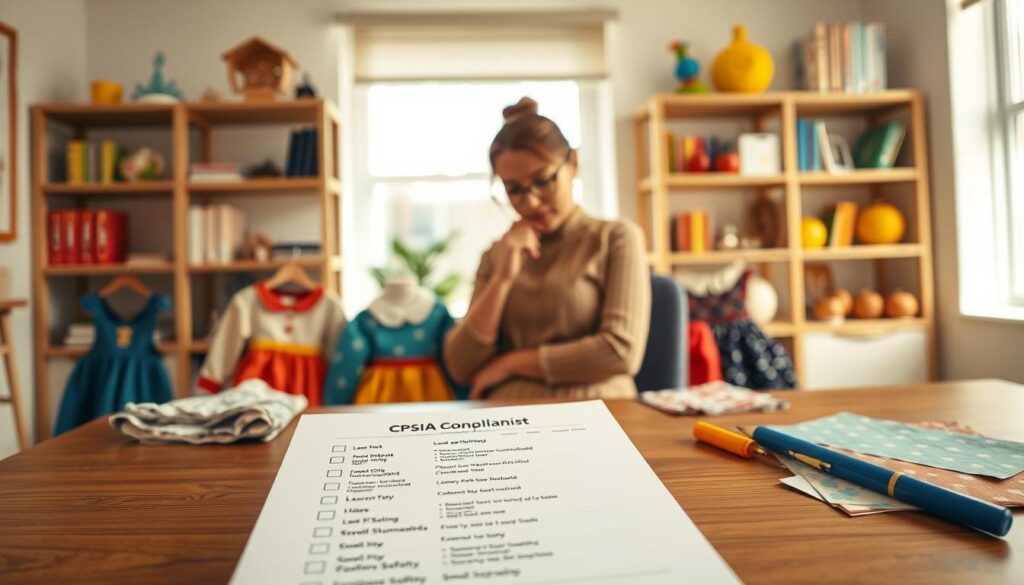
The Off-the-Rack Inspection Checklist
Before buying a costume, check it out thoroughly. It’s not just about the size tag. A quick check can reveal important safety info.
- Labels and Certifications: Look for a permanent tracking label. This shows CPSIA compliance. Also, check for fiber content tags and age warnings.
- Seam and Construction Integrity: Feel the inside seams. They should be smooth, not rough. Make sure seams are tight and there are no loose threads. Check areas like under the arms and the crotch, as they get a lot of use.
- Fastener and Closure Security: Pull gently on all fasteners. They should be securely attached. Test zippers to make sure they move smoothly.
- Trim and Embellishment Attachment: Check if glued-on decorations are secure. Pull on sewn-on items like ribbons or lace. Loose trim can be a choking hazard.
- Fabric and Lining Quality: Check the main fabric and lining. Is it sturdy, or does it feel weak? For active play or warm weather, choose breathable linings.
Key Questions for Handmade Costume Makers
Working with an Etsy maker means you’re the project manager. Your questions help create a safe, custom costume. Makers appreciate informed clients.
- “Can you detail the fabrics and materials you’ll use?” Ask about the type of fabric, its weight, and if it’s new or pre-washed. Ask about using breathable linings for comfort.
- “How do you finish seams for comfort and durability?” A good maker will explain their method. They might use sergers or French seams for soft seams.
- “What types of closures do you recommend, and how are they secured?” Discuss options like elastic or magnetic snaps. Make sure they use double-stitching or bar-tacking on high-stress points.
- “Are you familiar with and do you follow relevant safety standards, like CPSIA for children’s items?” This is key for CPSIA compliance. A responsible maker knows about lead and phthalates and the importance of secure small parts.
- “Can you accommodate breakaway features for capes or specific trim requests for safety?” If the design has a cape or long straps, ask for a breakaway closure. Also, talk about using non-shedding glitter or securely sewing down all embellishments.
| Inspection Area | Retail Purchase Focus | Handmade Commission Focus |
|---|---|---|
| Material Safety | Check for mandatory labels (tracking, fiber content). | Ask about fabric sourcing, certifications, and CPSIA compliance awareness. |
| Comfort & Skin Contact | Feel for soft seams and breathable linings already in place. | Discuss seam finishing techniques and lining material choices during the design phase. |
| Durability & Security | Physically tug on fasteners, trim, and seams to test factory construction. | Specify reinforced stitching for high-stress areas and secure attachment methods for all add-ons. |
| Hazard Mitigation | Identify and avoid items with loose, poorly attached small parts. | Request built-in safety features like breakaway closures and rounded, flexible accessory tips. |
With these checklists, you become a safety advocate. For store-bought items, inspect at purchase. For handmade pieces, talk with the maker early. This ensures a magical, safe costume from start to finish.
After‑Care
Keeping a costume safe doesn’t stop after the party. It’s about careful cleaning and storage. Proper after-care keeps fabrics, trims, and safety features in top shape for future adventures.
Always follow the manufacturer’s care label. But here are some general tips to keep your costume safe.
Washing for Safety & Longevity
Cleaning regularly removes dirt and allergens. But how you wash is key. Wrong washing can damage flame-resistant finishes, cause shrinkage, or weaken seams.
- Check the Label: Always follow the specific instructions. Most machine-washable costumes do best in a gentle cycle with cold water.
- Preserve Protections: Use mild detergent. Avoid harsh chemicals or bleach, as they can remove flame-resistant treatments and damage fabrics.
- Secure Closures: Fasten Velcro, zippers, or snaps to prevent snagging. Turning the costume inside out can protect outer details.
- Inspect After Washing: Before drying, check for loose sequins, shedding glitter, or opened seams that could become small parts hazards.
Drying with Care
High heat can harm costume durability and fit. Air-drying is usually the safest option. If you must use a dryer, choose the lowest heat setting or an air-dry cycle. This prevents excessive shrinkage and keeps closures elastic.
Smart Storage Solutions
Proper storage prevents new safety risks. Always dry the costume completely to avoid mold or mildew, which can weaken fabric and cause skin irritation.
Store costumes in a cool, dry place. Avoid overstuffing bins, as this can damage crowns, bend wands, or crease fabrics. Hang bulkier items like robes or dresses in a garment bag.
The Essential Safety Re‑Check
Before wearing a costume again, do a fresh safety check. Time and storage can introduce wear and tear not seen after the first use.
Conduct a thorough check:
- Re-test any breakaway features on capes or accessories.
- Examine seams, hems, and trims for fraying or loose threads.
- Ensure reflective accents are secure and visible.
- Verify that flexible parts, like crown bands or mask elastics, haven’t become brittle.
This after-care ritual turns a single-use outfit into a reusable treasure. It keeps kids’ costume safety standards high every time your little royal suits up.
Washing, storage, donation, hand‑me‑down safety check
A children’s fantasy costume’s safety story doesn’t end after Halloween. Taking good care of it keeps it safe for future adventures. This could be in your closet or for another child.
Preserving Safety Through Care
Always follow the costume’s cleaning instructions before you store it. This removes dirt and things that might irritate the skin. For delicate fabrics with trims, hand-wash them.
Machine-wash sturdy materials on a gentle cycle. Air-drying is best to avoid shrinkage or damage to safety features. Store costumes in a cool, dry place. Avoid plastic bags that can trap moisture.
Use a breathable garment bag or a dedicated bin to prevent crushing. This protects the costume’s components.
Passing the Costume Forward Safely
Before donating a costume or giving it as a hand-me-down, do a full safety check. This step is often missed. Look at every seam for weakness.
Check that all small parts, like buttons or gems, are securely attached. Inspect any props for damage. Make sure drawstrings, if present, meet current safety standards.
Have the new child try it on. Check the fit and mobility. Ensure it’s right for their size and age.
This final check turns a single purchase into a legacy of safe, imaginative play.