Handing a child the costume bin is more than just a task. It’s giving them control over their story. It’s like giving them their first chance to direct their own life.
Children’s minds are made for fantasy, mixing dreams with reality in amazing ways. When we let them pick their costumes, we’re doing something big. We’re recognizing their inner world.
Letting them choose to be a dragon or a vet is more than just fun. It lets them write their own story. They learn to handle their feelings by facing fears in a safe place. This idea is backed by experts in child development.
The power comes from creating their own character. It’s their first step in managing their image. They build skills and confidence as they explore their identity.
Performing for family
Think of the living room as a place where kids learn and grow. It’s where they first show off their talents. This moment is more than just fun; it’s a chance for them to feel seen and heard.
When a child puts on a new persona, they’re testing it out. Your reaction helps shape their confidence. A genuine laugh or a photo can mean the world to them.

Studies show that when parents join in, it strengthens their bond. It’s like stepping into a world of imagination together. By playing along, you show your child that you value their creativity.
This experience boosts their self-esteem in a big way. They share their creativity, and you acknowledge it. That photo on your phone is proof of their bravery, ready to inspire them in the future.
| Phase | Child’s Action | Developmental Gain |
|---|---|---|
| Private Preparation | Choosing a costume, practicing a persona alone. | Internal confidence, identity exploration. |
| Audience Engagement | Performing a snippet of story or power for family. | Social feedback, narrative skill practice, reaction gauging. |
| Parent Participation | Adult joins the play, asks questions, takes photos. | Deepened connection, validation of the imagined framework. |
| Solidified Outcome | The experience is celebrated and remembered. | Tangible evidence of bravery, a lasting boost in self-esteem. |
This experience is both fun and educational. It’s like a mini TED Talk, but with more excitement. They learn to tell stories, keep an audience engaged, and adjust based on feedback.
This confidence boost doesn’t stay in the living room. It helps them in school, with friends, and when trying new things. It’s a key step in linking dress-up to literacy, comprehension, and more.
So, when you watch a child perform, remember you’re their first audience. Your support is what turns their dreams into reality.
Empowerment Through Dress-up
Dress-up activities are more than just fun; they are a powerful tool for building self-esteem and empowerment. By allowing children to explore different roles and identities, dress-up encourages them to embrace their individuality and develop a sense of self-worth.
Through dress-up, children can express their creativity and imagination, which are essential for personal growth and development. It provides them with the opportunity to experiment with different personas and gain a deeper understanding of themselves and others.
When children engage in dress-up, they are able to tap into their inner strength and confidence. They can explore different scenarios and develop problem-solving skills, all while having fun and expressing themselves in a unique way.
By embracing dress-up, children can develop a positive self-image and a sense of empowerment. They learn to appreciate their own strengths and abilities, and they gain the confidence to take on new challenges and pursue their passions.
So, let’s encourage our children to embrace their creativity and explore different roles through dress-up. By doing so, we can help them build a strong sense of self-esteem and empower them to reach their full potentials.
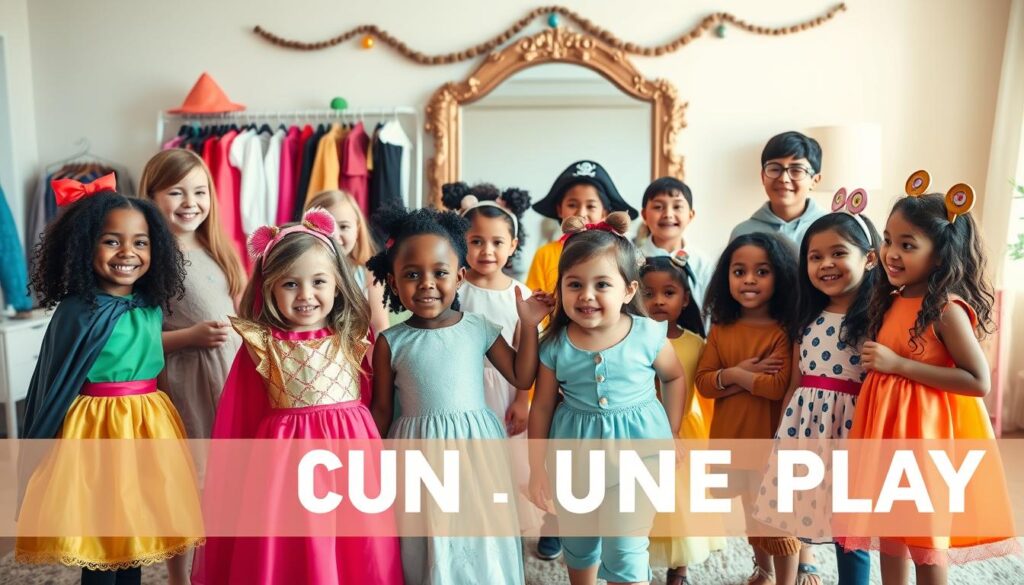
Benefits of Dress-up for Children’s Self-Esteem:
- Encourages creativity and imagination
- Provides opportunities for role-playing and exploration
- Builds confidence and self-expression
- Develops problem-solving skills
- Enhances self-esteem and self-worth
Pushing past shyness
Shyness often stems from fear of the unexpected. Dress-up offers a script, motivation, and a shield. It helps build dress-up self-esteem. By playing different roles, kids conquer their fears.
The quiet child behind the mask is practicing bravery. The act of dressing up is like integrating parts of oneself. Each snap of the costume is a sign of “I did it.” This builds empowerment step by step.
Adults need safe spaces to practice courage too. The journey on Hey Lady! shows shy English learners finding their voice. A supportive community acts as a script for courage.
When a child stands fully transformed, the costume’s confidence stays. The play may end, but the empowerment lasts. That’s the quiet victory of dress-up self-esteem.