Creating a stunning costume is an art. It’s all about finding the right mix of fire in your idea and sparkle in the final piece. But, there’s a big safety factor to consider.
For designers and event planners, costume flammability and electrical safety are key. They’re not just extra steps. They’re the heart of safe and responsible design.
This guide will give you the tools you need. We’ll talk about picking the best flame-retardant fabrics and following NFPA 701 standards. You’ll learn how to keep LED costumes safe with battery safety tips and the difference between Li-ion and alkaline batteries.
We’ll also cover important details like using heat-resistant adhesives. And we’ll talk about the dangers of candles or open flame near costumes. Let’s make safety a key part of creating amazing designs.
Risk Overview
When a performer’s cape touches a stage light or a child’s costume meets a jack-o’-lantern, fire becomes a real danger.
Good safety planning means more than just warnings. It’s about knowing exactly when costumes and props meet heat.
The biggest risk is real open flames. These are common at events but are very dangerous for costumes.
Materials that catch fire easily are a big problem near heat. Here are some examples:
- Flowing Fabrics Near Stage Equipment: Capes and sleeves can get caught in lighting or heaters.
- Synthetics and Ceremonial Candles: Materials like polyester melt fast near candles or open flames at dinners or rituals.
- Halloween and Jack-o’-Lanterns: Kids trick-or-treating often lean over pumpkin candles. Long costumes can easily catch fire.
- Outdoor Events with Fire Pits: Sparking embers or sudden gusts can ignite loose fringe or tulle.
- Stage Fog and Pyrotechnics: Chemicals on fabrics can make them catch fire more easily near heat.
Each example shows why choosing the right materials and design is key. Knowing these risks is the first step to safety.
Stage fog, candles, fireworks, heaters; kids’ trick‑or‑treat proximity to pumpkins
Understanding flammability means looking at the whole scene. This includes stage fog and candles in pumpkins. Common things at events and parties can be hidden dangers to costumes and props.
Stage fog machines are a special danger. The mist they create can settle on fabrics. This moisture can lower the material’s ignition point, making it catch fire more easily if exposed to a spark or flame. A costume that might resist a quick flash when dry becomes vulnerable in a fog-filled environment.
Radiant heat is another silent hazard. Space heaters used in dressing rooms or at outdoor events emit intense, direct heat. Draped fabrics like capes or gowns placed too close can smolder or ignite without ever touching the heater element. This risk is higher with synthetic materials that may melt before they flame.
Fireworks displays demand strict distance considerations. While the main burst is high in the sky, falling embers or wayward sparks from ground-based effects are a real concern. Costume wearers and handlers should maintain a significant buffer zone, as recommended by the pyrotechnics crew, during any display.
Perhaps the most overlooked risk is much closer to home. During Halloween, children’s costumes frequently brush against the candles or open flame inside jack-o’-lanterns. A flowing sleeve or a long cape can dip into the flame in an instant. This hazard turns a festive trick-or-treating moment into a possible emergency.
Events like bonfire nights present similar challenges with open flames and crowded spaces. For parents and costume makers, proactive mitigation is key. Here are actionable strategies to enhance safety:
- Use battery-operated LED lights inside pumpkins instead of real candles. They provide the glow without the heat or flame.
- Design costumes with shorter hems and secured sleeves to minimize loose fabric that can drape or swing.
- Establish a clear “no-go zone” around any open flame, including fire pits and candle displays, and supervise children closely.
- Choose fabrics wisely for events with these hazards; natural fibers like wool or treated cotton are safer near incidental heat.
By auditing the environment—whether it’s a professional stage or a neighborhood sidewalk—you can identify these granular hazards and implement simple, effective controls. The goal is to preserve the magic while eliminating the spark of danger.
Standards & Terms
Terms like ‘flame resistant’ and standards like NFPA 701 are often used. But what do they really mean for your costume or stage drape? These certifications aim to predict how a material will act when exposed to fire. Knowing these terms helps you make better choices.
Think of a safety standard as a recipe for a controlled test. It outlines the flame size, exposure time, fabric orientation, and pass/fail criteria. A material doesn’t get a general “fireproof” label. It either passes or fails a specific test.
The NFPA 701 standard is a key example. It’s a vertical flame test for draperies and window treatments in public areas. A fabric sample is hung vertically, and a controlled flame is applied to its bottom for a set time. To pass, the flame must not spread too far, and the material must not keep burning or drip after the flame is gone.
This is a big difference. A fabric certified to NFPA 701 is tested for hanging drapes, not for a costume sleeve near a candle. Other standards cover different areas. For example, CPAI-84 deals with flame resistance in camping tent fabrics, while BS 5852 checks ignitability for upholstered furniture.
| Standard | Primary Scope | Key Test Method | Common Application |
|---|---|---|---|
| NFPA 701 | Draperies, Window Treatments | Vertical Ignition; Flame Spread | Theater Curtains, Public Venue Drapery |
| CPAI-84 | Camping Tent Fabrics | Vertical & Horizontal Flame Tests | Tents, Canopies, Temporary Structures |
| BS 5852 (UK) | Upholstered Furniture & Fillings | Cigarette & Butane Flame Simulant | Stage Furniture, Set Dressings |
| 16 CFR Part 1610 (US) | General Wearing Apparel | 45-Degree Angle Flame Test | Everyday Clothing (Baseline) |
Why is this important when choosing materials? If a vendor says a fabric is “theater safe,” ask which standard it meets. A drapery fabric passing NFPA 701 is great for a backdrop but might be too stiff for a flowing cape. Knowing this helps you choose the right material for your project.
NFPA 701 (Textiles), “Flame Resistant” vs “Flame Retardant,” Consumer Labeling Realities
The NFPA 701 standard is a key for checking if textiles are safe from fire. But, it can be tricky to understand when it comes to clothes. Knowing about this standard is a big step in keeping safe.
First off, “flame resistant” and “flame retardant” are not the same thing.
Flame-resistant fabrics are naturally safe. They don’t catch fire easily and stop burning when the flame goes away.
Flame-retardant fabrics, on the other hand, get their safety from a chemical treatment. But, this treatment can wear off with washing and use.
Here’s a table that shows the main differences:
| Feature | Flame-Resistant (Inherent) | Flame-Retardant (Treated) |
|---|---|---|
| Source of Safety | Property of the fiber itself | Chemical coating applied to fabric |
| Durability | Lasts for the life of the fabric | Can diminish with washing and wear |
| Common Examples | Some wools, modacrylic, aramid fibers | Treated cotton, polyester, or rayon |
| Care Instructions | Follow standard care labels | Often require special washing to preserve treatment |
NFPA 701 is a test method by the National Fire Protection Association. It checks how fabrics react to a flame.
Passing NFPA 701 means the fabric meets safety standards. It’s important for public places like theaters.
But, labels can be confusing. A tag that says “flame retardant” isn’t enough. This term isn’t well-regulated for everyday items.
You need to be careful. Look for NFPA 701 or other standards like CPAI-84 or ASTM. Ask for test certificates.
A good supplier will show you a datasheet or certificate. If they can’t or won’t, it’s a warning sign. Your safety documents are as important as the fabric.
Make sure the treatment lasts. A “flame-retardant” costume that loses its protection is not safe.
By knowing these details and asking for proof, you can be sure a costume is safe.
Fabric Choices
Choosing the right fabric is key. It must look good and be safe. This guide helps you pick fabrics that are both stylish and safe.
Not all fabrics react the same to heat. Some don’t catch fire easily, while others burn fast. Knowing this helps you pick safe fabrics for costumes.
Synthetic Blends: Polyester and Spandex
Polyester and spandex are popular for their stretch and color. They melt when heated, which can be both good and bad.
They melt instead of burning, which can be risky. Many flame‑retardant fabrics start with polyester. They’ve been treated to make them safer.
Sheer and Decorative Fabrics: Tulle, Organza, and Mesh
Tulle, organza, and mesh add volume and beauty. But, they burn easily because they’re so light.
Long-pile tulle and some mesh burn fast. They catch fire quickly and spread flames fast.
Silky Textures: Stretch Satin and Rayon
Stretch satin is loved for its luxury. But, it burns fast if not treated. Rayon also burns quickly and cleanly.
Rayon is made from cellulose and burns fast. It doesn’t have the natural fire resistance of other fibers.
Practical Selection Guidelines
When picking fabrics for fire costumes, think about these:
- Fabric Weight: Heavier fabrics burn slower than light ones
- Weave Density: Tight weaves resist fire better than loose ones
- Fiber Content: Synthetic blends often do better in fires than natural fibers
- Treatment Availability: Some fabrics take flame-retardant treatments better than others
Your budget and design are important. But, safety comes first. Now, there are flame‑retardant fabrics that look great and feel comfortable.
Always ask for safety info when buying costume materials. Good suppliers will give you test results and certifications. This info is key for meeting venue safety rules.
Fabric choice is just part of safety. You also need to know how to make and handle costumes. The right fabrics are a good start for making amazing, safe costumes.
Wool and treated cotton vs untreated rayon; metallic meshes; when to avoid long pile tulle
When making a magical costume, picking the right fabric is key. Some fabrics look great but aren’t safe. We’ll look at the safety of common costume fabrics.
Natural Wool is a good choice for safety. Its fibers hold a lot of moisture. Wool is hard to light and will stop burning if the flame goes away. It’s a pricey option but great for safe parts of costumes.
Treated Cotton is a go-to for flame-retardant fabrics. It’s made safe through a chemical process. This cotton stays safe through many washes, perfect for costumes you can wear again.
Untreated Rayon is a bad choice. It’s made from cellulose and catches fire fast. It burns quickly and can melt, which is very dangerous. Stay away from it if you can.
Metallic Meshes are pretty but risky. They spread heat well. This can make the fabric under them catch fire. Use safer options like metallic laminates on treated cotton instead.
Long-Pile Tulle is also risky. Its big surface area catches fire quickly. For a similar look, use shorter tulle or layered chiffon that’s safe from fire.
Always choose flame-retardant fabrics from trusted sources. Your creativity should never risk safety.
Safe Sparkle Methods
Safe sparkle is possible with the right techniques and materials. Glitter, sequins, and reflective details add magic to costumes. But, adding them the old way can be risky.
Loose glitter is a big problem. It can fall off and create a flammable dust. Craft glues often melt or degrade when it gets hot.
The answer is to use safe materials and heat-resistant adhesives. These keep embellishments in place without risking the fabric’s safety.
Why choose heat-resistant adhesives? They create a strong bond that won’t break down near heat. This stops the adhesive from becoming a fire hazard. It’s key for keeping flame-resistant fabrics safe, as seen in safety standards for kids’ costumes.
Here are safe ways to add sparkle:
- Sealed Sequins & Foils: Use sequins stitched or heat-sealed, not glued. For foil, bond it with a high-temperature glue.
- Integrated LEDs & Reflectives: Sew LEDs into pockets or use diffusion fabrics. Attach reflective tapes with a high-temperature glue or stitch them.
- Secure Bonding: Test a small area first. Apply adhesive in a well-ventilated area and wait for it to cure. This ensures a strong and safe bond, like adding embellishments safely.
By using these methods, your costume’s sparkle is safe and secure. It becomes a lasting part of the design, not a risk.
Sequins/foils vs glitter sprays; heat‑resistant threads and adhesives
The sparkle of a gown often depends on two methods: attached sequins and glitter sprays. Each has its own fire risks. Picking the right sparkle method is key to safety, not just style.
Loose glitter sprays are a hidden danger. Their fine, flammable particles can catch fire easily near a flame. Once they start burning, they can spread fire fast across fabrics.
Attached sequins, foils, or pailettes are safer. Their main risks are the materials they’re made of and how they’re attached. Plastic sequins can melt, and metallic foils can conduct heat.
| Sparkle Method | Primary Fire Risk | Safety Recommendation |
|---|---|---|
| Glitter Sprays (Loose) | Highly flammable, airborne particles; rapid flame spread. | Avoid for costumes near open flames. Use only on isolated, non-fabric props. |
| Sequins & Foils (Attached) | Material melting or heat conduction; risk increases if loose. | Secure permanently with appropriate threads and heat-resistant adhesives. |
Choosing the right thread and glue is key for safe attachment. Regular sewing thread and craft glue can melt or degrade under heat. This can cause embellishments to fall off and possibly catch fire.
Instead, use threads like Kevlar® or Nomex® for high-temperature use. Some polyester threads are also rated for thermal resistance. They stay strong even when briefly exposed to warmth.
Adhesive choice is also critical. Look for strong fabric glues or heat-resistant adhesives for textiles and crafts. Silicone or certain epoxy-based products often handle higher temperatures better.
When applying adhesive, make sure it bonds well without excess. A solid bond keeps sequins in place and prevents them from catching sparks. Always test the heat-resistant adhesives on a fabric scrap first to avoid staining or reactions.
By choosing attached sequins over loose glitter and using the right materials, you create a safer, more durable sparkle. This method ensures dazzling results without risking fire safety for your magical creations.
LED Integration
LED costumes amaze people, but there’s a lot of work behind the scenes. It’s all about low-voltage design and keeping components safe. This mix of art and tech can make amazing effects, like soft lights or cool patterns.
The heart of safe lighting is smart, low-voltage design. This approach keeps the wearer safe and the costume lasting longer. By using safe voltages, you avoid shocks and fires.
Good design means following some key rules:
- Power Source Planning: Pick your battery type and where it goes early. A single, easy-to-reach battery pack is safer than many small ones.
- Wire Management: Keep all wiring tidy and hidden. Loose wires can cause problems and even hurt someone.
- Component Protection: Use heat-shrink tubing on solder joints. Make sure LEDs and controllers are safe from damage.
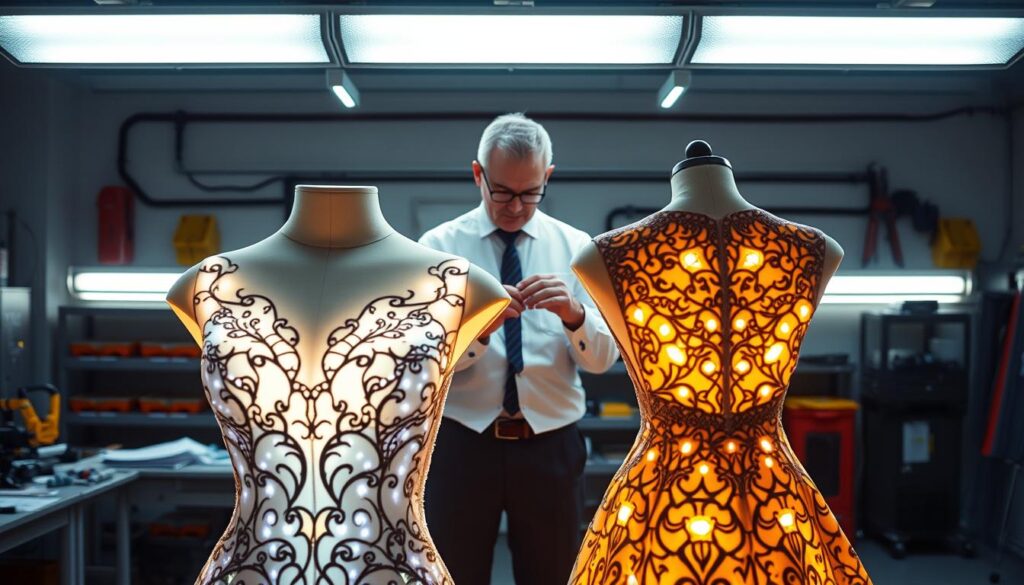
One big mistake is not thinking about how the lights and fabric work together. Use soft fabrics over bright LEDs for a nice glow. Don’t just glue things on fabric. Use strong bases or enclosures that you sew or fuse on.
Flexible electroluminescent wire is great for outlines, and battery-powered LEDs for bright spots. Make sure all parts can be taken off for cleaning or fixing. This way, your costume and tech last longer.
Safe LED integration lets your creativity shine without worry. By following these steps, you make costumes that are both reliable and beautiful.
Low‑voltage design; diffusion fabrics; wire management; strain relief; fusing; battery enclosures; on/off access
The magic of an illuminated gown is in the hidden engineering. It includes safe circuits, diffused light, and secure components. Professional LED costume integration is a masterclass in practical execution. It turns a simple garment into a reliable, glowing spectacle.
Start with a low-voltage design. Most costume LEDs run on 3 to 12 volts. This reduces electrical risk and heat. Always use a current-limiting resistor for each LED strip or cluster. It prevents burnout and extends battery life.
Choosing the right diffusion fabric is key. It softens harsh LED points into a beautiful, even glow. Stretch velvet, chiffon, and certain silicone-coated materials work well. Avoid thick, opaque fabrics that swallow light.
Clean wire management keeps everything tidy and safe. Use flexible, silicone-insulated wire for movement. Route wires along seam lines or inside fabric channels. Secure them with fabric glue or hand stitching every few inches.
Implement strain relief at every connection point. This prevents wires from snapping due to movement. Small knots before solder joints, hot glue blobs, or commercial strain relief sleeves are effective. Always inspect for frayed wires before each use.
Fusing your circuit is a non-negotiable safety step. A small, fast-acting fuse on the positive battery line will protect against short circuits. It acts as a sacrificial component, blowing before heat can damage wires or batteries.
Design a secure battery enclosure. A padded pouch with Velcro or a zippered pocket works. The enclosure must prevent batteries from shifting, shorting, or making accidental contact. For LED costumes worn by children, consider a lockable case.
Easy on/off access is vital for the wearer. Place a robust switch in an intuitive location, like the hip or sleeve. Test that it can be operated quickly, even with gloves on. A hard toggle switch is often more reliable than a small button.
Remember to always disconnect all electronic components before cleaning. Even a slightly damp cloth can cause corrosion in a live circuit. This simple habit preserves your hard work and ensures your LED costume remains stunning show after show.
These techniques build reliability into the heart of your design. They ensure the sparkle comes from the lights, not from an electrical fault.
Battery Safety
Battery safety is key for any magical garment with electric parts. It makes the difference between a great show and a safety risk. It’s not just about choosing a battery; it’s about knowing and controlling the energy that makes your garment work.
Choosing between Li-ion vs alkaline batteries is important. Alkaline batteries are cheap and safe for simple LED lights. But, they can leak harmful chemicals if they get wet or sit too long in a device. Li-ion batteries last longer and are brighter, but they need careful handling to avoid overheating or swelling.
Handling batteries right is a must. Always take out batteries before cleaning or storing. Cleaning solutions or humidity can damage the batteries. Store batteries in a cool, dry spot away from your costume. This keeps the batteries and your wiring safe.
Here are some tips for safe use:
- Use the right battery holder or enclosure: Make sure it’s secure and won’t let wires touch the battery terminals.
- Check the polarity: Make sure the positive (+) and negative (-) ends are in the right spots before closing the battery compartment.
- Inspect regularly: Before each use, look for corrosion, swelling, or damage to the battery casing.
- Never mix old and new batteries: Or different brands or types, as this can cause uneven discharge and overheating.
- Dispose of properly: Don’t throw away used batteries in regular trash. Take them to a battery recycling center.
Good battery safety makes you more than just a costume maker. It makes you a responsible creator. By respecting the power source, you ensure the magic lasts safely from start to finish.
Alkaline/Eneloop vs LiPo—charging, transport, venting; never body‑mount unprotected LiPos
It’s vital to know the difference between alkaline cells and Lithium Polymer (LiPo) packs for safe costume electronics. Your choice of power affects your safety plan.
Batteries for costuming fall into two groups: common ones and high-performance LiPos. Alkaline and NiMH rechargeables like Eneloop are well-known. But LiPo packs need careful handling.
- Alkaline/NiMH (e.g., Eneloop): These are safe, stable, and affordable. They have less energy density, so you might need more for the same power. They don’t need special chargers and are low-risk under normal use.
- Lithium Polymer (LiPo): These are light, small, and pack a lot of power for bright LEDs. But they’re more volatile. Wrong handling can cause overheating, swelling, or even fire.
LiPo Safety is a Three-Part Rulebook: Charging, transport, and installation each have their rules.
Always charge LiPos with a balanced charger made for them. Never leave them charging alone or on flammable things. Store and carry them in a fire-resistant bag. This is key for air travel, where airlines have strict rules on Li-ion batteries.
“Venting” means a battery releases gas because it failed. A LiPo safety bag catches this. An unprotected cell can’t stop over-charging or over-discharging, which can cause venting.
This leads to a key rule: never mount an unprotected LiPo battery directly on the body. If a damaged or faulty cell starts to heat up too fast, it could be dangerous against skin or flammable materials. Always keep LiPos in a strong, insulated container away from your body.
For many costume projects, NiMH rechargeables are safer and simpler. Use LiPo for designs where their special benefits are needed, but always handle them carefully.
Testing Protocols
Think of pre-event testing as your costume’s dress rehearsal for safety. This is where you verify every element under controlled conditions. A structured protocol transforms worry into confidence.
It is a non-negotiable quality assurance step. Never assume a fabric or electronic component is safe. You must prove it in a secure environment first.
Create a dedicated testing area away from people and flammable materials. Have a fire extinguisher and a bucket of water or sand ready. This controlled setup lets you focus on the data, not the danger.
The core of fabric testing involves observing its reaction to an open flame. This does not mean setting the costume on fire. The goal is to see if the material ignites easily and how it burns.
For a basic check, hold a small swatch with heat-proof tongs. Briefly pass the edge near a candle flame for one second. A safe, flame-resistant fabric will not catch. It may char but will not sustain a flame.
For full costumes, test each major fabric type separately. Pay special attention to seams, hems, and any decorative attachments. These areas can behave differently than the main material.
System integrity checks are just as vital. Power on all integrated LEDs for an extended period, at least one hour. Feel for any unusual heat buildup on batteries, wires, or controllers.
Check all connections for stability. Gently tug on wires at solder points and connectors. Rehearse all movements and quick-release mechanisms while the system is powered. There should be no flickering or disconnections.
Document every test. Note the material, test duration, and the exact result. This record is vital for your own reference and may be requested by event safety officers.
Use the table below as a guide for building your own essential testing checklist. It outlines key protocols to follow before any performance.
| Test Type | Primary Purpose | Controlled Setup | Clear Pass Criteria |
|---|---|---|---|
| Fabric Ignition Check | To verify material resistance to immediate ignition from a small open flame. | Small swatch, tongs, a candle in a stable holder, fire safety equipment on hand. | Material does not catch fire; may smolder but self-extinguishes within 2 seconds of removing flame. |
| Heat Buildup Assessment | To ensure electronic components (LED drivers, batteries) do not overheat during extended use. | Costume powered on, laid flat in a well-ventilated area, monitored with an infrared thermometer. | No component surface exceeds 140°F (60°C) after one hour of continuous operation. |
| Strain & Movement Simulation | To test the durability of wire connections and mechanical attachments during wear. | Costume worn or mounted on a mannequin, all movements (walk, bend, stretch) performed slowly. | Zero electrical interruptions, no wire pulling free, and all closures remain secure. |
| Emergency Release Drill | To practice removing the costume quickly in a simulated emergency scenario. | With a timer and a helper, rehearse removing the costume using its designed quick-release points. | Costume can be fully removed by the wearer or a helper in under 30 seconds. |
Final rehearsals should include a full safety run-through. Wear the complete costume under stage-like conditions. Have someone simulate an accidental brush with a candle or heat source.
Practice the emergency removal procedure until it becomes second nature. This final protocol ensures no surprises occur when the audience is present. Your preparation guarantees the magic happens only where it’s supposed to.
10‑second match test (controlled), distance-to-flame rule, emergency quick‑release rehearse
Start by doing a controlled match test to check for fabric ignition risks. This hands-on test moves safety from theory to action. It shows how your materials react near an open flame.
The 10-second match test is simple but must be done carefully. Always do it in a well-ventilated area with a fire extinguisher and water nearby. Use a standard wooden match, not a lighter, for a consistent, small flame.
Hold the match at a 45-degree angle and bring the fabric sample within two inches of the flame’s tip for exactly ten seconds. Observe carefully. A properly treated fabric will char but should not sustain a flame once the match is removed. If it continues to burn, that material is unsafe for use near candles.
Also, set a clear distance-to-flame rule for all performers. Keep a minimum of 24 inches from any naked flame source. This includes candles on tables, torches in scenes, or ceremonial fire pits.
This rule helps avoid accidents due to unexpected movement, drafts, or the reach of a costume’s sleeves or capes. Make it a key part of your rehearsals, like knowing your stage marks.
The most critical protocol is rehearsing an emergency quick-release. This is essential for any costume with layers, capes, or integrated props. The goal is to be able to shed the garment in under five seconds.
Design the quick-release into the costume itself. Use sturdy Velcro panels, break-away ties, or magnetic clasps instead of complex lacing. Practice the removal sequence repeatedly until it becomes muscle memory—first with eyes open, then blindfolded.
This rehearsal can mean the difference between a minor scare and a tragedy. It empowers the performer to take immediate, life-saving action. Never assume a fire will be put out by someone else in time.
Integrate these three protocols—the match test, the distance rule, and the quick-release drill—into your standard preparation. They form a complete safety system that protects both the performer and the production from the real dangers of open flame.
Event Policies
Your stunning, fire-safe costume means little if it doesn’t meet the venue’s strict safety regulations. Event policies are the final, non-negotiable checkpoint. They exist outside your workshop.
Venues, like large convention centers, theaters, and historic buildings, have rigid rules. These rules protect their property, their insurance, and every person inside. Ignoring them can lead to a last-minute disqualification. Your masterpiece might never see the stage.
The most common requirement you will encounter is proof of flame resistance. Many venues mandate that all fabrics and drapery meet specific standards. The NFPA 701 standard for textiles is frequently cited. It’s not enough to say a fabric is “flame resistant.” You may need to show a test report.
Proactive communication is your most powerful tool. Contact the venue’s event coordinator or safety officer weeks before the event. Don’t wait for them to ask you. Ask them specific questions.
- Do you require costumes or props to meet a specific fire safety standard, such as NFPA 701?
- Is a certificate of flame resistance required for all fabric elements?
- Are there restrictions on battery types or open wiring for LED elements?
- What is your policy for on-site quick changes or emergency releases?
When purchasing materials, ask for documentation from the seller. A reputable supplier of flame-resistant fabrics should provide a test certificate. Keep this paperwork with your costume’s records. It turns a claim into verifiable fact.
Remember, venue policies are often tied to their insurance liability. A venue cannot risk a waiver for an untested costume. Your preparation demonstrates professional respect for their business and the safety of all attendees.
By mastering this external landscape, you move from a creator to a compliant professional. You ensure your beautiful work is not only safe by design but also approved for the spotlight. This foresight eliminates stressful surprises and builds trust with clients and venues alike.
Venue rules for power and fireproof certificates; how to request documentation from sellers
Before your costume or prop hits the stage, you must pass two big tests. You need to check the venue’s power rules and get proof of fabric safety. Getting ahead of these steps can save your project and keep everyone safe.
Venue managers and fire marshals are the ones who decide. You must ask for their rules in writing. Don’t count on just a verbal promise. You should ask for:
- Electrical Power Rider: This shows what power you can use and how to handle it.
- Fire Marshal Certificate: This tells you if your materials meet fire safety standards.
- Specific Test Reports: Many places want to see that your fabrics meet NFPA 701 or similar fire codes.
- Pyrotechnics/Fog Policy: This explains the rules if your design uses special effects.
You also need to ask for safety info from your suppliers. This creates a clear record. The most important documents are Material Safety Data Sheets (MSDS) and flame resistance certificates.
When you talk to a supplier, be clear. Ask if their fabric is naturally flame-resistant or if it’s treated. You should get a copy of the test report, not just a claim. If they mention NFPA 701, it’s a good sign.
Use a professional tone when asking for these documents. A simple email template can save time and set clear expectations.
Sample Email Request to a Supplier:
Subject: Documentation Request for [Product Name/SKU]
Hello,
I’m looking at your [Fabric Name] for a theatrical costume. Before I buy, I need some safety documents for my venue:
- Material Safety Data Sheet (MSDS)
- Certificate of Flame Resistance or any relevant test reports (e.g., NFPA 701)
- Care instructions for washing and treatment longevity
Could you send these over as soon as possible? Thanks.
This approach lets you work with confidence. A folder full of certificates shows you’re serious about safety. It proves to venues that you respect their rules and care about safety.
Maintenance & Transport
After figuring out venue rules, you need to think about long-term care. Keeping your costume in good shape is key. It keeps it looking great and safe.
Clean flame-retardant fabrics gently. Use a mild detergent for spot cleaning. Don’t use harsh chemicals or soak it, as this can harm the fire-resistant treatments. Always turn off electronic parts before cleaning.
Store your costume in a cool, dry, dark spot. Use a breathable bag to keep dust away and prevent fabric damage. This is also important for keeping batteries safe over time.
When moving your costume, protect the electronics. Make sure wires and LEDs are secure to avoid damage. Use strong containers for costumes with hard parts. Take out the batteries from LED costumes to avoid accidental turns on and short circuits.
By paying attention to these details, your costume will stay safe and bright for many events. Safety is a big part of taking care of every costume.