Imagine making stunning, magical accessories that look like they came from a fancy boutique. You don’t need years of training or a big budget. With the right materials, you can make amazing pieces at home.
The key is to learn a few professional tricks. Start by picking a strong, clear jewelry glue. This special adhesive keeps your creations together without a mess. It’s the secret to making your work last.
Then, think about the magic of ribbon. This material adds beauty and personality. A simple ribbon can turn into a fancy headband or wand wrap. The fun of making it your own is truly magical.
This guide will make everything clear. We’ll share tips to help you make accessories that look like they were made by pros. You’ll see how to mix simple supplies to create accessories with a story. Let’s start your magical crafting journey.
Materials & Tool Primer
This primer is your guide to the hardware store and craft aisle. It helps you understand the supplies needed for magical accessories. The right materials and tools make your project easier and elevate it to boutique-quality. Let’s build your foundational toolkit.
Core Materials: The Building Blocks
Your choice of material defines your creation’s character. We categorize them into structural, volumetric, and decorative elements.
For a structural wire crown base, the wire’s gauge (thickness) is key. A lower gauge number means a thicker, stronger wire.
- 18-Gauge Wire: Very sturdy, ideal for large halo crowns that need to hold their shape without support. It can be difficult to bend by hand.
- 20-Gauge Wire: The most versatile choice. It offers an excellent balance of strength and malleability for most crown frameworks.
- 22 to 24-Gauge Wire: Perfect for delicate wrapping, securing small embellishments, or creating fine filigree details.
Crafting a lightweight floral crown often uses a different core. Floral wire and flexible floral tape are essentials for binding stems and creating a comfortable, hidden base.
For volume and softness, craft foam is a game-changer. EVA foam sheets (2-6mm thick) can be cut and shaped into tiara points or padded headbands. It’s lightweight and easy to cover with fabric or paint. For a natural-looking floral crown, preserved or silk flowers and greenery are key. Look for varieties with flexible, wire-wrapped stems for easy manipulation.
This quick-reference table helps you select the right wire for your project:
| Gauge | Best For | Flexibility | Recommended For |
|---|---|---|---|
| 18 | Large, self-supporting structures | Low (Stiff) | Halo crowns, large armatures |
| 20 | General framework & shaping | Medium | Most wire crown bases, wand cores |
| 22 | Wrapping & securing details | High | Attaching crystals, reinforcing joints |
| 24 | Fine detail work | Very High | Delicate filigree, tiny floral arrangements |
Essential Tools: Your Crafting Allies
With materials sorted, the right tools make assembly precise and enjoyable. You don’t need a professional workshop, but a few key items are non-negotiable.
Pliers & Cutters: A basic set containing needle-nose pliers, round-nose pliers (for creating loops), and wire cutters will handle 95% of your shaping and cutting needs. Brands like Xuron offer professional-grade precision, but hardware store brands like Irwin provide excellent, cost-effective options for beginners.
Adhesives: A low-temperature hot glue gun is the crafter’s best friend for its strong, fast bond on porous materials like foam, wood, and fabric. For a more flexible, clear-drying bond on plastics or smooth surfaces, a strong craft adhesive like E6000 is invaluable. Always work in a well-ventilated area.
Finishing Tools: Don’t underestimate the power of floral tape. This stretchy, matte tape is perfect for creating a smooth, professional-looking base for a floral crown. A sharp pair of fabric scissors (reserved only for fabric and ribbon) and a utility knife for clean foam cuts will keep your edges looking crisp.
Armed with this knowledge, you can confidently select materials that fit both your vision and your budget. Knowing why you choose a 20-gauge wire over a 24-gauge, or when to reach for floral tape instead of glue, empowers you to create with intention. This informed foundation is what separates a thoughtful creation from a simple craft.
Five Crown Builds (wire halo, floral circlet, foam tiara, crystal comb, paper filigree)
Let’s explore making five unique crowns. Each one is a different way to create a magical accessory. From bending wire to layering paper, these projects are designed for success. Follow the step-by-step guides below to craft a piece that looks professionally made.
Wire Halo
This build creates an ethereal, floating crown. It is quick to assemble and wonderfully adjustable.
Start with a length of sturdy, yet bendable craft wire. A 16-gauge aluminum wire works perfectly. Form a circle that fits comfortably around the wearer’s head.
Overlap the ends by about an inch. Secure them tightly with floral tape or a small piece of heat-shrink tubing. This creates a smooth, safe join.
Now, create the halo’s peaks. Gently bend sections of the wire circle upward to form arches or points. A pro tip is to use round-nose pliers for consistent, smooth curves. The result is a delicate appearance with surprising strength.
Floral Circlet
Selecting Faux Flora
Choose a mix of faux flowers, leaves, and berries. Look for varieties with flexible stems. A cohesive color palette creates a natural, boutique look.
Cut the stems short, leaving about two inches. This makes them easier to attach and reduces bulk.
Attaching to the Base
Use a pre-made wire circlet or create your own base from a thicker wire. Begin wrapping the base with green floral tape. This gives texture and helps attachments grip.
Attach your largest floral pieces first. Use floral wire or hot glue to secure them. Fill in gaps with smaller blooms and greenery. Overlap elements slightly for a lush, organic flow.
Foam Tiara
A foam tiara offers regal volume and is easy to shape. It’s perfect for a bold, structured look.
Cutting and Shaping
Draw your tiara design on a sheet of craft foam. Cut it out with sharp scissors or a craft knife. For symmetrical points, fold the foam in half and cut.
To add curves, gently heat the foam with a hairdryer. It becomes pliable. Mold it over a rounded surface, like a bottle, and let it cool. This sets the shape.
Creating Volume
Layer multiple cut-out shapes. Glue them together with tacky glue for height. You can also roll thin strips of foam into beads or cones and attach them as jewels. The foam is incredibly lightweight, even with layered designs.
Crystal Comb
This build is all about sparkle and secure placement. It turns a simple hair comb into a jeweled accent.
Preparing the Base
Select a sturdy, wide-tooth hair comb. Clean the surface with rubbing alcohol. This ensures a strong bond for the glue.
Arranging Stones
Plan your crystal layout on the comb before gluing. Mix sizes and shapes for visual interest. A central, larger stone surrounded by smaller ones creates a focal point.
Use a strong adhesive like E6000. Apply a small dot to the back of each stone. Press firmly onto the comb. Let the glue cure completely, usually for 24 hours. The result is a truly stunning piece that stays put.
Paper Filigree
This technique involves precision for a lace-like, elegant crown. It’s ideal for lightweight, delicate designs.
Precision Cutting
Use cardstock or metallic paper for durability. Print or draw a filigree pattern. Use a fine-tip craft knife on a cutting mat to carefully cut out the design.
Take your time with complex curves. A sharp blade is essential for clean edges.
Layered Assembly
Create depth by layering multiple cut-out pieces. Glue them together with slight offsets. This makes the design pop.
Attach the finished filigree panel to a hidden headband or comb base. For strength, sandwich the base between two identical filigree pieces. The final product is delicate yet durable.
Five Wand Builds
Let’s dive into five unique wand builds using simple materials. Each wand has its own style, from rustic to glamorous. You can make these with basic craft supplies and a bit of creativity.
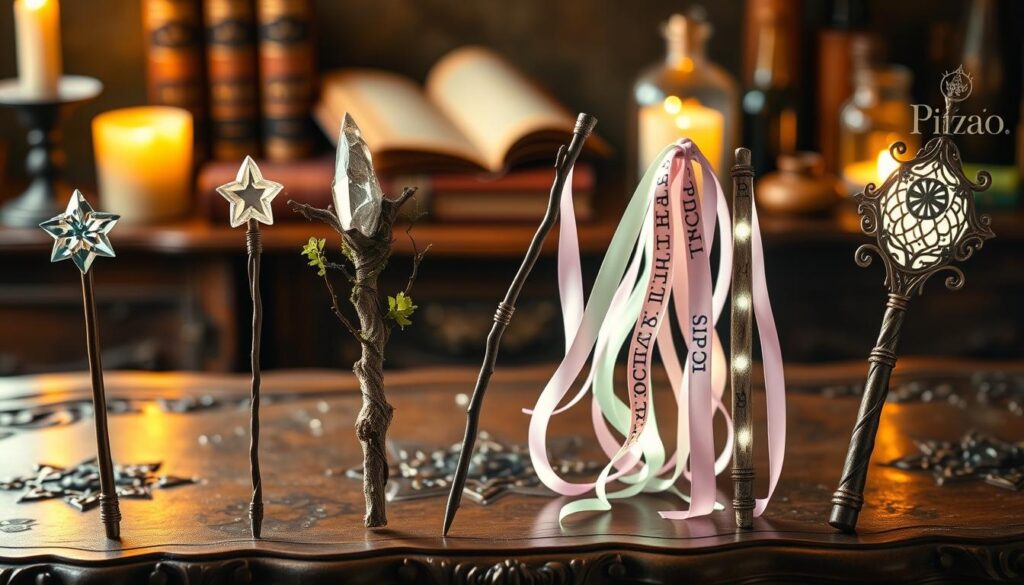
Our guides will help you achieve professional results, even if you’re new to crafting. Pick a wand that fits your character or event theme. Let’s start making magic.
Star Dowel
This wooden dowel wand is loved for its celestial topper. It’s perfect for wizards and space fairies. The key is a durable, eye-catching polymer clay star.
Start with a 3/8-inch diameter dowel, cut to 12-14 inches. Sand it smooth. For the star, condition white or metallic polymer clay. Roll it out and use a small star-shaped cutter.
Bake the star as clay instructions say. Let it cool completely. Attach it to the dowel with strong craft glue or a hot glue gun. Hold it firm for a minute. You can paint the dowel before attaching the star for extra color.
Crystal Cluster
This wand is glamorous, gem-encrusted, and perfect for a sorceress. It focuses on a stunning focal point. You’ll need a dowel, a large faux gem or crystal cluster, and smaller accent stones.
Choose a chunky crystal or a cluster of smaller gems from a craft store. Plan the arrangement on the dowel’s end before gluing. Use a jewelry-grade adhesive for a secure bond.
Decorate the wand’s handle with smaller crystals or metallic wire wrapping. This design shines under party lights and adds serious sparkle to any costume.
Nature Branch
For an earthy, organic feel, a wand from a found branch is ideal. It connects the wielder to nature. The process involves selection, preparation, and subtle embellishment.
Find a sturdy, interestingly shaped twig or branch. Ensure it’s dry and free of insects. Sand any rough spots. Seal the entire piece with a clear matte varnish or Mod Podge. This prevents splinters and preserves the wood.
Add magic by wrapping the handle with leather cord or gluing on small moss patches. You can also wire tiny faux leaves or acorns near the tip. This wand feels authentically magical.
Ribbon Streamer
Introduce motion and elegance with flowing ribbons. This wand is fantastic for fairies, dancers, or celebratory events. The streamers catch the air beautifully with every wave.
Choose a dowel and sand it smooth. Select 2-4 ribbons in complementary colors and patterns. Satin and sheer ribbons work well. Cut them to different lengths, between 18 and 36 inches.
Secure the ribbons to the wand’s tip using a strong knot covered by a decorative bead or wrap. You can also use a screw-eye hook at the dowel’s end for a swivel attachment. The result is a dynamic, graceful accessory.
Light-Up
Add a wow factor with an illuminated tip. A simple LED circuit can be integrated safely for a dazzling effect. This build is great for evening events or photo shoots.
Use a basic LED tea light or a small LED module with a coin cell battery holder. Carefully attach the LED to the wand’s tip using hot glue or wire. Conceal the wires along the dowel with electrical tape or decorative wrapping.
Secure the battery pack to the wand’s handle with strong tape. Add a discreet switch if possible. Always use LED lights as they generate minimal heat. This wand truly lights up the imagination.
| Wand Build | Core Materials | Skill Level | Best For | Key Feature |
|---|---|---|---|---|
| Star Dowel | Wooden dowel, polymer clay | Beginner | Classic wizard, space fairy | Customizable topper |
| Crystal Cluster | Dowel, faux gems, strong adhesive | Intermediate | Glamorous sorceress, royalty | High sparkle & glamour |
| Nature Branch | Found branch, sealant, natural accents | Beginner | Druid, earth sprite, rustic themes | Organic, authentic feel |
| Ribbon Streamer | Dowel, assorted ribbons | Beginner | Fairies, dancers, celebrations | Flowing movement |
| Light-Up | Dowel, LED module, battery pack | Intermediate | Evening events, photos, tech magic | Illuminated tip |
Attachment & Comfort (Combs, Elastic, Headbands)
The difference between a craft project and a wearable accessory is all about attachment and comfort. A piece that slips, pinches, or feels unstable quickly loses its magic. This section gives you the expert tips to make sure your coronets and wands feel as good as they look.
Choosing the right foundation is your first step. Each method—combs, elastic, and headbands—has its own strengths for different hair types, styles, and activity levels. The right choice ensures your creation stays put from start to finish.
| Attachment Method | Best For | Key Advantages | Potential Challenges | Pro Tip |
|---|---|---|---|---|
| Combs | Secure, updos, fine hair, detailed tiaras | Invisible from the front, extremely secure when anchored properly, minimal head pressure. | Can be tricky to position on slippery hair; may snag if not smoothed. | Always use at least two combs, angled in opposite directions for a locking effect. |
| Elastic | Active events, all-day wear, adjustable fit | Universally comfortable, easy self-adjustment, suits most head sizes. | Can flatten hairstyles; visible band may clash with design aesthetic. | Cover the elastic band with a matching satin ribbon for a polished, comfortable finish. |
| Headbands | Quick wear, thick or short hair, bold statements | Easiest to put on and remove, provides a solid base for large decorations. | Can cause pressure points behind ears; decorations may shift if not secured well. | Wrap the entire headband base with fabric or ribbon before adding decor to prevent slipping. |
Mastering Comb Attachments
Hair combs offer a nearly invisible hold. For success, placement is everything. Never attach a comb pointing straight up. Instead, angle it to follow the natural curve of the head where the hair is most dense.
Slide the comb into the hair, then gently push upward until you feel slight resistance. This creates a secure anchor. For a wire halo or tiara, attach combs at both ends, angling them toward the center. This balances the weight and prevents tipping.
To hide the comb base, cleverly position a cluster of small flowers, leaves, or crystals over the attachment point. This integrates the functional element seamlessly into your design.
Working with Elastic for Comfort
Elastic is the champion of all-day comfort and security. The key is finding the right tension—snug enough to hold without creating a headache. Measure the elastic around the wearer’s head where the piece will sit, subtracting about 1-2 inches for stretch.
For a professional look, never leave plain elastic exposed. Cover it by hand-stitching or using a strong fabric glue to attach a soft, wide satin ribbon. This prevents hair from catching and greatly enhances comfort. For children’s pieces, always use soft, non-pinching elastic and double-check the fit.
Utilizing Headbands as a Base
Plain plastic or metal headbands are blank canvases. Their smooth surface can cause decorations—and the band itself—to slide. The solution is to create grip and a unified look by wrapping the entire band.
Use a hot glue gun to secure the end of a fabric strip or ribbon to the inside of the band. Tightly wrap the material around the band, overlapping slightly, and glue the end securely inside. This wrap provides texture for glue to adhere to and makes the band more comfortable against the skin.
When securing heavier items like a crystal cluster or floral spray, create a “cradle” with additional wire or a fabric patch glued to the wrapped band. This distributes weight and prevents the decoration from pivoting sideways.
If a piece feels front-heavy, add a small, hidden counterweight like a polymer clay bead to the back. For general slippage, a single discreet bobby pin crossed over a comb or under a wrapped headband often solves the problem. Testing the fit for at least 15 minutes before an event is the sage advice that prevents mid-party adjustments.
Finishes: gilding, stones, patina, sealers
Turning your handmade accessories into something special starts with finishing. These advanced techniques add depth, sparkle, and a professional look. They make each piece truly magical.
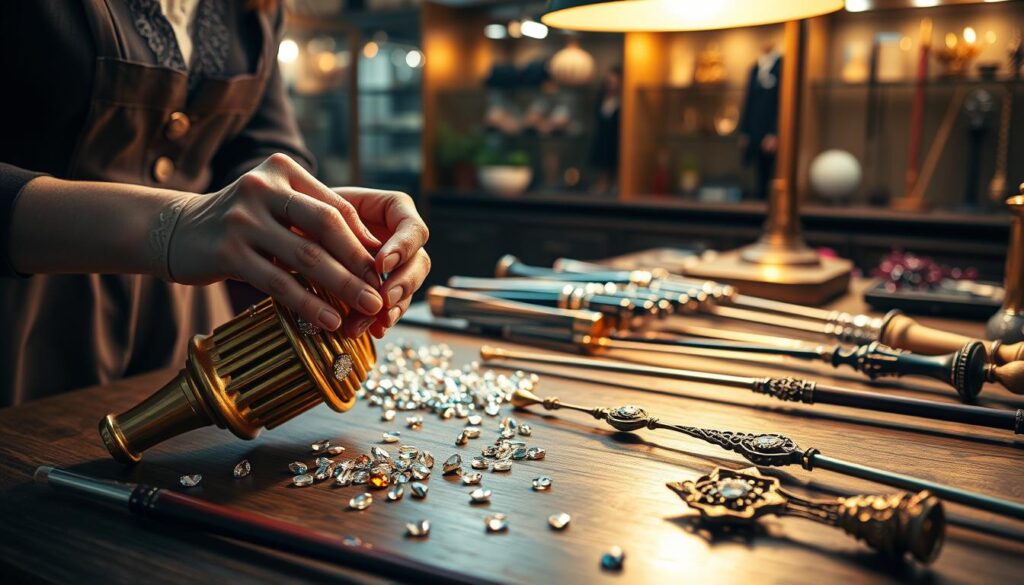
Finishes tell the story of your coronet or wand. They can show ancient royalty, starlit magic, or weathered mystery. This section will cover four key methods to achieve these effects.
Gilding
Gilding adds a thin layer of metal, making your piece instantly luxurious. You can use metallic leaf or high-quality metallic paints and waxes.
For leaf, apply a special adhesive to the surface. Once it’s tacky, place the leaf on it and brush off the extra. This leaves a delicate, shimmering foil that catches light beautifully. Metallic paints give more control for detailed work. Use a soft brush and apply in thin, even coats.
The key advantage of gilding is its transformative power. A simple wire halo becomes a regal heirloom with a touch of gold leaf along its curves.
Stones
Adding sparkle is all about where you place the stones. Rhinestones, crystals, and glass gems are popular. The secret to a professional look is in the adhesive and pattern planning.
Use strong, clear-drying craft glue or a hot glue gun for larger stones. For detailed work, a precision applicator bottle is best. Arrange rhinestones in clusters, scatter them like constellations, or line them along a wand’s shaft.
Mix sizes and colors for dynamic interest. A floral circlet might have a central cluster of large crystals surrounded by smaller sparkles. This ensures captivating light play.
Patina
Patina gives your accessory an aged, storied look. It’s as if it’s been passed down through magical generations. You can achieve this with specialty paints, washes, and even common household items.
Antiquing gels or diluted acrylic paint in dark colors work well. Apply the mixture over a base coat, then quickly wipe it away from raised areas. The paint settles in crevices, highlighting details and adding shadow.
For a verdigris effect on copper elements, try a wash of turquoise and white paint. This technique adds character and makes new pieces feel authentically ancient and powerful.
Sealers
A sealer is the essential final step that protects all your hard work. It locks in finishes, prevents tarnishing, and adds durability against handling and weather.
Choose between spray sealers and brush-on varieties. Spray sealers provide a fast, even coat but require a well-ventilated area. Brush-on sealers, like clear acrylic varnish, offer more control for detailed pieces.
Always apply sealers in thin, even layers and allow full drying time between coats. This protective barrier ensures your boutique-quality finish lasts through many adventures.
| Technique | Primary Effect | Key Tools & Materials | Pro Application Tip |
|---|---|---|---|
| Gilding | Metallic luxury & light reflection | Metal leaf, adhesive, soft brush, metallic paint | Apply adhesive only where leaf will go to control coverage. |
| Stones (e.g., Rhinestones) | Sparkle & dimensional interest | Rhinestones, precision glue, tweezers | Plan your pattern on paper before gluing to the piece. |
| Patina | Aged, antique character | Antiquing gel, dark acrylic paint, soft cloth | Wipe off excess wash quickly for a natural, highlighted look. |
| Sealers | Protection & longevity | Clear acrylic spray, brush-on varnish | Test sealer on a scrap piece first to ensure no clouding or reaction. |
Investing time in these finishing steps greatly improves your craft. A well-sealed, beautifully patinated wand or a gilded, gem-encrusted coronet doesn’t just look magical—it feels expertly made. These techniques empower you to create heirloom-quality accessories with confidence.
Kids’ Safety & Event Rules
Before a child wears a handmade crown or waves a custom wand, a safety check is key. Magical accessories bring wonder, but safety comes first. This guide covers important safety tips and event rules for creators.
Choose tools that are safe for kids. Adults should handle sharp items like scissors and glue guns. Kids can use safety scissors and cool glue under adult watch.
It’s important to use non-toxic materials. Make sure paints, glues, and sealants are labeled as safe. For a polymer clay star, check that the clay is non-toxic and fully cured.
Keeping small parts safe is a must. Use more than glue to attach decorations like beads or clay. Wire them from the back or embed them well. Always check for loose parts, even if they seem secure.
Make sure accessories are comfortable and safe. Headpieces should be light and balanced. Use soft elastics or wide headbands. Sand wand edges smooth and avoid sharp points.
Know the rules of the event and venue. Check for size limits, metal bans, and battery restrictions. Getting approval early avoids last-minute issues.
Here’s a quick guide to safety standards:
| Age Group | Tool Recommendation | Material Focus | Secure Attachment Method |
|---|---|---|---|
| Toddlers (3-5) | Safety scissors, tape, stickers | Felt, foam, fabric | Fabric glue, stitching, wide elastic |
| Kids (6-9) | Cool glue gun, blunt needle, sandpaper | Wood dowels, craft foam, polymer clay star accents | E6000 glue, tied ribbons, embedded wires |
| Tweens (10+) | Low-temp glue gun, wire cutters (with supervision) | Wire, crystals, thermoplastics | Soldering (adult only), epoxy, mechanical fasteners |
Set clear rules for using accessories. Tell kids that crowns and wands are for play, not fighting. Check them before and after each use. A little planning ensures magic stays safe and fun for all.
Gift Sets & Party Crafting Setup
Mastering crafting skills opens doors to impressing others. You can create beautifully packaged gift sets and fun group activities. This turns your crafting into a social and entrepreneurial asset.
Presenting a handmade item as a gift makes it special. For crowns and wands, consider these packaging ideas:
- Luxury Gift Boxes: Use rigid paperboard boxes with soft lining. Velvet or satin fabric inserts prevent scratches and add a high-end feel.
- Drawstring Pouches: These are excellent for wands. Choose fabrics like crushed velvet or linen for a tactile, magical touch.
- Display Stands: A small, clear acrylic stand allows the recipient to showcase their crown or wand immediately.
Personalization is key. Add a handwritten tag detailing the materials used or the inspiration behind the piece. A simple ribbon in a complementary color ties the whole look together professionally.
Hosting a crafting party turns your knowledge into a memorable experience. A successful station requires forethought. Follow this step-by-step plan for a smooth event.
Phase 1: Preparation. Pre-cut common materials like wire lengths, ribbon strips, and foam bases. Organize components into individual kits for each guest. This minimizes mess and speeds up the initial building phase.
Phase 2: Station Layout. Set up separate zones. Have a “Base Building” table with essential tools like wire cutters and glue guns. Create a “Decoration Bar” stocked with stones, feathers, and paints. This flow prevents bottlenecks.
Phase 3: Tool Management. For safety, limit the number of hot glue guns. Assign one per adult helper or use low-temperature guns. Have multiple pairs of scissors and pliers to avoid waiting.
Phase 4: Workflow Tips. Start with a five-minute demo of a simple technique. Encourage guests to help each other. Have a “finishing table” with sealers and ribbons for final touches as pieces dry.
For those seeking advanced, customizable options, explore the 3D print files. You can create custom molds for resin gems or unique decorative elements. This technology allows for precise, repeatable components that can elevate both gift sets and party projects.
Whether you’re assembling a special present for a fantasy fan or orchestrating a creative birthday party, these strategies ensure your magical accessories make a powerful impact. It’s about sharing the craft and scaling the joy.
Storage & Transport
Creating your wire crown or floral crown is just the first step. Protecting your investment ensures the boutique look lasts for many adventures to come. Organized storage prevents delicate pieces from tangling, crushing, or gathering dust.
Compartment trays or clear plastic organizers are ideal for home storage. They keep your foam tiara, polymer clay stars, and collections of rhinestones visible and separated. For smaller decorations like spare ribbon or beads, drawer dividers create custom spaces.
Transporting these accessories requires a different strategy. A single wooden dowel wand travels safely in a padded travel tube. For a full set, consider a case with padded sections. This protects detailed work secured with jewelry glue and prevents 3D print files from getting scratched.
Incorporate smart closures for safety and ease. Using Velcro or magnetic snaps on pouches, as discussed in our guide on how accessories fuel play, minimizes risks during transport and storage. This practical approach maintains the professional quality of your handmade pieces from your workshop to any event.