Welcome to a world where dreams and engineering come together. This guide helps creators, from costume designers to cosplayers, learn how to make pieces that are not just beautiful but also safe and comfy. They’ll last a long time too.
Why is it so important to focus on structural integrity? It’s all about the wearer’s health and how well they can perform. A gorgeous piece that hurts or breaks down ruins the whole idea. This is true for big wings or detailed headpieces.
Think about a simple prop, like a costume shaped like the solar system. Its success depends on ergonomic design. This means how it spreads out the weight and moves with the body. The same rules apply to rig safety for fancy corsets or heavy shoulder pieces.
We’ll look at real examples, like the Tabasco Twins corset and feathered shoulder pads. They show us how to focus on safety and comfort. Whether you’re making a unique crown or using printable templates for masks and crowns, the aim is the same. We want to create strong, empowering pieces for the wearer.
Ergonomics First
Before starting, the most important thing is how the costume fits the body. This ergonomics-first design makes sure costumes are safe, comfy, and work well. It focuses on posture, breathability, and movement.
Think of a costume as a second skin or an exoskeleton. It should support the performer, not get in the way. For long days or intense performances, ignoring ergonomics can cause discomfort and injury.
Posture, Breathability, and Range of Motion
Good costume design helps keep the wearer’s body aligned. A heavy piece or a stiff corset can cause back pain quickly. Proper weight balance is key for good posture.
For example, a “solar system” costume with a child in a front carrier needs careful design. The weight should go to the stronger core and hip muscles, not the shoulders and neck.
Breathability is also important. Non-breathable fabrics and sealed rigging can lead to overheating. Using mesh panels, ventilation channels, and moisture-wicking linings helps keep the wearer cool.
Range of motion is critical for performance. A costume that restricts movement, like a “Beautiful Oops” character, is not practical. Designers must consider the wearer’s movements when creating the costume.
- For Dancers: Ensure deep lunges, arm raises, and spins are possible.
- For Convention-Goers: Prioritize the ability to navigate crowds, sit in panels, and use restrooms.
- Universal Rule: Test all critical motions in a mock-up before final construction.
Understanding the Risk of Nerve Compression
Nerve compression is a serious safety issue. It can happen from poorly distributed weight or tight straps. This isn’t just about temporary numbness. It can cause lasting damage like tingling, muscle weakness, or chronic pain.
A common problem is a heavily beaded or boned corset on the hip bones. If the weight balance is off, it can press on the lateral femoral cutaneous nerve. This causes meralgia paresthetica—a burning pain in the outer thigh.
Also, a heavy wing rig with thin shoulder straps can compress the brachial plexus nerves. This network controls the arm and hand. Compression here can result in temporary or even permanent loss of sensation and function.
How do you prevent nerve compression?
- Widen Pressure Points: Use broad, padded straps and distribute load over larger body areas.
- Redirect Weight: Channel forces away from bony prominences and nerve pathways towards fleshy, muscular areas.
- Avoid Constant Pressure: Design with micro-breaks in mind, allowing for slight shifts in position.
Ergonomics is the unseen foundation of every great costume. It requires designers to think like engineers and anatomists. Mastering weight balance, airflow, and joint mobility is essential. It keeps performers safe, comfortable, and ready to shine.
Corset Engineering
The story of the Tabasco Twins’ duct tape corset failure is a clear lesson. True corsetry is about engineering, not just looks. Their attempt, though well-meaning, failed under the day’s demands. This shows a key truth in cosplay.
A corset is more than a fashion item; it’s a load-bearing piece. It reshapes the body and supports itself and any accessories. To be safe, it must be built like a small architectural wonder for the body.
This means you’re not just sewing fabric. You’re building a structural system. Each part has a role. The backbone of the corset is its hidden framework, known as boning types. Historical garment research from the Victoria and Albert Museum explains how structured corsetry relies on internal boning systems to distribute pressure safely and maintain shape.
The duct tape disaster was due to missing this skeleton. A real corset uses materials that bend a bit but don’t break. The choice between materials is key for both function and comfort. There are two main types:
Steel: The traditional choice for heavy support. It’s strong and keeps its shape well.
Synthetic whalebone: A modern, flexible option. It’s great for curves and movement.
Choosing between steel and synthetic whalebone is a big decision. It impacts the corset’s flexibility, durability, and shape. This choice is combined with other important factors like panel layout and seam direction.
Knowing about boning types is the first step to making a corset. It ensures the corset works right, without harm. It turns fabric into a solid base for your character.
Next, we’ll explore each part of this system. We’ll see how panels, seams, and bones work together for safety and comfort.
Panels, seam direction, waist tape, floating modesty panel; steel vs synthetic boning; safe lacing and break‑in schedule
Each part of a corset has a special job. This section explains how these parts work together. They turn fabric into a safe, supportive garment.
A popular corset, like the TaoBao option, shows how these principles work. Knowing them helps you choose or make a corset.
The Foundation: Panels, Seams, and Internal Supports
Fabric panels shape the corset’s silhouette. The number and shape of panels affect the fit. More panels mean a smoother shape around the hips and bust.
Seam direction is key for strength. Seams run vertically to handle the tension of lacing. This keeps the seams from straining and bursting open.
The waist tape is a sturdy strip inside the corset. It’s usually twill tape sewn at the waistline. It helps distribute the lace pressure away from the seams, protecting the fabric and maintaining the shape.
Many corsets have a floating modesty panel. This fabric covers the laces and prevents pinching. It’s attached only at the top and bottom, allowing it to adjust with your body.
The Backbone: Steel vs. Synthetic Boning
The bones give the corset its shape and prevent wrinkles. The choice of material affects flexibility, durability, and comfort.
Steel boning is traditional for serious shaping. It’s rigid and provides strong support. It’s best for tight lacing or theatrical costumes.
Synthetic whalebone is a flexible plastic alternative. It’s lighter and more forgiving, making it great for dance corsets or beginners.
The busks are another key part. They consist of pins and loops for a secure front closure. A well-made busk handles daily strain without bending.
| Feature | Steel Boning | Synthetic Whalebone | Best Use Case |
|---|---|---|---|
| Flexibility | Very rigid, minimal flex | Highly flexible, bends easily | Steel: Static poses, strong shape. Synthetic: Active movement, dance. |
| Durability | Extremely high, can last decades | Good, but may fatigue over time with extreme bending | Steel: Heirloom pieces, frequent wear. Synthetic: Costume pieces, moderate use. |
| Weight | Heavier, adds to garment weight | Very light, almost weightless | Steel: Where weight is not an issue. Synthetic: For large costumes or comfort. |
| Cost | Generally more expensive | Typically more affordable | Steel: Investment pieces. Synthetic: Budget-friendly projects. |
| Comfort | Can feel restrictive; requires break-in | Comfortable from first wear; conforms to body | Steel: For experienced wearers. Synthetic: For beginners or sensitive skin. |
Safe Lacing and Break-In Protocol
Proper lacing is essential for safety. Aim for even reduction, not extreme waist training. Lace from the top and bottom toward the middle for even tension.
Don’t lace too tight too fast. You should be able to breathe deeply and sit comfortably. Start with a 2 to 3-inch gap at the back.
Corsets and bodies need a break-in schedule. This period lets the fabric and bones adjust to your shape. It also helps your body get used to the corset.
- Days 1-3: Wear the corset loosely laced for 1-2 hours at home. Focus on sitting and standing.
- Days 4-7: Increase wear to 2-4 hours, slightly tightening the laces. Try light walking.
- Week 2: Aim for 4-6 hours of wear. You may achieve your desired snugness by the end of this week.
- Ongoing: Never sleep in a corset. Always listen to your body. Numbness or sharp pain means it’s too tight or not fitted correctly.
Following this gradual process protects both you and your garment. It ensures your corset remains a source of confidence and comfort, not discomfort.
Wing & Cape Rigs
The secret to comfortable, wearable wings isn’t in the feathers or fabric. It’s in the hidden harness that carries their load. Large structures like wings, capes, or massive pauldrons need a special rigging system. Simple straps or pins won’t do.
A rigging harness creates deliberate load paths. This means directing force away from delicate areas. The goal is to shift weight from the neck and spine to stronger zones like the shoulders, rib cage, and hips. Proper harness distribution is key.
Without a planned weight balance, the wearer gets tired fast. They might feel nerve compression or even injury. A good harness acts like a suspension bridge for your costume, spreading the load evenly.
Different rigging philosophies exist for different needs. A hip-focused system is great for very heavy wings. A shoulder-and-chest harness works better for broader, lighter structures. The choice depends on the costume’s total weight and the wearer’s planned movements.
The table below compares common harness approaches for wing and cape rigs:
| Harness Type | Primary Load Path | Best For | Key Consideration |
|---|---|---|---|
| Hip Belt & Suspenders | Weight transfers down to the iliac crest (hip bones) and is shared with shoulders. | Very heavy wings, long-wear events. | Must be fitted precisely to avoid sliding and pressure points on the waist. |
| Full Torso Vest | Weight is distributed across the entire rib cage and upper back. | Broad cape rigs, symmetrical wing sets. | Requires excellent ventilation to prevent overheating during activity. |
| Shoulder Yoke System | Weight sits directly on the trapezius muscles and clavicles. | Light to medium weight shoulder-mounted pieces. | Padding is critical to prevent nerve compression and bruising. |
Your harness distribution strategy defines the wearer’s experience. Always prototype with the actual materials. Test the weight balance by having the wearer move their arms, bend, and walk. The rig should feel like a secure backpack, not a heavy burden. This thoughtful approach turns a stunning visual piece into a safe, functional costume.
Harness design, load paths, counterbalance; removable vs fixed mounts; hinge and quick‑release hardware
Designing a harness for wings or capes is all about physics and safety. It’s the secret hero of any costume, making sure big structures don’t hurt the wearer. A bad harness can cause serious harm.
To get it right, you need to know about force, balance, and emergency exits. We’ll explore how safe harnesses are made, from start to finish.
Understanding Load Paths and Counterbalance
Every harness must have a clear load path. This is the path the weight of the attachment takes to the strongest parts of your body. A bad path can hurt weak areas, leading to pain and tiredness.
For back-mounted wings, the path goes up the spine and across the shoulders and hips. Wide, padded straps are key. For arm-mounted pieces, the path goes through the shoulder and down the torso to avoid wrist or elbow strain.
Counterbalance is also key. Big wings pull you back, and heavy capes pull you forward. You counteract this by shifting your center of gravity or adding weights on the opposite side. This keeps you stable and able to move.
Removable vs. Fixed Mounts: A Strategic Choice
How your harness attaches to the costume piece is a big decision. You can choose between removable and fixed mounting systems. Each has its own benefits for different situations.
| Mount Type | Stability & Security | Transport & Storage | Versatility | Best For |
|---|---|---|---|---|
| Fixed Mounts | Excellent. Permanent connection minimizes points of failure. | Challenging. The piece cannot be detached, often requiring large storage space. | Low. The harness and piece are a single unit. | Heavy, complex pieces worn for long, critical performances. |
| Removable Mounts | Very Good. Requires robust locking pins or bolts. Slight risk of accidental detachment. | Superior. The piece detaches for easy packing and travel. | High. One harness can potentially support multiple different attachments. | Event travel, costumes with interchangeable elements, or pieces needing frequent repair. |
The choice often comes down to your primary need: ultimate stability for a marathon wear, or practical convenience for transport and versatility.
The Critical Role of Hinge and Quick-Release Hardware
Safety hardware is non-negotiable. These components are your emergency exits. The two most important types are hinges and quick-release buckles.
Hinges allow for controlled movement. A shoulder hinge lets you raise your arm without the wing jamming. A back hinge can let wings fold slightly when sitting. They prevent rigid structures from snapping or putting dangerous torque on your body.
Quick-release buckles are the most vital safety feature. In a pinch, panic, or entanglement, the wearer or a helper must be able to shed the entire assembly in seconds. These buckles are designed for one-handed operation under stress.
- Center-Pull Buckles: A tug on a central tab releases both sides instantly. Ideal for chest or waist straps.
- Parachute Clips: Simple, proven hardware where a loop slides out of a clasp. Often used as a secondary release.
- Shearable Links: Plastic zip ties or weak links designed to break under extreme force, acting as a mechanical fuse.
Integrating this hardware into your overall harness distribution plan is essential. Place primary quick-release points where hands can naturally reach them, and ensure the harness falls away cleanly when released. Never design a harness that traps the wearer. Your beautiful creation should empower the performer, not imprison them.
Headpieces & Crowns
Elaborate headwear often causes neck pain and headaches. This can spoil a great costume. A well-designed weight balance makes it comfortable to wear for hours.
The Earth headpiece from an astronaut costume is a good example. It’s visually striking but heavy. Similar issues arise with geometric headbands and Yayoi Kusama’s polka-dot look. They need smart design to work.

Designers aim for a low center of mass. They place heavy parts near the head and avoid cantilevering. This keeps the neck muscles relaxed.
Choosing the right material is key. EVA foam is great for making large, light pieces. It’s easy to shape and doesn’t weigh much.
Using EVA foam lets you create big, light shapes. These can be painted and sealed for any look. For geometric headbands, layered EVA makes sharp, durable edges.
How you attach the headpiece is also important. The method should fit the piece’s weight and shape. There are three main ways:
- Headbands: Spread the weight evenly across the head. A wide, padded band is best for heavy pieces.
- Combs: Good for light pieces that need to stay in place. Multiple combs give better hold.
- Elastic Bands: Quick to put on but less stable. Suitable for very light items.
For the Earth headpiece, a sturdy headband is key. The Kusama sphere might use a headband and a rear comb for stability.
Test your weight balance early. Wear the piece for 15 minutes. Look for neck pain or tilting. These signs mean you need to adjust.
The goal is a headpiece that’s as amazing as it looks. Use EVA foam for lightness and plan your weight balance well. Your costume will be a hit, and you’ll be comfortable.
Padding, weight limit guidelines, comb vs elastic vs band; anti‑snag finishing
The difference between a stunning costume piece and a wearable accessory is in the details. It’s about the padding, weight balance, and secure attachment. These details turn a beautiful object into a comfortable, all-day accessory.
Padding for Comfort and Structure
Any part of a headpiece touching the head needs padding. Padding is not just softness; it also gives structure and prevents pressure points. EVA foam is a common, versatile material for padding.
EVA foam is lightweight, can be shaped, and cushions well. Think of the foam tubing in astronaut helmets. It’s a great example of padding. For headpieces, EVA foam strips or custom pads can line headbands and crowns.
Respecting Weight Limit Guidelines
How heavy is too heavy? A good rule is to keep a headpiece under one pound for comfort. Too much weight causes neck strain and headaches. It’s not just the total weight, but how it’s spread.
A heavy crown can pull the piece down. Always test the weight balance before attaching. If it’s off, adjust with lightweight parts or change the structure.
Choosing Your Attachment: Comb, Elastic, or Band?
The attachment method is key. It depends on hair type, activity level, and the piece’s weight.
The Security of Combs
Combs are best for thick or voluminous hair. They hold well, making them great for active wear. But, they can slip on fine hair. Use combs with smooth teeth and secure them well.
The Snug Fit of Elastic
Elastic straps fit snugly under the chin or around the head. They’re good for lightweight pieces and keep the headpiece steady. Use wide, non-roll elastic to avoid skin irritation.
The Distribution of Bands
A full headband or wide band spreads weight evenly. It’s the most comfortable for heavier pieces. It’s also good for those with short or no hair. Padding the band with EVA foam adds to the comfort.
| Attachment Type | Best For | Key Consideration |
|---|---|---|
| Comb | Thick, voluminous hair; active wear | Can slip on fine hair; ensure teeth are smooth |
| Elastic Strap | Lightweight pieces; universal fit | Use wide elastic to prevent rolling and digging |
| Headband/Band | Heavier pieces; short or no hair | Must be well-padded for all-day comfort |
Anti-Snag Finishing: The Final Guard
Finishing every edge is essential. “Anti-snag finishing” means smoothing, covering, or rolling seams and edges. This protects hair, skin, and clothes from catches and pulls.
Use bias tape or fabric to cover wires. Sand rough edges on plastic or EVA foam. Secure beads or sequins so they don’t snag. A few minutes on this step prevents wardrobe malfunctions and ensures comfort.
Materials & Tools
The modern costumer’s workshop is filled with specialized materials and tools. These help turn creative ideas into wearable art. Making a costume safe requires more than fabric and thread. It needs knowledge of how different parts work together.
Materials can be grouped by their main use. Some make the basic shape. Others add strength and rigidity. The last group focuses on finishing and details. This way, makers choose the right material for each part.
| Material Category | Primary Function | Key Properties | Common Uses |
|---|---|---|---|
| Thermoplastics | Structural Form & Strength | Heat-moldable, rigid when cool, sandable | Corset boning channels, armor plates, detailed embellishments |
| EVA Foam | Lightweight Form & Padding | Soft, flexible, easy to cut and shape | Shoulder pads, helmet liners, lightweight armor layers |
| Cardboard & Paper-Based | Prototyping & Base Forms | Inexpensive, readily available, good for testing shapes | Feathered shoulder pad armatures, lantern forms for helmets |
| Felt & Fabric | Finishing & Comfort | Provides padding, covers seams, improves aesthetics | Lining for helmets, padding for harnesses, covering structural frames |
| Adhesives & Fasteners | Bonding & Assembly | Creates permanent or temporary bonds between materials | Hot glue for quick prototypes, contact cement for foam, snaps for closures |
Thermoplastics are a big deal for costuming. They get soft when heated and can be molded into shapes. Once cooled, they stay rigid. Worbla is a favorite among cosplayers. It can be molded and shaped to make armor and details.
EVA foam is another great option. It’s light and easy to shape. You can find it in different thicknesses. Thicker foam is good for padding, while thinner sheets are for details.
The right tools are key. A good heat gun is needed for thermoplastics. Rotary tools help shape foam and plastic. Contact cement and hot glue are good for bonding.
Even complex projects start with simple materials. Feathered shoulder pads might begin as cardboard covered in felt. An astronaut helmet could start with papier-mâché before adding details. Knowing your materials helps build from simple to complex.
Thermoplastics, EVA, fiberglass basics; when to reinforce with carbon or wire armatures
Beyond fabric and thread, cosplay construction uses advanced materials like thermoplastics and EVA foam. Choosing the right material is key for a durable corset, wing, or crown. This section explains the basics and when to add internal reinforcement.
Every material has its own strengths and weaknesses. Knowing them helps avoid structural failures at long conventions. Let’s look at the three main materials for rigid costume pieces.
Thermoplastics, EVA Foam, and Fiberglass Basics
Thermoplastics, like Worbla or Sintra, melt when heated. This lets makers shape details easily. They harden into a shell, great for armor and decorations. They can be reshaped by reheating.
EVA foam is lightweight and easy to carve. It can be shaped with tools like a heat gun. But, it’s porous, so it needs a seal like Plasti Dip or glue before painting.
Fiberglass is for very strong projects. It’s made by layering resin-soaked cloth over a mold. It’s very rigid but working with it is dangerous. You need safety gear like gloves and a respirator.
| Material | Best For | Key Properties | Considerations |
|---|---|---|---|
| Thermoplastics | Detailed armor, masks, curved surfaces | Moldable, sandable, good detail capture | Can be heavy; requires heat source |
| EVA Foam | Lightweight props, large wings, padding | Easy to carve, very light, cost-effective | Requires sealing; can dent if thin |
| Fiberglass | Structural cores, load-bearing frames | Extreme rigidity, high strength-to-weight | Toxic process; needs mold; less forgiving |
When to Reinforce with Carbon or Wire Armatures
Even the best material has its limits. Reinforcement is key when physics demands it. An internal armature acts like a skeleton, preventing bends or breaks.
You need an armature in these common scenarios:
- Long Cantilevers: Any piece that extends far out from the body without support. Think of a dramatic horn, a wing spike, or a large sword blade. Gravity will cause thin materials to sag over time.
- Unexpected Load Points: Areas where someone might grab or where weight is concentrated. The joint of a large wing harness or the base of a heavy crown are prime examples.
- Dynamic Movement: Pieces designed to flex or move slightly. A wire armature allows controlled movement without fatiguing the primary material.
Carbon fiber rods offer the best strength-to-weight ratio and are ideal for long, thin supports. Aluminum wire is bendable and great for custom shapes. Even sturdy coat hanger wire can work for smaller projects. The armature should be embedded or securely attached during construction, before the final layer is applied.
Knowing when to add this hidden support is what makes a maker great. It turns a visually impressive piece into a reliably safe one.
Fit Testing Protocol
Imagine wearing a solar system costume and feeling your arms ache. A good fit test would have caught this problem right away. This issue often comes from not testing the costume for long periods. To make sure your costume looks great and feels safe, you need a detailed fit testing protocol.
A protocol is a set of steps to test your costume like it’s real. It’s like a rehearsal for your big event. It helps find problems like weight balance issues or pressure points before it’s too late.
Always test three key areas. First, check how the weight balance feels when you move. Don’t just stand there. Walk, turn, and do things you’ll do at the event. A costume that feels okay standing up might drag you down after walking for a bit.
Next, look for pressure points. Watch for red marks under straps or where the costume touches your body. These are big warning signs.
Lastly, make sure you can move freely. Can you sit down or reach up? For a corset, can you breathe well? Your protocol should answer these questions.
Here’s a simple checklist to follow:
- Static Check: Look at the costume on a dress form and on you while standing.
- Dynamic Motion Test: Do movements like squats and arm circles.
- Duration Test: Wear it for 30 minutes while doing simple tasks.
- Buddy Feedback: Have someone watch you to see if anything shifts.
The solar system costume example shows why a dynamic test is important. The weight of the planets made it unbalanced. A good test would have shown this, helping to fix it.
Take your fit test seriously, just like you do the making. This careful approach makes you a better creator. It makes sure your work is not just beautiful but also comfortable and safe, all day long.
30/60/120‑minute wear tests; sit/stand, stairs, driving, restroom drill
To make sure costumes are safe and comfy, they go through timed wear tests. These tests mimic real event conditions. This fit testing protocol is the last step before calling a costume complete.
The Progressive Testing Timeline
Fit testing isn’t just one test. It’s a progressive series of tests to find issues at different times. First, check for comfort in 30 minutes, looking for immediate issues. Then, test for 60 minutes to see if muscles get strained or if there’s pinching.
Lastly, do a 120-minute test to see how it holds up during long events or photoshoots.
Skipping the early tests can lead to missing important signs. For example, the 60-minute mark is when heavy headpieces or wing harnesses start to feel too heavy.
Simulating Real-World Activities
Testing isn’t just about looking good in a mirror. It’s about how well your design works in real life. This includes common, often awkward, activities.
- Sit/Stand: Sit in a chair and stand up many times. Does the corset or wings cause problems?
- Stairs: Walking up and down stairs tests balance with capes and headpiece stability.
- Driving: If you’ll wear it to an event, try it in your car. Can you drive safely?
- Restroom Drill: This is the most important test. Can you use the restroom without help?
The restroom drill is a must. A costume you can’t use the restroom in is stressful. The 60-minute test might show tired arms from a big costume, leading to changes before the event.
This method turns guesswork into a solid safety inspection. It makes sure your costume is not only beautiful but also comfortable to wear all day.
Emergency Exits
Emergency exits turn beautiful costumes into safe, wearable art. They address worst-case scenarios that professionals must plan for. Situations like panic, getting stuck, or sudden health issues can turn any event into an emergency.
The main rule is clear: the wearer must get out fast without tools. This rule separates amateur designs from professional ones. Planning for emergencies is key to making costumes responsibly.
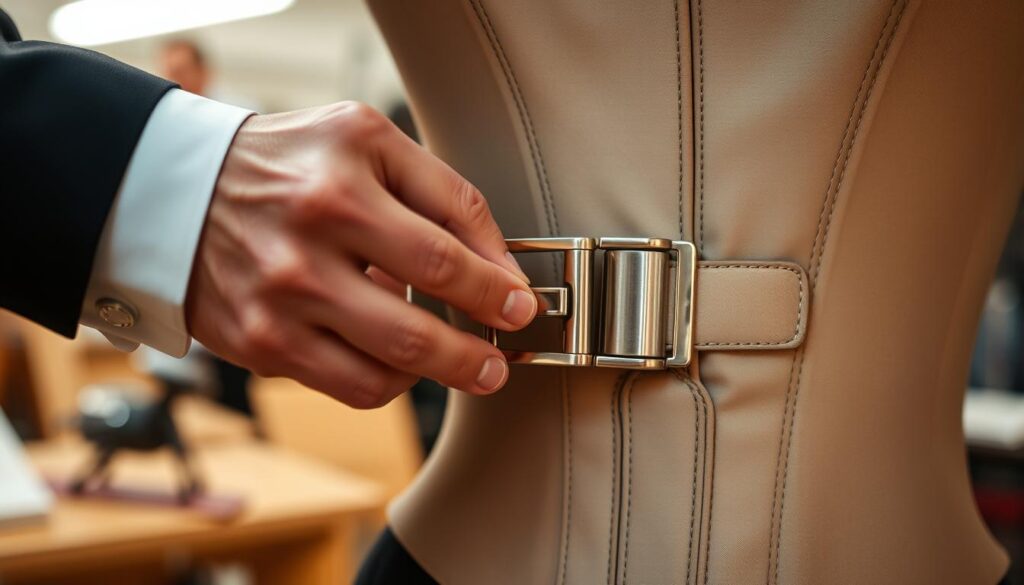
There are many ways to make emergency exits effective. Each meets different needs and parts of the costume. The table below shows the best options for makers today.
| Mechanism Type | Activation Method | Best Use Case | Key Limitation |
|---|---|---|---|
| Quick-Release Buckles | Single-pinch center release | Wing harnesses, heavy capes | Bulkier than standard buckles |
| Breakaway Snaps | Moderate pull force separation | Closure points, accessory attachments | Can accidentally detach |
| Shearable Zip Ties | Cut with safety scissors | Temporary connections, internal rigging | Requires cutting tool nearby |
| Hidden Zipper Pulls | External tab with clear access | Back closures, panel seams | Less intuitive under stress |
| Magnetic Closures | Strong pull separation | Front closures, decorative elements | Weaker hold than mechanical fasteners |
Quick-release buckles are the top choice for emergency exits. Their easy-to-use mechanism works even when the wearer is scared or disoriented. Use them on any part of the costume that holds a lot of weight.
Start thinking about emergency exits from the beginning, not as an afterthought. Test each option while wearing the whole costume. Can you find and use all the releases? Do they work with gloves on? Practice makes sure you’re ready for real emergencies.
Think about how the wearer might feel in an emergency. Panic makes it hard to use small muscles. Medical issues might affect strength or coordination. Your emergency systems need to work even when the wearer is stressed or can’t move well.
Always teach the wearer how to use the emergency exits. Show them during fittings. Explain how to activate each one. Knowing how to use these features is as important as having them.
Professional costume design means being responsible. Your costume should keep the wearer safe, not put them in danger. With emergency exits, you can make costumes that are not only beautiful but also safe and empowering.
Hidden zippers, breakaway snaps, shearable zip ties; buddy systems at events
Costumes should be safe, not restrictive. They need hidden exits for quick escapes. This ensures the wearer’s safety above all.
Designers make these exits hidden but easy to find when needed. This is about safety, not failure.
Essential Emergency Release Hardware
Choosing the right hardware is key. Each piece has a special role in emergencies.
Hidden Zippers with Long Pulls: Regular zippers are hard to use with gloves. Use a heavy-duty zipper with a long pull tab. This makes it easy to open with force.
Magnetic or Breakaway Snaps: Great for attaching cape layers or straps. They stay put until you need to release them quickly.
Shearable Zip Ties: Use weak zip ties for temporary fixes. They break safely when needed.
Quick-Release Buckles: Essential for harnesses. They should open with one press. Always test them.
Have a buddy at events. They should know how to help you. Do a safety drill before going in.
- Show them every exit: Teach them how to use hidden zippers and quick-release buckles.
- Establish clear signals: Pick a signal for “I need help now.”
- Share a toolkit: Give them scissors or a hook tool for emergencies.
This setup makes emergencies manageable. You can wear your costume safely, knowing you have help.
Safety is the best part of any costume. With hidden exits and a buddy system, you stay safe and enjoy the event.
Maker Notes
Every amazing cosplay piece comes from solving problems and finding clever hacks. This section is for that hard-earned wisdom. It’s like a conversation between builders, sharing pro tips and tricks you won’t find in tutorials.
Every costume build has its own puzzles. The real skill is knowing how to creatively deviate from instructions. Here are some common pitfalls and their elegant solutions.
- Fabric Grainline Gremlins: You cut your panels perfectly, but the corset twists. Often, the culprit is ignoring the fabric’s bias. For heavy fabrics like brocade, always stay-stitch curved edges immediately after cutting to prevent stretching.
- The “Almost Fits” Frustration: A mock-up is 95% right. Instead of redrafting the entire pattern, consider inserting a narrow, shaped gusset at the side seam or under the arm. This tiny adjustment can add just enough room without altering the garment’s silhouette.
- Boning Channel Bunching: When boning channels sewn directly to the fashion fabric create unsightly ridges, switch to a floating channel technique. Sew the channel to a separate lining layer first, then attach the lining as one unit. This distributes pressure more smoothly.
Material shortcuts can save hours. For lightweight structural shapes in wings or headpieces, thermoplastics like Worbla are fantastic. But for a smoother finish, lay a thin layer of craft foam between two sheets of the thermoplastic. The foam absorbs the texture, giving you a sandable, paintable surface.
Another piece of experience-based wisdom: your first fitting should never be in the final fabric. Use a cheap, non-stretch canvas for your initial structural mock-up. This allows you to test load paths and harness points under real stress without fear of ruining expensive materials.
Keep a maker’s journal. Sketch what went wrong and how you fixed it. This log becomes your most valuable problem-solving tool for future projects. The best builds are iterative, each one informed by the maker notes of the last.
Pattern adjustments for short/long torsos; inclusive sizing and pressure mapping
Inclusive design starts with understanding body shapes and how pressure is distributed. A standard pattern is just the beginning. To ensure safety and comfort, it must be tailored to fit the wearer’s unique body.
This process is more than just scaling up or down. It requires a maker’s keen eye for how a garment fits the body’s specific points.
Mastering Torso Length Adjustments
Incorrect torso length is a common fit issue in structured garments. A pattern made for an average body can be uncomfortable for someone with a short torso or a long torso.
For a short torso, the distance between the bust and waist is too short. If not adjusted, the corset will pinch the lower rib cage. To fix this, shorten the middle panels, not just the top or bottom.
On the other hand, a long torso needs more length in the middle panels. Without it, the garment will ride up, putting pressure on the ribs. This can also affect lower back support.
The key adjustment is made along the “lengthen/shorten” line on a pattern. This line is usually drawn horizontally between the bust and waist. Always test these pattern adjustments in a mock-up made from cheap fabric. Have the wearer sit, bend, and move to check for any issues.
Inclusive sizing is both an ethical and practical choice. It means creating a size range that fits diverse body types. This includes different torso lengths, cup sizes, and hip shapes from the start.
An inclusive approach rejects the idea of a “standard” body. It builds comfort and safety into the design. This expands your audience and makes every wearer feel valued.
This leads to the concept of pressure mapping. It’s like a diagnostic tool. Before finalizing a design, analyze where the garment applies force to the body.
- Identify High-Pressure Zones: These are usually over bony prominences like ribs, hips, shoulder blades, and the spine.
- Redistribute Force: Use curved seams, strategic padding, or widened panels to spread pressure over a softer area.
- Test for Even Distribution: During a wear test, ask the wearer to point out any “hot spots” of discomfort. This feedback is invaluable for refining your pattern.
Effective pressure mapping prevents pain and injury. It turns a rigid costume into a supportive, wearable piece. When combined with thoughtful pattern adjustments and a commitment to inclusive sizing, you create garments that are stunning, safe, and respectful to every body they adorn.
Maintenance
The real test of a costume’s quality is how well it lasts with care. A top-notch costume is a big investment in time, skill, and materials. Keeping it in good shape needs a strong care routine to protect its structural integrity.
Think of maintenance as a way to prevent problems. Small issues can turn into big problems if not fixed. A good costume maintenance plan keeps your costume safe, makes it last longer, and saves you money on repairs.
Good costume maintenance starts with a post-wear check. Don’t just pack it away after an event. Spend 10-15 minutes checking it while the details are fresh in your mind.
Here’s a quick checklist after every use:
- Corsets: Look for bent bones, frayed stitching, and stiffness. These signs can mean a broken bone.
- Wings and Rigging: Check harness straps for wear and test all buckles and hinges. Look for cracks in foam parts.
- Headpieces: Make sure everything is securely attached. Check for loose stones and broken wires.
This post-wear inspection helps catch problems early. A bent bone is easy to fix. But a snapped bone during a performance can be dangerous.
Also, set up a cleaning and conditioning schedule. Clean fabrics to avoid stains and condition leather straps. For wire armatures, a little clear nail polish can stop rust.
Your costume’s longevity shows how well you care for it. By making regular inspection and costume maintenance a must, you show respect for your craft. You turn a beautiful item into a reliable tool for performances, year after year.
Post‑wear inspection checklist; storing shaped pieces
A safe costume needs ongoing care. This final step ensures your corsets, wings, and headpieces are secure and ready for performance.
Your Post-Wear Inspection Checklist
Do this quick check after each wear. It catches small problems before they become big safety issues.
- Check for loose bones in the corset or any internal armature.
- Inspect all stressed seams for popped stitches or thread tension.
- Examine rigging points on wing harnesses for wear or damage.
- Look over headpiece attachments like combs and elastic for fraying.
- Test the function of any breakaway snaps or hidden emergency zippers.
This post-wear check is a simple habit. It keeps your pieces safe and in good shape.
Proper Storage for Shaped Pieces
Storing shaped pieces right prevents damage. Each piece needs its own method.
For corsets, store them flat or hung by their waist tape. Never hang by the laces, as it warps the panels. Keep it laced loosely or fully unlaced.
Headpieces and crowns should rest on padded stands or in boxes. Avoid heavy elements like those from Arda Wigs or custom makers putting pressure on weak spots.
Large items like wing rigs are best hung from their central harness point in a closet. Make sure the weight is balanced to avoid stress on hinges or fabric connections.
Following this inspection and storage routine protects your work. It ensures your wearable art is always ready to provide safety and spectacle.