Imagine the classroom dress-up bin. It’s a mix of imagination, with firefighter helmets and princess crowns. But it’s more than fun. It’s a child’s first step into sociology.
Play helps kids connect and learn. They soak up the world’s sounds, stories, customs, and colours through it. Dressing up boosts their thinking, social, and emotional skills.
But, it can also reinforce old stereotypes or break them. So, how do we shift from clueless to culturally-aware costumes?
This isn’t just about avoiding Halloween problems. It’s about laying the groundwork for empathy and identity. Let’s explore the intellectual reasons.
Discussing differences
Talking about cultural differences with kids can be tricky. It’s like trying to defuse a bomb with a spaghetti spoon. You want to help, but it feels like you’re not quite getting it right.
Experts say to avoid making assumptions. Don’t think every Asian-American kid knows about Lunar New Year. And don’t assume every family can afford a Día de los Muertos costume. It’s about being respectful and logical.
Putting a child on the spot as a cultural expert can be harmful. It makes their heritage seem like homework. This approach can make them feel like they don’t belong.
The “Three Fs” – Festivals, Fashion, and Foods – are often the focus. But this approach is shallow. It turns cultural celebrations into tourist attractions. Kids learn that costumes are just props, not windows into other cultures.
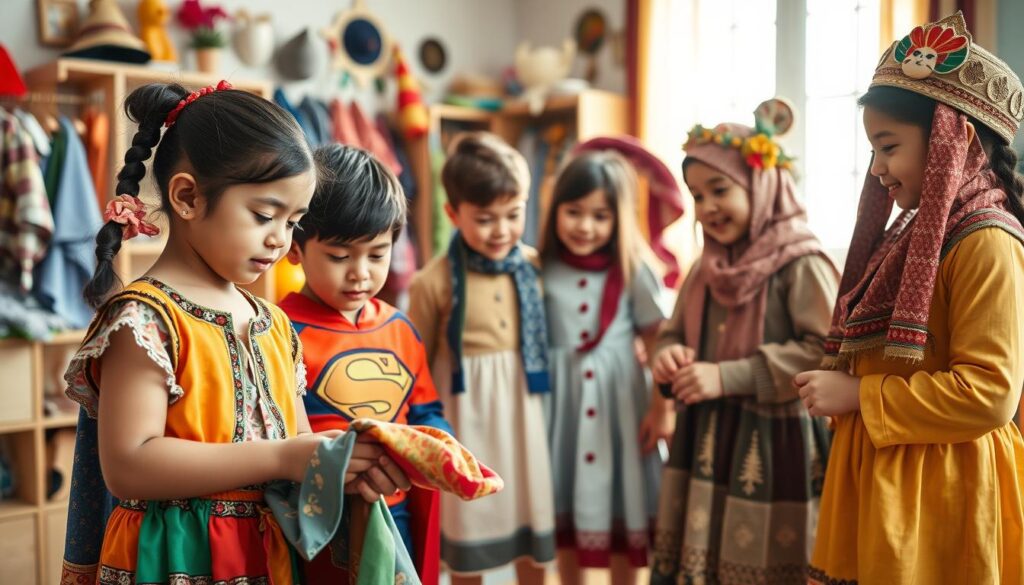
True inclusive dress-up goes deeper. It explores the “why” behind cultural symbols. This kind of exploration can teach kids about different cultures and help them understand themselves better.
After playtime, it’s important to have a thoughtful conversation. Ask questions like “Why is this different?” and “Why is that cool?” This approach helps kids learn without feeling lectured.
For example, if a child asks about a hanbok, you can talk about Korean history and values. This way, you move beyond just talking about the dress. This method aligns with inclusive design principles that focus on stories and meanings.
Here’s how to tell if an activity is shallow or meaningful:
| Aspect | The “Three Fs” Approach | Contextual Engagement |
|---|---|---|
| Focus | Isolated, often stereotypical symbols (tacos, kilts, dragons). | Stories, meanings, and everyday contexts behind symbols. |
| Depth | Memorization of a “fun fact.” | Spark for curiosity and further questions. |
| Child’s Role | Passive consumer or unwitting stereotype. | Active explorer and respectful observer. |
| Outcome | Reinforces shallow cultural checkboxes. | Builds empathy and nuanced understanding. |
This table is your guide to avoiding awkward moments. An “International Day” focused on the Three Fs might not be helpful. But starting a conversation with “I see you chose that design. What do you think it might tell us?” can be magical.
This is a delicate balance. It requires listening more than talking. It means being okay with saying, “I don’t know, let’s find out together.” This turns Dress-Up and Inclusivity into a continuous, respectful dialogue. The costume is the invitation, and the conversation is the party.
Encouraging respect
You can’t force a child to respect a culture like you can’t force them to eat broccoli. But, you can create an inviting environment. This helps them naturally develop a taste for it. It’s the leap from mere awareness to genuine cultural safety.
Think of it as moving from tolerating the weird cousin to genuinely wanting him at the Thanksgiving table.
Data shows this isn’t just feel-good fluff. When children feel culturally seen and secure, their emotional wellbeing and academic engagement skyrocket. They become little global citizens in training.
So, how do we use something as simple as cultural costumes to build this foundation? The answer is intentionality.
That “chef” hat isn’t just for making pizza. It’s a passport. Use it to explore the spices of India, the techniques of Japan, or the stews of Nigeria. This transforms Inclusive dress-up from a visual activity into a pedagogical one.
A simple prop—a piece of fabric, a special lamp—can spark a conversation about Diwali’s festival of lights or Eid’s celebration of community.
This is where we bake cultural competence into the play-dough. It’s a fancy term for knowing how to interact across cultures with respect and curiosity. The goal is to embed these perspectives as a living thread in the daily narrative, not a one-week “Around the World” unit.
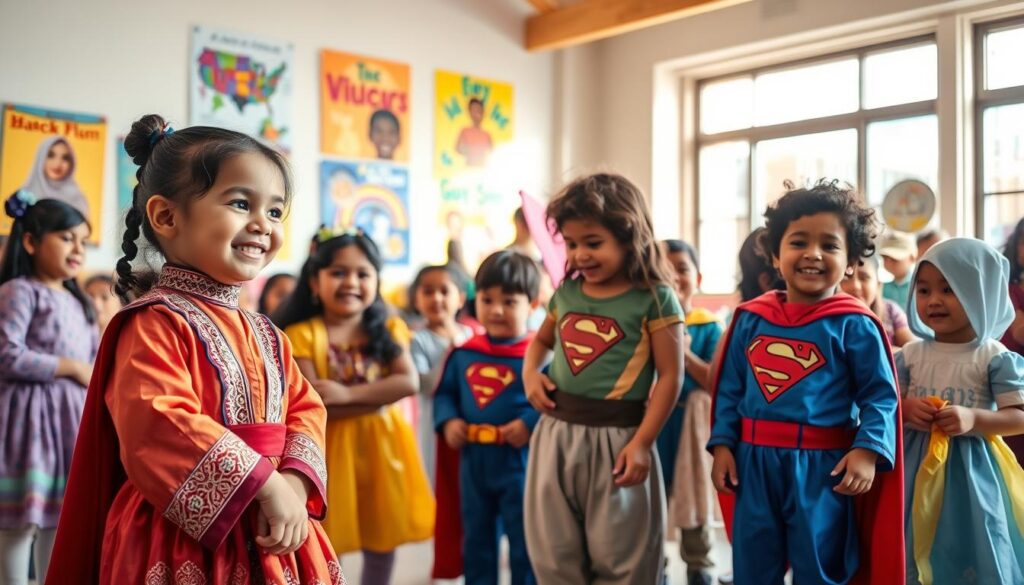
Connecting holiday observances to bigger ideas is key. Labor Day isn’t just a day off; it’s a chance to discuss workers’ rights and contributions. This approach makes cultural learning relevant and deep.
It also means actively rethinking restrictive scripts in dress-up play. Why can’t a boy be the nurturing parent at the play kitchen? Why must a “family” only look one way? Breaking these gender and role norms is a powerful part of creating a truly inclusive environment.
| Aspect | Tolerance Approach | Cultural Safety Approach |
|---|---|---|
| Primary Goal | Avoiding offense; surface-level acceptance. | Fostering belonging and emotional security. |
| Emotional Impact | Child feels “different” or merely acknowledged. | Child feels seen, valued, and able to participate fully. |
| Long-term Outcome | Passive coexistence; potentially unconscious bias. | Active global citizenship and empathetic engagement. |
| Role of the Educator/Parent | Gatekeeper of correctness; avoids “mistakes.” | Facilitator of stories and co-learner in cultural exploration. |
Embedding First Nations perspectives requires consistent, respectful integration. Resources like the animated series *Little J and Big Cuz* offer brilliant entry points for Inclusive dress-up and storytelling that honors living cultures. It’s about moving beyond the headdress (which is often inappropriate) and into the stories, connection to Country, and community values.
So, what does this look like in practice? Here are a few starting points:
- Focus on Stories, Not Stereotypes: When introducing a cultural costume element, lead with the narrative. “This is a kimono. Let’s read a story about a family preparing for a special festival in Japan.”
- Co-create with Families: Invite families to share items, photos, or stories. This ensures authenticity and builds community.
- Prop Box Over Premade Costume: Offer open-ended fabrics, hats, and tools. Let the children’s imagination, guided by stories, dictate the play.
- Connect to Universal Themes: Link specific cultural practices to feelings everyone knows—joy, gratitude, sharing, light overcoming darkness.
The endgame isn’t a child who just wears a costume. It’s a child who understands, even in a simple way, the story, values, and people behind it. That’s how you cultivate respect. You don’t mandate it; you build a world where it grows naturally.
Real-life classroom/home examples
Enough theory. Imagine a rainy Tuesday afternoon. Your dress-up bin is full of old scarves, a doctor’s coat, and fabric. It can become a sari, kimono, or superhero cape with just a flick of your wrist. This is your starting point for Dress-Up and Inclusivity.
Steal these ideas. Use a world map puzzle as a treasure hunt for stories. Let an international cookbook inspire playdough dumplings. Build a diverse doll collection where role-play mirrors the real world. The goal is simple: make inclusion tangible.
Inclusive dress-up thrives on low-budget hacks. A cardboard box is a passport. Music from Play Matters Sing&Grow’s global playlist sets the scene. Celebrate everything from Purim to Pride by focusing on stories, not stereotypes. This way, cultural costumes become tools for connection, not caricature.
The data backs the fun. Structured play with diverse toys builds empathy. The best learning looks like mess-making. It sounds like laughter. It feels like a world where every child sees themselves in the story.