Do you remember digging through your parent’s closet as a kid? It was magical. A scarf became a royal cape, and a colander was a space helmet. It was more than just fun; it was starting a collaborative creative process.
Joint dress-up is like family game night for the creative. You, the adult, become a part of your kid’s story. Together, you create adventures where anything can be anything.
This isn’t just about making a mess. It’s about playing roles and believing in each other’s stories. It’s a special way to connect, unlike watching screens.
Your “costume trunk” is a way to connect with your kid. It’s filled with old clothes, cardboard, and scarves. Keeping these items ready helps tell new stories together.
This simple activity deepens your bond with your child. For more ideas, check out these matching Halloween costume ideas that make your stories even better.
Benefits to trust & communication
The foundation of family trust is built in the living room, not in therapy. It starts with agreeing that invisible dragons are real. This Parent-Child Bonding Play is different from regular talks. It’s like a secret code where costumes are the keys and “you be the patient” means “I need control.”
When you let a five-year-old doctor examine you, you’re showing vulnerability. The roles change. You become the subject, and they have all the power. Agreeing to pretend the “shot” won’t hurt is like putting trust into a bank.
Pretend play is a safe place for psychology. Here, you can test boundaries without fear. You learn to read each other’s signals. For example, does your face show real pain or are you just playing along?
Dress-up and role-play help build trust and communication skills. It’s like building a bridge of emotions. Research shows that this play helps develop:
- Social-Emotional Intelligence: Reading faces and understanding motives. It’s like stepping into another’s shoes.
- Verbal & Non-Verbal Communication: It’s about negotiating and using tone and gesture to mean more than words.
- Self-Regulation & Perseverance: Remember the “Batman” study? Kids pretending to be Batman kept going at hard tasks. The role helped them push past limits.
- Cooperative Problem-Solving: When the castle has no door, you work together to solve it. It’s a fun way to practice teamwork.
This is where Parent-Child Bonding Play becomes real. Your participation shows that their world matters. It’s not just about having fun. It’s about creating a story where their ideas are valued.
This play builds a bridge of trust and communication. It’s filled with laughter and real listening. It’s where a child learns that their voice is heard, even when they’re pretending to be someone else.
So, the next time you’re given a crown or a cape, remember what’s happening. This family playtime is more than just playing. It’s building trust that lets them talk to you about real things later.
Creating family traditions
What if the strongest bonds aren’t forged on special days, but in the silly, costumed chaos of an ordinary evening? Forget the forced, picture-perfect holiday rituals. The most resilient family traditions are the gloriously absurd bits of recurring theater born on a random Tuesday.
This isn’t about adding more to your calendar. It’s about strategically investing in your family’s culture by ritualizing the mechanism of play. When you declare “Costume Friday” a thing or institute the monthly “Superhero Lunch,” you’re doing more than being quirky. You’re building a living, breathing family lore.
From Periphery to Priority: The Calendar Shift
The magic happens when you move dress-up from the playroom’s periphery to the center of your shared schedule. This simple act signals that imagination is a valued family priority. It transforms sporadic family playtime into an anticipated event.
This calendar shift is the engine of genuine Dress-up parent bonding. You’re no longer just playing; you’re world-building together. In that shared, imagined world, your roles flatten. Parent and child become co-conspirators and collaborators.
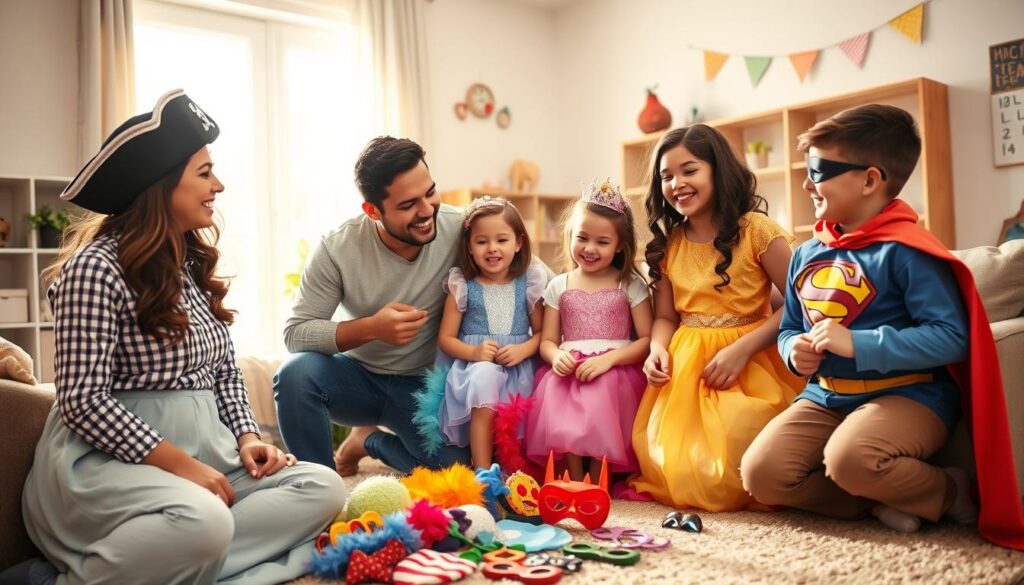
The best part? This doesn’t require finding new time. It’s about reframing the time you already have. That walk to the park? It’s now a mission for the Royal Explorers Guild. Saturday morning pancakes? They’re the culinary creations of the Cafe du Costume.
Encouraging kids to wear their creations in public—whether to the grocery store or the library—invites positive community feedback. These become your stories. “Remember the time Mom wore the dinosaur tail to get milk?” That’s the lore that outlasts any toy.
Ready to start building your own tradition? It’s easier than you think. Here are a few ways to weave playful learning into your routine:
- Themed Meal Nights: Taco Tuesday becomes “Space Ranger Fuel Station.” Cooking together is part of the act.
- Errand Adventures: Turn the supermarket into a treasure hunt for a mythical beast’s ingredients. This is family playtime in the wild.
- Weekly Character Day: Pick a day where everyone comes to breakfast as a book character, historical figure, or animal. It’s sustained Dress-up parent bonding without the Halloween pressure.
- Storytime Spin-Off: After reading a book, spend 15 minutes acting out what happens next in costume.
The goal is collaboration, not perfection. You’re not directing a play; you’re a fellow actor in an improv scene. This shared creative process builds a unique family identity. For a more structured approach to establishing these playful routines, a structured monthly play plan can provide fantastic scaffolding. Ultimately, you’re not just creating traditions. You’re building the inside jokes, stories, and shared language that will define your team for years to come.
Why Dress-up is Important for Parent-Child Bonding
Dress-up play is more than just fun for kids. It’s a powerful way for parents to bond with their children. This activity helps create a special connection between them.
When parents join in on dress-up play, they show their kids they value their imagination. This makes the child feel seen and understood. It’s a way to connect on a deeper level.
Playing dress-up together also helps parents understand their child’s perspective. It lets them see the world through their child’s eyes. This builds empathy and strengthens their bond.
It’s a chance for parents to be creative and have fun with their kids. Dress-up play encourages imagination and creativity. It’s a way to explore different roles and stories together.
By engaging in dress-up play, parents can create lasting memories with their children. It’s a special way to spend quality time together. It fosters a sense of closeness and connection.
So, dress-up play is not just for kids. It’s a valuable way for parents to bond with their children. It encourages creativity, imagination, and connection. It’s a fun and meaningful activity for the whole family.
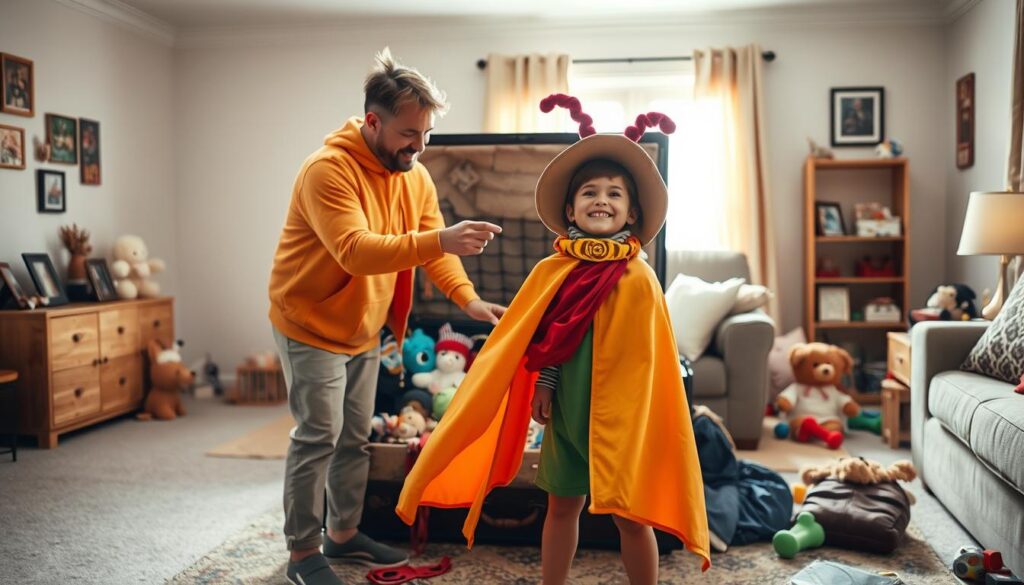
Benefits of Dress-up Play for Parent-Child Bonding:
- Encourages creativity and imagination
- Creates a sense of connection and closeness
- Helps parents understand their child’s perspective
- Builds empathy and strengthens the bond
- Creates lasting memories