Forget the academic calendar. The real syllabus for the modern parent is a seasonal book costume calendar. It’s a never-ending parade of themed events that starts when school begins.
That crumpled flyer isn’t just paper; it’s a summons. From Red Ribbon Week to the “12 Days of Holiday Dress-Up,” we face a year of glitter and glue guns.
This isn’t about mere survival. It’s about strategy. Why do we choose literary themes in October over scary ones? How does March become a Seussian kingdom?
We’re here to break down the school year’s story. This is your strategic guide before the battles with felt and pipe cleaners start.
Events & suggested titles
“Pajama Day” is more about checking if families work well together than just being comfy. School flyers show fun themes, but each one tells a story. “Crazy Sock Day” might be fun or a test of how well parents do laundry.
Every theme day is a chance to dive into a story. This turns finding a book week costume into a journey through literature. It makes spirit week a lesson in style.
“Career Day” is often just a small lab coat or tool belt. But, it can be so much more. Imagine your child as Rosie Revere, Engineer, showing how failure leads to success. The costume starts a conversation about real bravery.
“Superhero Day” usually means just wearing a cape. But, what if we celebrate smart heroes? Dressing up as The Paper Bag Princess shows how cleverness can win. A Ms. Marvel costume shows a hero we can all relate to. It’s about the story, not just the look.
Events like “Red Ribbon Week” or “Character Parade” are more than just wearing red or a favorite hat. They’re a chance to show virtues like kindness or courage. A “Literacy Parade” is the perfect time to show off your favorite book character.
To make this idea real, here’s a guide for pairing events with books that add depth.
| Common Spirit Day | Literary Lens (Book Suggestion) | Thematic Elevation |
|---|---|---|
| Pajama Day / Cozy Day | Llama Llama Red Pajama by Anna Dewdney | Shifts focus from just sleepwear to the comfort of routine and waiting patiently for a caregiver—a deeply relatable preschool emotion. |
| Wacky Hair Day | Stephanie’s Ponytail by Robert Munsch | Celebrates individuality and non-conformity. The wackiness has a purpose: being uniquely yourself, despite what others say. |
| Decades Day (e.g., 80s) | Julián Is a Mermaid by Jessica Love | Instead of generic neon, explore self-expression through time. The book’s focus on costume and identity fits any “dress-up” decade theme beautifully. |
| Book Character Day | The Day You Begin by Jacqueline Woodson | Go beyond the obvious protagonist. This choice honors the quiet courage of sharing your unique story, perfect for a shy child. |
| Career Day | Rosie Revere, Engineer by Andrea Beaty | Highlights STEM, resilience, and the idea that a “career” can be about passionate problem-solving. |
This table is just a starting point. It shows how to think about spirit week differently. Instead of just dressing up, think about what each day means. “Twin Day” could be about friendship, like Frog and Toad.
When we ask, “Who could they become?“, we turn school events into stories. It makes every costume search a journey of self-discovery, not just a fashion choice.
Quick Builds per Month
The clock reads 9:47 PM. The project is due at 8:15 AM. This is where theory meets the hot glue gun.
We’re not making fancy clothes here. We’re turning a junk drawer into literary magic. A red sweater and construction paper become The Cat in the Hat. A yellow raincoat and stuffed monkey turn a child into Curious George.
It’s like quick thinking in class. Our costumes are more like MacGyver tricks than fancy fashion.
The aim isn’t to be perfect. It’s to look like we planned it all. And have a photo that says, “We totally planned this.”
We’ll show you how to do it month by month. This matches up with events like Read Across America. It’s a seasonal book costume calendar for those in a rush. Because sometimes, the best ideas come at 10 PM.
How to Create a Halloween Book Costume
Creating a Halloween book costume is a fun and creative way to celebrate your favorite stories. Whether you’re dressing up as a character from a classic novel or a beloved children’s book, there are a few steps you can follow to bring your costume to life.
Step 1: Choose Your Book
Start by selecting a book that you love and that you’d like to create a costume for. Consider the characters, settings, and themes in the book to get inspiration for your costume.
Step 2: Research the Character
Once you’ve chosen your book, do some research on the character you’d like to dress up as. Look at illustrations, descriptions, and any other references you can find to get a better understanding of their appearance and personality.
Step 3: Gather Materials
Make a list of the materials you’ll need to create your costume. This may include fabric, felt, cardboard, paint, and other craft supplies. Consider the colors, textures, and details that are important for your character’s costume.
Step 4: Design Your Costume
Sketch out a rough design for your costume. Consider the character’s clothing, accessories, and any props that may be relevant to their story. Think about how you can incorporate these elements into your costume.
Step 5: Start Crafting
Begin crafting your costume using the materials you’ve gathered. Follow your design and add details such as embroidery, appliques, or paint to bring your character to life. Don’t be afraid to get creative and add your own personal touches to make your costume unique.
Step 6: Add Accessories
Once your costume is complete, add any accessories that are relevant to your character. This could include hats, belts, jewelry, or props. These details can help complete the look and make your costume even more authentic.
Step 7: Practice Your Character
Before wearing your costume, practice your character’s mannerisms and expressions. This will help you get into character and make your costume even more convincing. Consider practicing your character’s dialogue or actions to fully immerse yourself in the role.
Step 8: Show Off Your Costume
Once your costume is complete, show it off! Share photos of your costume on social media, attend costume parties or events, or simply enjoy wearing it to celebrate your love for books and reading.
Creating a Halloween book costume is a fun and creative way to celebrate your favorite stories. With a little bit of imagination and some crafting skills, you can bring your favorite characters to life and show off your love for reading.
| Benefits of Creating a Halloween Book Costume |
|---|
| 1. Celebrate your love for books and reading |
| 2. Showcase your creativity and crafting skills |
| 3. Connect with other book lovers and share your passion |
| 4. Create lasting memories and have fun |
Classroom & Library Tie‑Ins
Let’s be honest. The outfit is the shiny lure. But the real catch? That happens after the parade ends and the classroom door closes.
A book week costume is the ultimate conversation starter. It opens the door to deeper literacy engagement. A child dressed as Bilbo Baggins isn’t just wearing a cloak—they’re carrying a portal to Middle-earth into your classroom.
This is where the magic shifts from passive wearing to active learning. That “Fantasy Day” attire? Perfect segue into a read-aloud of The Hobbit or a library display on world mythology. “Animal Day” becomes a springboard for a non-fiction deep dive into habitats and ecosystems.
The library transforms from a quiet backdrop into a dynamic stage. Imagine a “Literary Detective Day” with a clue-based scavenger hunt through the stacks. Or an “Author Day” where kids present mini-biographies of the writers they’re channeling.
These library events create the “line and sinker” to the costume’s hook. They’re the School Spirit Week activities with real scholarly teeth—unity walls celebrating shared stories, talent shows for budding orators, community service through reading buddies. The dress-up is just chapter one.
Displays, readings, service projects
The classic spirit week is like a sugar rush. It’s fun but short-lived. Photos are great, but memories can fade quickly. What if we could turn that energy into something lasting?
We’re moving from just having fun to creating lasting memories. Our goal is to make a real impact, not just a fleeting event.
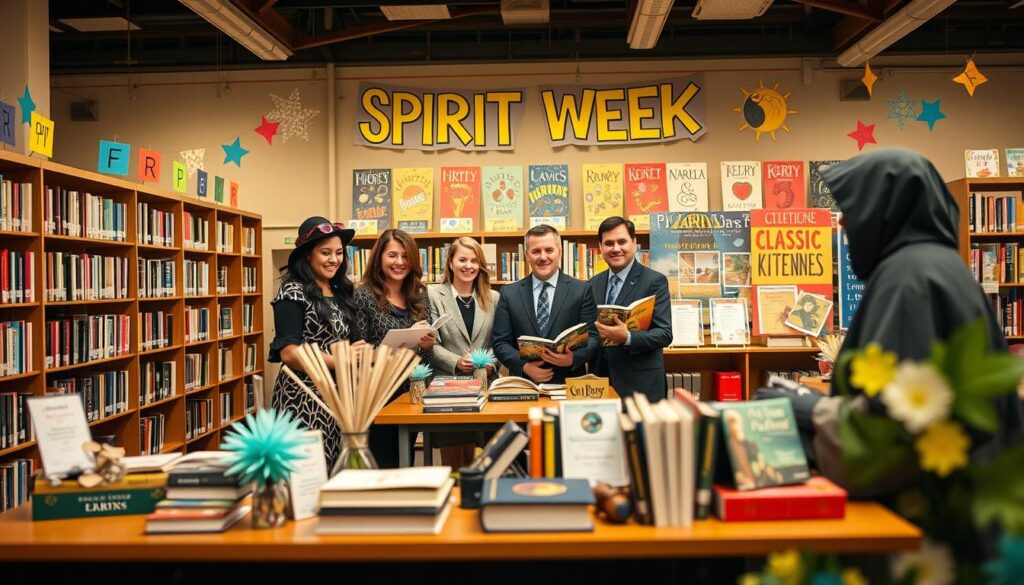
Start with a display that sparks curiosity. The “Book Faces” project is simple yet powerful. Students pose with a book cover over their face, creating mystery and intrigue.
But displays are just the start. Service projects are where the real magic happens. The “Reading Buddies” project pairs older students with younger ones. They read together, creating a special bond.
Looking inward is also key. The “Memory Jars” project asks students to write about a classmate’s positive traits. It’s a way to celebrate each other’s strengths.
This activity goes beyond just costumes. It shows who we really are. These jars become a lasting reminder of our positive qualities.
So, how do these pieces fit together? They form a strategic plan to create lasting impact. The table below shows how to turn energy into legacy.
| Activity Type | Core Output | Community Impact | Setup Complexity |
|---|---|---|---|
| Hallway Display (e.g., Book Faces) | Visual conversation starter; shared aesthetic experience. | Low-barrier engagement; fosters school-wide identity. | Low (needs space, printing, tape). |
| Reading & Performance (e.g., Reading Buddies, Music Video) | Shared narrative; skill demonstration (reading, acting). | Builds cross-grade bonds; showcases student talent. | Medium (requires coordination, maybe simple tech). |
| Service & Collaboration (e.g., Memory Jars, Community Clean-up) | Tangible artifact or improved environment; emotional resonance. | Strengthens internal bonds or external community ties. | Variable (Jars are low; off-campus projects are higher). |
We’re using spirit week as a starting point. A scavenger hunt can uncover school history. A collaborative art mural can show our shared story. The music video is our highlight reel.
The real magic happens after the noise fades. It’s in the notes, the memories, and the displays that make us think.
This is how we build a lasting culture. It’s not just one day of fun. It’s about turning that energy into projects that last.
Budgeting & Reuse
Let’s talk about a secret: the themed industrial complex. That fancy Wizard of Oz costume, worn for just seven minutes in October, is a big waste. It’s a reminder of money spent on something that’s now just taking up space.
We suggest a better way. Imagine a world where creativity meets thriftiness. The first step is simple: find something you already have. It’s not about missing out; it’s about being smart with what you have.
Introducing the “Modular Costume Core.” Start with black pants and a solid shirt. Then, add a few accessories to turn it into a pirate, wizard, or detective. It’s like a capsule wardrobe for playtime.
A “theme week box” is also a game-changer. It’s filled with reusable props and key pieces. That Madeline outfit your kid grew out of? It could be another child’s dream for Read Across America. Swapping is better than buying new every month.
This approach is all about being smart with your money. It’s about winning by not following the expensive rules of the game.
Rotation bins, swap days
Imagine a system that makes changing costumes easy, thanks to museum archivists. It turns Halloween leftovers into a valuable collection. This is more than just organizing—it’s turning costumes into magic.
Start with the Costume Swap Carnival. It’s best right after Halloween, when you’re regretting that expensive outfit. Or use it before your school’s spirit week. It’s simple: people swap when they see yesterday’s mistakes.
- The Sorting Protocol: Sort costumes by size (Toddler, Child, Teen). Avoid vague labels to prevent fights.
- The Quality Gate: Only accept costumes that are in good shape. Send stained or broken ones for repair or recycling.
- The Currency System: Use colored tickets for trades. One costume in = one ticket. This stops arguments over items.
- The Fun Factor: Create a “Style Lab” for kids to mix and match. It’s a fun workshop.
This system turns swapping into a fun event. It helps with the halloween book costume problem. Plus, it makes costumes last longer.
For your own collection, try the Rotation Bin System. It’s like a costume emergency kit. You need three bins:
- Headgear & Hats: Items like crowns, wizard hats, and animal ears. They define a character quickly.
- Capes & Overlays: Pieces that change a character. A red cape makes you a superhero; a black one, a vampire.
- Character-Specific Props: Items like Harry’s glasses, Sherlock’s pipe, or Dorothy’s basket. They add depth to a costume.
This isn’t just cleaning up. It’s organizing strategically. When you hear about spirit week‘s “Storybook Character Day,” you’re ready.
The rotation bin system saves you from last-minute stress. That cape bin? It’s been used for pirate, monarch, and superhero costumes. Your halloween book costume from October can become February’s outfit with a simple prop swap.
Use both systems together. Host a swap to refresh your community’s costumes. Organize your own with rotation bins. You’re not just storing items. You’re building a collection.
The real win? When next year’s spirit week comes, you’ll be ready. You’ll pick from your bins, not frantically search. Treating costumes as a collection, not clutter, is powerful.
Inclusivity Checklist
Let’s be honest for a moment. Literary celebrations should spark imagination, not exclusion. Yet every year, I watch the same pattern unfold. Some kids arrive as storybook royalty while others feel like background characters in their own educational narrative.
This isn’t about political correctness. It’s about basic human dignity. When we plan for Read Across America or any book-focused event, we’re crafting cultural touchstones. What messages are we stitching into those book week costume choices?
Representation matters profoundly. A child seeing themselves in a story isn’t just feel-good rhetoric. It’s academic rocket fuel. It tells them their experience is worthy of literature, that their imagination belongs in the canon.
So before you raid the dress-up box, run through this checklist. Consider whose stories you’re celebrating. Think about which voices get amplified. Are we merely recreating the same tired tropes, or building a more expansive literary universe?
The goal is simple yet radical. Every child should find a doorway into the celebration. Every student should feel the electric connection of seeing their reality reflected back through fiction. That’s when reading transforms from assignment to identity.
Weather, mobility, sensory notes
The gap between a perfect book character and a comfy costume is huge. We’ve all seen kids look magical for just a few minutes before reality hits. It’s not just about looks; it’s about costume ergonomics.
Weather is the biggest challenge. A sunny day can turn cardboard armor into a hot box. A sudden cold snap can make a fairy wing set too chilly. The key is to layer up smartly.
Imagine creating a climate-controlled version of your favorite character. Paddington’s duffle coat is warm, but add a thermal layer for cooler days. A wizard’s robe works well over leggings and a tee. It’s all about the “Layers Day” idea in fiction.
But then there’s mobility. A long princess gown can be a tripping hazard and a mess on grass. A heavy cardboard robot suit can be hot and hard to move in.
Before the event, test your child’s costume. Can they walk, sit, climb, and use the bathroom in it? If not, it’s a design issue, not a child problem.
Sensory issues are also key. A scratchy helmet lining or a tight mask can cause big problems. These are not just minor issues; they’re serious.
Find out what might upset your child before Halloween. For a Cat in the Hat costume, use clips instead of elastic. For a knight, use soft fleece in the helmet. Choose fabrics that feel nice against the skin. A happy child in a simple costume is better than a miserable one in a fancy one.
The main goal of library events or Halloween is to have fun. A costume should enhance the fantasy, not hinder it. It’s about finding a balance between practicality and creativity.
Parent Communication Templates
We’ve all been there. The school sends an email, and a flyer might make it home. But the info really hits home when your child mentions it at bedtime. “Oh, by the way, I need to dress as my favorite book character tomorrow.” This leads to parental panic.
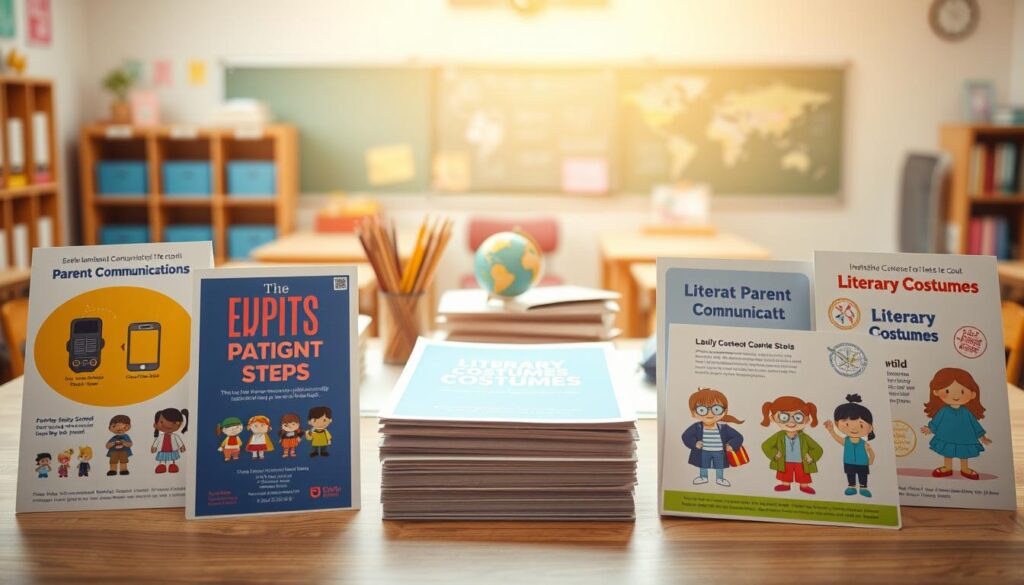
This isn’t just bad luck. It’s a bigger issue. Emails get lost, and flyers crumple. Important details about a Read Across America celebration or spirit week often get missed. Parents end up scrambling to find out what’s happening.
Let’s change this. Good communication shouldn’t catch you off guard. Below, you’ll find clear, easy-to-use templates for parents. They’re not just official documents. They’re tools to connect us.
Our aim is simple. We want to turn you from a frantic parent into an informed partner. When schools and parents really talk to each other, amazing things can happen.
Permission, care, photo policy
Getting ready for school events means more than just excitement. It’s about having a permission slip that’s clear and easy to understand. We’re here to help make the legal stuff simple.
For events like halloween book costume or book week costume celebrations, the permission slip is key. It’s like a contract that tells parents what’s happening, when, and where. It also explains what their child needs and what they should know.
A good permission slip answers all the big questions before anyone even asks. This stops the 3:00 PM panic calls from confused parents.
| Permission Type | Key Components | Parent Action Required | Teacher Notes |
|---|---|---|---|
| General Event Participation | Date, time, location, activity description, required items | Signature, emergency contact verification | Keep copies for all students; have extras for book week costume helpers |
| Photo/Media Release | Usage scope (website, newsletter, social media), duration, opt-out instructions | Checkbox for consent, signature for denial | Separate form allows nuanced choices; critical for halloween book costume events |
| Costume/Prop Safety | Material restrictions, size limits, mobility considerations | Acknowledgment of guidelines | Reference during pre-event reminders; avoids last-minute issues |
| Off-Campus Parade (if applicable) | Route map, supervision plan, return time | Signature, alternative activity consent | Coordinate with administration; essential for liability coverage |
The photo policy is very important today. It’s not just about rules—it’s about respecting privacy and celebrating achievements.
Write a clear statement about photos. Say where they can be used: the school website, a parent portal, the yearbook. Say how long they’ll be used: this year only. Make it easy for parents to say no.
This isn’t about stopping fun. It’s about making sure parents are okay with their child’s photos. Taking pictures of halloween book costume parades or book week costume activities creates memories. Make those memories with permission.
Now, let’s talk about care—the heart of the paperwork. Your plan should include everyone, not just the perfect few.
Remember, if a child forgets their halloween book costume or book week costume, have something simple ready. A wizard hat, a superhero cape, or a bookmark. It’s not about giving out free stuff. It’s about making sure no one feels left out.
Make a “Costume Care Kit” for teachers. Include safety pins, tape, scissors, and wet wipes. Why? Because even the best book week costume can have a problem. Be the team that keeps the show going.
This trio—permission, policy, care—is the base of a great event. It’s the behind-the-scenes work that lets the magic happen. Get these right, and you can focus on the fun. You’ll create a safe, joyful, and inclusive event for every young reader.
Photo Ideas
The usual class photo is like beige carpet—it shows an event happened but doesn’t tell us how it felt. Your goal is to capture the end of your book week costume celebration as a story, not just proof.
Forget the boring, stiff photos. Think like a movie director. Take pictures of action, like Hermione in mid-spell or the Very Hungry Caterpillar about to eat. Create a “silly pose” station for fun photos.
Try recreating book covers, with the child holding the book next to their face. This makes photography part of the library events.
But, dealing with hallway lighting can be tough. Look for windows. Getting a real smile is about distracting them, not just telling them to smile. Ask about their favorite snack.
The aim isn’t perfect photos. It’s the real moments—the secret whispers between pirates, the serious look of a young scientist. This way, you create a visual story of the day.
Banner crops for school page
The homepage banner crop is where fun and digital marketing meet. It’s like your school’s digital welcome sign. It’s not just for looks; it’s a tool to engage parents and boost school pride.
Analytics show a good banner keeps people on your site longer. It tells visitors, “Look what we’re doing here.” Your goal is to grab their attention.
Forget vertical photos. The banner crop is all about landscape. You need a 3:1 aspect ratio. It’s like a billboard for your school.
Negative space is key. It gives your text room to breathe. Clear, readable text is essential for announcements about library events and spirit week.
Choose images that show your school’s diversity. Go for dynamic shots with lots of kids. Avoid the single-file-line cliché.
Look for images with clear focal points. Use the rule of thirds to place key action off-center. This makes your banner interesting and leaves room for your headline.
Good lighting is a must. Avoid dark, grainy photos. Use bright, well-lit images from library events. Faces should be clear, not in shadow.
Your banner should show the spirit of spirit week or the excitement of a reading event. Choose photos with expressive faces and clear stories. What does this image say about your school’s culture?
This is the final step in the feedback loop. You’ve planned and executed events, now market their success. A strong banner shows parents the value of their involvement. It turns a fun day into a lasting memory.
Your homepage is the community’s window. Make them want to look in. A strategic banner does more than fill space. It builds excitement for the next library event and spirit week. That’s marketing that matters.
End‑of‑Year Costume Parade
After months of reading and dressing up, we reach the big day. It’s like the Super Bowl halftime show, but with Dr. Seuss and less lip-syncing.
This isn’t just a walk around the playground. It’s the culmination of your seasonal book costume calendar. It’s where every character comes to life. We’ll handle the details like routes and schedules. But the magic is in the philosophy.
Forget about competitions and prizes. This parade celebrates your imagination from a year of reading. It’s the emotional payoff, from the first steps in October to the confident strut in May.
We’ll show you how to make a true Read Across America moment. It should feel like a community festival, not a school event. Our goal is to create a memory book for every child, celebrating their journey, not judging it.
Memory book, donation guide
The confetti settles. The last photo is snapped. Your epic spirit week has reached its final curtain call. Now comes the sage’s final lesson: how to turn fleeting joy into lasting community assets.
Create a simple Memory Book page. Think of it as a digital scrapbook for your school’s narrative. Capture those candid shots from the costume parade. Include quotes from kids about their favorite characters. This isn’t just nostalgia; it’s institutional memory. It proves your library events and spirit week activities build real connection.
Next, the Donation Guide. What to do with the dragon costume that no longer fits? First, check the school’s rotation bin. That green fabric could be a pirate’s tunic next October. Consider local partners like the Children’s Theatre of Charlotte or a community center. Even a family shelter might welcome dress-up clothes for imaginative play.
This closes the loop with grace. It transforms clutter into curriculum. An outgrown superhero cape donated today fuels another child’s story tomorrow. Your thoughtful exit strategy makes next year’s planning easier. It turns a single event into a sustainable cycle of creativity.
The final snapshot isn’t of the parade. It’s of costumes finding new homes and memories being preserved. That’s how you build a tradition, not just host a party. The end of this year’s spirit week is simply the first draft of next year’s plan.