Let’s be honest – we’ve all secretly cheered for the bad guy at some point. Whether it’s Darth Vader’s tragic grandeur or Maleficent’s majestic menace, there’s something compelling about the dark side.
When children slip into those kids villain costumes – whether channeling Black Adam’s conflicted power or the Riddler’s cunning intellect – they’re not just playing dress-up. They’re engaging in sophisticated emotional work.
This exploration of antagonist roles builds emotional intelligence by wrestling with complex motivations. Why does Scar want to overthrow Mufasa? What drives Two-Face’s dual nature?
Through elaborate schemes and dramatic monologues, children develop problem-solving skills while processing darker emotions safely. It’s cognitive behavioral therapy with capes and questionable moral choices.
Sometimes, you need to play the bad guy to truly understand what makes a good one.
Safety Essentials: cape length, breakaway closures, soft foam props
Nothing can ruin a villain’s entrance like a trip to the hospital. I’ve seen more costume mishaps than Batman has bad days. The key to a memorable villain moment is three safety elements.
Cape length is more important than you think. We want drama, not danger. Aim for a length that hits mid-calf. This way, it flows dramatically but doesn’t trip you up.
Breakaway closures are a must. Velcro can be a villain’s worst enemy. Use magnetic or quick-release closures to avoid getting tangled. It’s not cool to get stuck in your cape.
Foam props must be carefully chosen. They should look scary but feel safe. The right foam can make a prop look deadly without being harmful.
What makes a villain great? It’s not just the costume:
- Test cape length by having the child walk up stairs
- Practice quick-release closures until they become second nature
- Choose closed-cell foam for props – it’s durable yet forgiving
- Avoid hard plastic accessories that can snap unexpectedly
Good villains are smart about their gear. Your child’s cape safety is key to their role. Those foam props are more than just accessories; they’re tools for play.
The ultimate villain trick? Look scary but stay safe. That’s true evil genius.
Color & Shape Language: dark vs bright, sharp vs curved silhouettes
Forget basic black – true villainy demands a more sophisticated color palette than your average goth phase. The psychology of villain aesthetics operates on a level that would make any fashion editor proud. It’s not about looking scary; it’s about telling a story through visual cues.
Dark colors create that essential mystery and threat factor. Think deep purples, blood reds, or midnight blues. But the real magic happens with strategic bright accents. The Joker’s purple isn’t just random – it’s madness made visible. Maleficent’s green glow? Pure supernatural power.
This is where color theory becomes your secret weapon. Ursula’s purple works differently than Thanos’s because context matters. One suggests seductive danger, the other cosmic domination. The same color, completely different stories.
Now let’s talk shapes. Sharp silhouettes communicate danger and instability. Jagged edges, angular shoulders, pointed accessories – they all scream “approach with caution.” These designs create visual tension that feels inherently threatening.
On the other hand, curved shapes suggest something more nuanced. Flowing capes, rounded crowns, or serpentine patterns can indicate seduction or supernatural elegance. It’s the difference between a brute and a mastermind.
The best villain aesthetics often mix both approaches. A sharply angled mask with flowing robe details creates compelling visual contrast. This interplay between sharp silhouettes and curved shapes makes for more interesting character design.
When designing your tiny tyrant’s outfit, consider these elements:
- Use dark colors as your base for that mysterious vibe
- Add one or two strategic bright accents for visual punctuation
- Mix sharp silhouettes with curved shapes for dimensional storytelling
- Let the costume tell part of the story before any evil laughter begins
This isn’t just costuming – it’s visual storytelling at its most delightfully wicked. The right combination of color theory and shape language creates villains that are memorable, compelling, and visually fascinating.
Core Pieces: capes, vests, hats, gloves—modular wardrobe
Every villain knows that how you look matters a lot. We’re creating a wardrobe system that’s as impressive as Ernst Stavro Blofeld’s. It’s all about mixing and matching pieces like you would political alliances.
Imagine dressing like a capsule for the morally gray areas. A black cape can be Dracula one night and a pirate the next. Add a vest, and you’re a Victorian industrialist plotting to pollute the Thames.
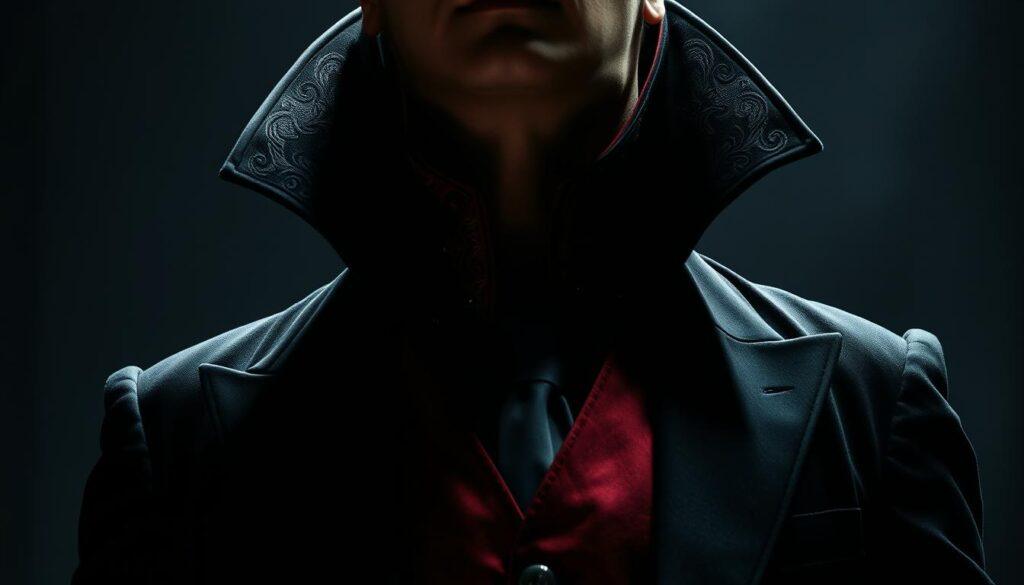
- Capes: The ultimate power move. Floor-length for drama, waist-length for action sequences
- Vests: Instant sophistication. Perfect for boardroom takeovers or mad scientist labs
- Hats: Wide-brimmed for mystery, top hats for elegance, masks for anonymity
- Gloves: Because fingerprints are for amateurs. Leather for sophistication, fingerless for practicality
The real power is in mixing things up. That black vest can be a corporate raider one day and a wild west outlaw the next. It’s like politics—same pieces, different looks for different goals.
I’m obsessed with dramatic collars. They’re key for villains with monologues. High Nehru collars for tech villains, ruffled Elizabethan collars for historical baddies, sharp angular collars for modern megalomaniacs.
Dramatic collars do more than frame the face. They add drama even under capes. They show that this villain has thought about their look—more intimidating than a sloppy villain.
This system grows with your child’s imagination. New pieces mean new characters. A pirate can become a space pirate with different accessories. Evil plans shouldn’t be limited by wardrobe options.
We’re not just making costumes—we’re creating a system for creative villainy. Dressing like you’re in charge is a powerful way to understand power dynamics.
Prop Alternatives: cardboard spell books, light-up orbs, foam daggers
Who needs a big budget when you have a recycling bin? Making iconic villain props from everyday items is an art. Kids can create better accessories than some big movies with huge budgets.
Cardboard spell books are a great example. With some tea staining and aging, they turn into ancient grimoires. It’s like magic—watching brown water and patience turn simple materials into dark magic artifacts. These cardboard spell books become special, not just generic props.
Light-up orbs show how cheap items can create magic. Clear plastic balls glow with just LED tea lights. It’s like a movie prop department, but cheaper and more fun. These light-up orbs are special because they’re made from imagination.
Foam daggers are perfect for looking scary without being dangerous. Craft foam becomes convincing weapons with some cutting and painting. They look menacing but are safe. These foam daggers show that being scary is all about how you look, not how sharp you are.
| Material | Transformation | Villainous Effect | Safety Advantage |
|---|---|---|---|
| Cardboard | Tea staining, folding | Ancient spell books | No sharp edges |
| Craft foam | Cutting, painting | Menacing weapons | Flexible, soft |
| Plastic balls | LED insertion | Supernatural orbs | Cool light source |
| Recycled fabrics | Dyeing, shredding | Tattered cloaks | Breathable |
The beauty of these DIY props is their uniqueness. Handmade items have character that machine-made ones lack. They teach resourcefulness and create truly unique accessories.
The best villain props are made, not bought. They show creativity over budget and mass production. When your costume has these handmade elements, you’re not just playing a villain—you’re living their spirit.
Role-Play Prompts: conflict resolution and redemption arcs
Imagine if Darth Vader asked himself why he wanted the Death Star. The best villain stories are about change, not just destruction.
I’ve made pretend play scripts that turn evil lairs into places for healing. These stories help kids learn about feelings and making tough choices.
Here’s a prompt: “Your villain realizes their plan will hurt someone they love. What do they do next?” Kids get to think about why we do things and the results.
Redemption stories teach kids about solving problems better than any talk. When Loki returns the Tesseract or the Wicked Witch says sorry to Dorothy, kids see that change is real.
These aren’t just games; they’re a way to learn empathy in a fun way. Sometimes, the most compelling stories are about understanding, not just winning.
Consent & Boundaries: family/classroom play rules
Every supervillain knows that even world domination needs rules. I’ve seen playdate plans fail because of bad boundary setting, not because of heroes.
The art of villain play is about fun tension, not real harm. It’s like a playground rule where everyone respects each other.

Knowing social cues is key. An evil laugh should never scare anyone. Look for smiles and engagement to know if everyone’s having fun.
Set clear signals before starting. Use phrases like “magic shield” to pause the game. It’s not weakness, but smart play.
Before starting, ask if everyone wants to feel defeated. Or if your evil machine should have an obvious off switch. This keeps the game fun, not scary.
| Play Scenario | Green Light Signals | Red Light Signals | Resolution Strategy |
|---|---|---|---|
| Evil Laughter | Echoing giggles, play continuing | Silence, withdrawn body language | Switch to bumbling villain trope |
| Capture Scenes | Dramatic protests, staying in character | Genuine distress, attempts to leave | Immediate release, change plot direction |
| Power Displays | Mock fear, creative counterattacks | Tension, conflict escalation | Introduce comic relief element |
| Plot Twists | Engaged participation, suggestions | Confusion, disengagement | Check-in conversation, simplify narrative |
Remember, every child is different. What’s exciting for one might be too much for another. It’s not about being less evil, but precise in your menace.
Good villains know about emotional intelligence. It’s not about winning, but making stories everyone wants to see again.
Nothing ruins a good evil plan like real tears. And that’s just bad villain work.
Durable Construction: reinforced seams, washable trims
Villainy is not a gentle job. Those dramatic cape moves during evil monologues are like stress tests for costumes. I’ve seen many costumes fail, and I know where they usually break.
The shoulder seams get the most wear from cape-swirling moments. Knee areas thin out during dramatic kneeling scenes. Reinforced seams are a must for withstanding a toddler’s tantrums.
Washable trims are key for a practical villain. That metallic fringe must survive mud and juice box mishaps. I suggest triple-stitched hems and decorations that won’t fade.
Costumes often fail at these points. Here’s how to fix them:
| Stress Point | Common Failure | Reinforcement Solution | Washability Factor |
|---|---|---|---|
| Shoulder seams | Cape pulling tears fabric | Double stitching + fabric patches | Machine washable backing |
| Knee areas | Fabric thinning from kneeling | Extra layer of durable fabric | Colorfast dye protection |
| Cape closures | Velcro or snaps detaching | Reinforced attachment points | Washable fastener materials |
| Decorative trim | Fraying or color bleeding | Heat-sealed edges | Colorfast testing recommended |
Smart construction means your villain clothes last through many evil plans. Washable trims handle accidental dips in moats. Reinforced seams survive being used as emergency parachutes. Even the darkest lord deserves clothes that work.
Budget Builds: thrifted shirts, felt collars, cardboard cuffs
World domination doesn’t need a Black Card budget. Some of my best villain costumes cost less than a fancy coffee. The trick is in creative repurposing, not expensive buys.
Thrift stores are like secret villain lairs for costume parts. That sinister shirt you need? It’s probably at Goodwill for three dollars. Look for dark patterns, slightly too large dress shirts, and leather-look jackets.
Let’s talk about the three key parts of affordable evil: shirts, collars, and cuffs. These elements turn regular clothes into villainous wear without spending much.
Thrift Store Gold Mines
Your local thrift store is full of budget villain costume pieces. Look for:
- Dark colored dress shirts with interesting patterns
- Vests and blazers that can be modified
- Leather-looking jackets for that bad guy look
- Unusual accessories that suggest mysterious origins
The beauty of thrifted materials is their worn-in look. New clothes often look too perfect for a villain. Worn-in items already have character.
Felt Collars: Couture on a Dime
Felt collar creations are an easy upgrade. For about two dollars in craft felt, you can make dramatic neckpieces that look like they’re from a fashion villain’s collection.
Just cut your shape, add metallic details with paint, and attach to a thrifted shirt. Instant megalomaniac upgrade.
Cardboard Cuffs: From Packaging to Armor
Those Amazon boxes piling up? They’re about to become cardboard cuffs for a dark knight. With some cutting and metallic paint, they turn into convincing armor pieces.
The trick is in the finishing. Sand edges smooth, use multiple paint layers, and add weathering details. Suddenly, you’ve got medieval gauntlets or sci-fi restraints for almost nothing.
| Material | Cost | Time Investment | Villain Impact |
|---|---|---|---|
| Thrifted Shirt | $3-5 | 30 min hunting | High (base layer) |
| Felt Collar | $2-3 | 15 min crafting | Medium-High (accent piece) |
| Cardboard Cuffs | $0 (recycled) | 45 min crafting | High (visual statement) |
| Metallic Paint | $4-6 | 20 min application | Medium (finishing touch) |
This DIY approach to costume creation isn’t just about saving money. It’s about being resourceful like a true villain mastermind. Why buy when you can repurpose?
The joy of building a villain wardrobe from almost nothing? That’s the real superpower. Your costume budget might be small, but your imagination doesn’t have to be.
Remember: some of cinema’s most memorable villains wore simple outfits. It’s not about the price tag—it’s about the presence you bring to the clothing.
Storage & Care: wrinkle release, accessory caddies
Even the most diabolical mastermind needs a proper storage system. Your villain costume is more than fabric—it’s your character’s dark ambitions in physical form. Proper care keeps your dramatic entrances flawless, avoiding wrinkles or missing props.
Accessory caddies are your secret to staying organized. Use them for foam daggers, light-up orbs, and spell books. Transparent containers from The Container Store help you quickly check your arsenal before any plans. Wall-mounted racks keep capes looking great, avoiding those annoying creases.
Wrinkle release spray is a lifesaver for crushed velvet and satin capes. For tough folds, a garment steamer brings back that sharp, menacing look. Remember, a well-kept costume keeps your evil reputation intact. Downey Wrinkle Release Spray has always helped me during key moments.
These care routines turn seasonal dress-up into lasting theatrical investments. Your villain gear should get the same respect as any hero’s costume. Good presentation is key to being feared or respected. Keep your tools tidy, fabrics clean, and evil tools ready. The world is waiting for your next move.