Kids grow fast, like weeds after a spring rain. One day, their clothes fit great; the next, they’re too small. It’s not just about laundry. It’s about making clothes that fit right.
We’re moving away from the “snip and pray” method. No more fighting with patterns that don’t fit. By making your own, you control the fit.
This is your chance to take control of your kid’s closet. We’ll say goodbye to clothes that don’t fit. We’ll start with the basics: the sloper (your master blueprint), wearing ease (room to breathe), and grading up or grading down between sizes.
We’re not just hacking at patterns. We’re using the wisdom of pattern drafting books. We’re making a shirt that fits perfectly, not too tight or too loose.
Taking Accurate Measurements at Home (Because Guessing is Not a Measurement System)
Welcome to Measurement Boot Camp, where we focus on real data. Saying “he looks about a size 8” is outdated. Accurate measurements are essential. Without them, your sewing project is just a guess.
Every change in a pattern starts with a precise number. If you get this number wrong, your project will be a mess. We’re moving beyond simple sizes. We’re mapping the human body.
Your task is to measure important body parts. This is not a quick job. It’s a detailed survey.
- Nape to Waist: This line shows where your garment will sit. It affects both comfort and style.
- Shoulder Slope: It’s not just about width. The angle matters. This affects how sleeves will look.
- Bicep Circumference: Measure here when your arm is relaxed. No need to flex.
- The Bust Conundrum: Here, most systems fail. You need to measure both high bust and full bust. The difference helps with sizing and grading, as explained in this article.
Measuring someone who moves a lot can be hard. Try bribing them or wait until they’re calm. Make sure they’re standing naturally. The tape should be snug but not too tight.
Write down every measurement right away. Memory is not reliable for this. This list will guide your future decisions on grading up/down.
Measuring alone is challenging but doable. Use a well-fitting garment as a guide. For hard spots like the nape, use a string.
This process makes you more than a size guesser. You become a body analyst. You start asking about dimensions, not sizes. This change is key to making clothes that fit perfectly.
This data gives you the power to ignore size charts. You can make smart grading up or down choices. You’re not just measuring. You’re collecting evidence.
So, get your tape measure and notepad ready. The journey to a perfect fit starts with one accurate measurement. All the rest—hacks, adjustments, and the final fit—are built on this foundation. Get this right, and you’ve already won half the battle.
Decoding Size Charts & The RTW Illusion
The size on the tag is just a suggestion, not a fact. The ready-to-wear (RTW) sizing system is shaky, like a Jenga tower in an earthquake. You might fit perfectly in one brand but need a bigger size in another. This isn’t because you can’t find the right size; it’s the “RTW Illusion.”
This illusion is based on vanity sizing and inconsistent grade rules. Vanity sizing affects both adults and kids, making a “Toddler 4T” waist vary by three inches. The pattern grade is the other main pillar.
Pattern grading isn’t just about making everything 10% bigger. It’s about proportional scaling of a base design. Imagine stretching a photo; the proportions get off. A skilled grader adjusts armholes, sleeve caps, and necklines to keep the garment looking right across sizes.
Grading up a toddler 2T pattern to a child’s size 10 can make a garment look silly. The armholes will be wrong, the neck too wide, and the sleeves too big. This is why patterns and RTW brands use different “base blocks” for different sizes. They use different blueprints.
Your Decoder Ring for the Size Chart
To fight the illusion, you need to become a code-breaker. The size chart is your first clue. But look beyond your usual “size” column. Here’s how to decode:
- Finished Garment vs. Body Measurements: Use the “finished garment” measurements as your guide. Subtract your body measurements from the garment’s measurements. This shows the “wearing ease.” For a child’s play dress, you might want 4-6 inches of ease. For a tailored blazer, maybe only 2.
- Ease is a Spectrum: The size chart’s “ease” is for a static mannequin, not a moving child. Your child’s “wiggle and jiggle” ease isn’t on the chart.
- Frankenstein Your Size: Your child is not one size. Their shoulders might be a 4, their chest a 6, and their height an 8. Grade between sizes to create a custom fit. The size chart is a starting point, not a mandate.
Let’s make this real. Say you’re making a simple t-shirt pattern. The size chart says:
| Size Label | Chest (To Fit) | Finished Garment Chest | Ease Built-In |
|---|---|---|---|
| 4 | 21″ | 24″ | 3″ |
| 6 | 22″ | 25.5″ | 3.5″ |
| 8 | 23″ | 27″ | 4″ |
If your child’s chest is 22″, the size 6 should fit, but with only 1.5″ of ease (24″ garment – 22″ body = 2″, minus the .5″ seam allowance on each side). Is that enough for a t-shirt? Maybe. For an active kid, you might want the 8 for more room. This is the grading up decision point.
Forget the tag. Your new mantra is “measure the body, then measure the garment.” By learning to decode the chart and understanding that grading up or down is a proportional art, you shatter the RTW illusion. You stop being a passive consumer of sizes and become the architect of the fit.
The Quick Grade: When to Nudge a Size Up or Down
Think of the Quick Grade as a smart move in sewing. It’s about making small changes to fit better without big changes. It’s like adjusting the map a little to win the game.
Your pattern is almost perfect. The shoulders and waist are just right. But the sleeves might be too tight, or the rise is too low. That’s when the Quick Grade comes in handy.
Full pattern grading is like making laws—it’s a big deal. The Quick Grade is more like a local rule. It’s about making small tweaks, like adjusting a seam or adding a gusset. It’s quick and easy.
When making changes, spread them out. Don’t take all the ease from one spot. That can make your garment look stretched out.
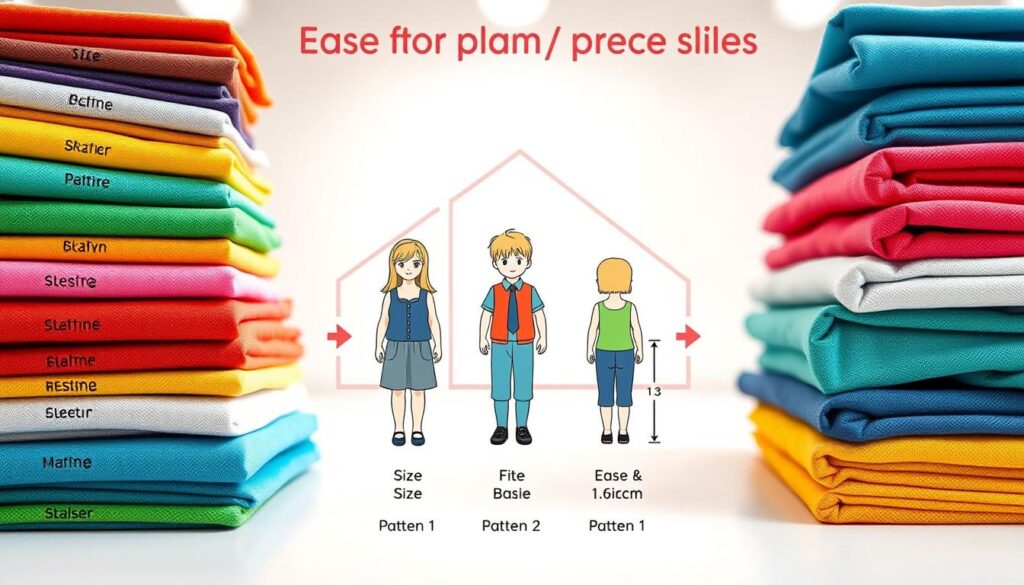
For width changes, try the slash and pivot method. Imagine cutting a pie to add or subtract width. This keeps the shape but gives you the space you need.
For length, use the add-a-wedge method. Need more room for dancing? Cut the pattern and add a strip of paper. This adds ease where it matters, like the chest and back, without making the shirt too big.
Here’s a quick guide for the Quick Grade:
- Limit your ambition: Stick to one or two size changes. More than that, and you’re doing full grading.
- Follow the grain: Always keep the grainline the same. Rotating the pattern can mess up your garment.
- Balance your changes: If you add to the front, add to the back. This keeps things symmetrical and functional.
- Test on scrap fabric: Your mock-up is like a test run. Never use your good fabric without checking first.
These methods are based on pattern grading principles. For more on this, check out this guide on the pattern grading slash and spread method. It explains the theory behind these shortcuts.
What makes a hack good or bad? Intentionality. Your changes should look like they were planned from the start. The seams should match, and the hem should hang evenly. The armhole shouldn’t look like a weird art piece.
This approach helps you improve your sewing without getting lost in details. You’re making small changes that add up. It’s like giving every seam a say in the final fit.
Master the Quick Grade, and you’ll rarely need to start over. You’ll have the right ease for play without having to remake your garment every time your child grows.
The Art of Ease: Adding Wiggle Room for Squat, Reach, and Impromptu Dance Parties
If a sewing pattern were a blueprint, ease would be the margin of error. It’s the essential, beautiful buffer between a garment that fits and one that functions. In the kinetic, unpredictable world of a child, this margin isn’t just about comfort. It’s the difference between a shirt that survives a playground summit and one that surrenders at the first monkey bar.
Ease isn’t extra fabric; it’s the difference between a sprint and a spin. It’s the energy stored in a stretched waistband or a gusseted underarm, waiting to be released.
We often think of fit as static, but children are anything but. They are a constant, glorious performance art of motion. The concept of ease is our technical term for engineering that performance. It’s the difference between a costume and a uniform, between a garment that fits the body and one that fits the life being lived in it.
Deconstructing Ease: More Than Just “A Little Extra Room”
To build for movement, we must first deconstruct ease into its core components. Think of a basic sloper or block—the minimalist garment pattern with the barest whisper of ease for the body to, you know, breathe. This is your baseline. From there, we strategically add ease with intent.
- Wearing Ease: The non-negotiable. This is the minimal, built-in slack that allows for breathing and basic movement. It’s the difference between a shirt that lays flat and one that’s painted on. Without it, a child can’t raise their arms to catch a ball.
- Design Ease: The aesthetic architect. This is the drape, the swing, the silhouette. It’s the volume in a pinafore or the relaxed fit of a tunic. It’s style, expressed in extra inches.
- Play Ease: This is my term for the kinetic currency of childhood. It’s the extra two inches in a sleeve that allows for a full-extension pitch. It’s the gusset in the underarm for a sudden, spontaneous cartwheel. It’s the difference between a pant that fits and a pant that allows a full, deep squat without a seam’s surrender.
Understanding these layers lets you engineer not just clothing, but a uniform for exploration.
The Ease Matrix: From Block to Kinetic Garment
The table below breaks down how to apply these ease types across common children’s garments. This is your cheat sheet for turning a static pattern into a dynamic one.
| Ease Type | Typical Added Ease (Garment-Specific) | Primary Function | Pattern Areas to Check |
|---|---|---|---|
| Wearing Ease | 1-2″ (2.5-5cm) at bust/chest | Allows for breathing, sitting, and basic movement. The “must-have” for any functional garment. | Bust, waist, and hip lines; sleeve cap height. |
| Design Ease | Varies widely (2-6″+) | Creates the intended silhouette (slim, oversized, A-line). It’s the “fashion” in the fit. | Hem width, waist definition, overall garment silhouette. |
| Play Ease | 1-3″ extra in key movement zones | Enables full range of motion for play, squatting, reaching, and running. Prevents seam failure. | Shoulder width, underarm (gussets), back width, and inseam gussets. |
From Theory to Seam: Applying “Play Ease”
How does this translate to your cutting table? Let’s get practical. For that woven pinafore, you might follow the pattern’s bust measurement, but add 1-2″ of ease in the back panel for a full reach forward. For knit tees, the fabric stretch provides wearing ease, but for a woven button-down, you’d add ease at the bicep and across the back for a full throwing motion.
Look for the stress points: the knee of a pant, the underarm of a t-shirt, the back of a jacket. These are the zones for strategic reinforcement and extra ease. A gusset under the arm or a gusseted crotch in pants isn’t a design flaw; it’s an engineering solution for the kinetic art of childhood.
Remember, a sloper is a blueprint for the body at rest. Your child is a verb. Ease for play is the grammar that lets the sentence of their movement make sense. It’s not just extra fabric; it’s the space where a cartwheel is born.
Sleeve & Hem Adjustments (Without Ruining the Proportions)
Sleeves and hems are like the first violin and cello in a symphony. They must be perfectly tuned or the whole thing falls apart. These parts are very high-maintenance and can quickly show any mistakes.
A sleeve that’s a quarter-inch too tight or a hem that’s a whisper too long can ruin a garment. It’s not just about cutting fabric. It’s about understanding how the garment moves and how it drapes.
Sleeves control how much you can move your arms. If they’re too tight, reaching for something high becomes a challenge. The sleeve cap ease is important. It lets your arm move without the sleeve riding up.
When you grade a pattern, the sleeve cap height is key. Lower it for a closer fit, raise it for more room.
To adjust a sleeve, you need to consider the armhole too. Shortening a sleeve means changing the cap curve to keep the right fit. The Pattern Master tool helps you make these precise changes.
| Tool | Purpose | Best For |
|---|---|---|
| Pattern Master/Ruler | Redrawing smooth curves for sleeve caps and armholes | Adjusting sleeve cap ease and armhole depth |
| French Curve | Creating fluid, consistent curves for hems and caps | Hem adjustments, curved seam adjustments |
| Hip Curve Ruler | Adjusting side seams post-hem alteration | Maintaining silhouette after hem changes |
| Seam Gauge | Precise 1/8″ to 1/4″ hem adjustments | Fine-tuning hem depth evenly |
A hem is like a punctuation mark for a garment. It’s not just a finish. A hem that’s too short or too long can change how the garment looks.
When shortening a hem, align the side seams carefully. Cutting the bottom only can mess up the side seam. Use a hip curve ruler to blend the new hemline smoothly.
| Adjustment | Technique | Pro-Tip |
|---|---|---|
| Sleeve Lengthening | Slash and spread at the bicep, not the cap | Add paper to the underarm, not the shoulder |
| Sleeve Shortening | Remove length above the elbow, not at the cuff | This preserves the sleeve cap’s relationship to the armhole |
| Hem Lowering | Add a deep hem allowance (2″+) during mock-up | Allows for future growth or style changes |
| Hem Raising | Re-draw side seam from hip to new hem | Keeps the side seam from twisting |
The bicep width is another area to watch. For growing children or layers, add width at the underarm only. Use a Pattern Master tool to make the underarm seam fit right.
A sleeve is a 3D shape. Changing one part affects the whole sleeve cap. A sleeve cap that’s too high or too low can cause problems. The ideal cap sits about 1/2″ above the shoulder when the arm is relaxed.
For hems, the key is the hem allowance. Always cut it 1.5 times deeper than your finished hem. This allows for growth or style changes. When adjusting a hem, mark it at multiple points and use a hem gauge for evenness.
Sleeve and hem adjustments are all about geometry and grace. They’re the final touches that make a garment move and fit perfectly.
The Seam Allowance Shuffle: Consistency is Your New Best Friend
Think of a garment’s seams as its skeleton. The seam allowance is like the connective tissue that holds it together. If you ignore it, your project will be unstable. But if you get it right, you’ve built a strong foundation.
It’s not about sewing a “good enough” 5/8″ and hoping for the best. It’s about setting a standard and sticking to it. This is about sewing with precision and consistency.
Inconsistent seam allowances lead to sewing mistakes like puckering and misaligned seams. The goal is to have a consistent seam allowance. A 5/8″ line on your pattern is not a suggestion; it’s a rule in your fabric kingdom.
Deviate by even an eighth of an inch, and your garment’s fit will suffer. This is why a Pattern Master or accurate seam gauge is essential.
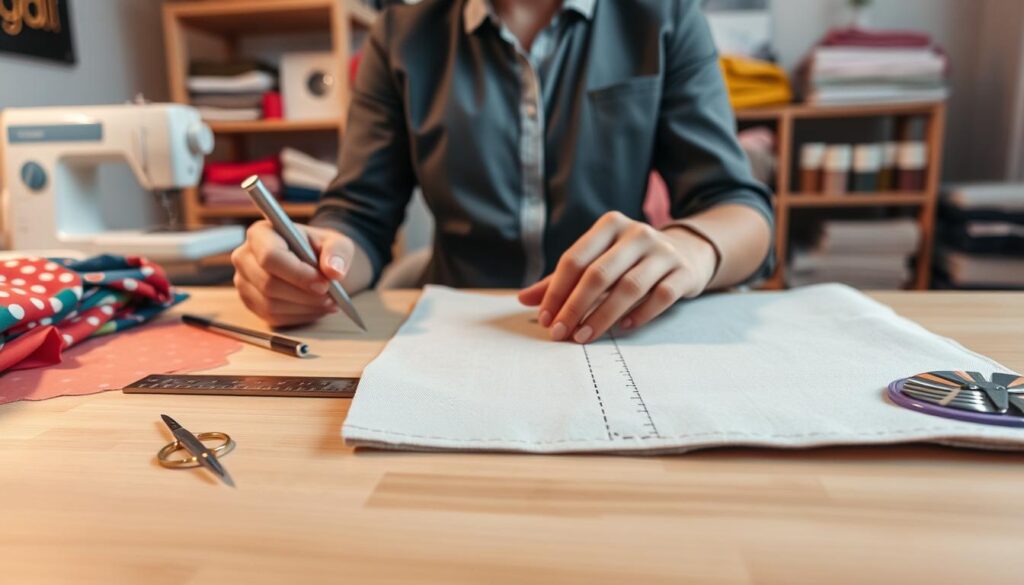
Using a Pattern Master helps you mark and verify seam allowances, even on curves. Beginners often add an extra 1/4″ for safety. But the goal is to eventually sew with precision, without needing this extra buffer.
After sewing a seam, the work isn’t done. Trimming, grading, and notching are key steps in finishing the seam.
- Trimming: Reduces bulk. After stitching a curved or corner seam, carefully trim the seam allowance down to about 1/4″ to reduce bulk and allow the seam to lie flat when turned.
- Grading: This is the next-level move. You don’t just trim both layers equally. You trim one layer of the seam allowance slightly narrower than the other. This creates a staggered, stair-step effect that eliminates a hard, bulky ridge. For example, if you have a facing, you’d trim the facing seam allowance narrower than the garment’s, so the bulk is distributed.
- Clipping & Notching: For outward curves and convex seams, you clip into the seam allowance to allow it to spread and lie flat. For inward curves and concave seams, you notch out small V-shaped wedges to allow the seam to contract without puckering. Notching isn’t optional; it’s the difference between a smooth, professional curve and a bunched, gapped mess.
Think of your seam allowance as the structural rebar in a concrete pillar. You don’t see it in the finished piece, but the entire structure depends on its consistent placement and strength. It’s not the most glamorous part of sewing, but it is the difference between a garment that fits and a garment that fits flawlessly. Consistency here isn’t just a best practice; it’s the line between a home-sewn piece and a homemade-looking one.
The Mock-Up Gambit: Your Fabric Safety Net
Think of your fashion fabric as a precious, one-of-a-kind canvas. You wouldn’t start a masterpiece by slashing into a pristine canvas with a palette knife. First, you sketch. In sewing, your sketch is the mock-up, or as the purists call it, the toile or muslin. This isn’t a suggestion for perfectionists; it’s the single most effective risk-management tool in a sewist’s arsenal. It’s the dress rehearsal before opening night, where the only admission you pay is a bit of cheap fabric and time, saving your prized fashion fabric from a tragic, irreversible snip.
This process is not about creating a finished garment. It’s a diagnostic tool, a three-dimensional critique of your pattern hacks and measurements. The goal isn’t beauty; it’s brutal, honest feedback. We’re not just checking if it fits; we’re stress-testing the pattern adjustments you’ve made. That armhole you thought you graded correctly? The muslin will tell you if it binds. The crotch curve you lengthened? The muslin will show if it’s comfortable. Skipping this step is like baking a cake without tasting the batter—you won’t know it’s a disaster until it’s too late.
Crafting Your Franken-Muslin
Forget perfection. Your mock-up is a scientific experiment, not a gallery piece. Raid the linen closet for old bedsheets, or buy the cheapest, ugliest muslin or calico you can find. The goal is to create a Franken-Muslin—a quick-and-dirty, basted-together version of your pattern pieces. Don’t bother with facings, linings, or hems. Simply cut and baste the main pieces together along the major seams.
Once you’ve got your stitched-together creation, it’s time for the fitting. Put it on your model (or a dress form in their size). This is where the real magic happens. Grab some pins, tailor’s chalk, and a healthy dose of patience.
The Critical Fit Checkpoints:
- Shoulder Slope & Neckline: Does the garment hang from the correct point? Is the neckline gaping or choking?
- Armhole & Sleeve Cap: Is there puckering? Does the sleeve allow for a full range of motion without binding?
- Torso & Hips: Is there enough ease for sitting, bending, and the all-important impromptu dance party? Is the waist hitting at the natural waist?
- Lengths: Are the sleeves, bodice, and overall length proportionate?
As you evaluate, don’t just look for what’s wrong. Use the muslin itself as a notepad. Draw on it. Pin it. Slash it. This is where the brilliant concept of a growth tuck comes into its own.
The Growth Tuck: Planning for the Inevitable
Children, in their maddening and wonderful way, grow. Instead of making a garment that fits perfectly today but is unwearable in three months, we can build in a growth strategy. This is the genius of the growth tuck.
Here’s how it works: When you pin the muslin on your model, find a spot with generous seam allowance—like the center back of a dress or the outseam of a pant leg. Pinch a generous horizontal tuck in the fabric and baste it in place. This visually (and physically) removes the excess length or width.
This basted tuck is a placeholder for the future. When the child grows, you simply release the basting stitches, let the tuck out, and voilà—you’ve just added an inch or two of life to the garment. It’s a simple, reversible hack that turns a quickly outgrown piece into a long-term wardrobe staple.
To visualize where and how to apply these fitting solutions, it helps to see the mock-up process as a system:
| Mock-Up Stage | Key Action | What You’re Testing | Potential Fix |
|---|---|---|---|
| 1. Initial Fitting | Pin the basted garment on the wearer. | Overall proportion, shoulder slope, armhole depth. | Pinch out excess fabric or slash to add room. |
| 2. Stress Test | Have the wearer sit, bend, reach, and squat. | Range of motion, strain on seams, ride-up. | Add or subtract ease at key stress points. |
| 3. Growth Hack | Pin a deep, horizontal tuck in the muslin. | How much length/width can be added later. | Mark and baste the growth tuck for future letting out. |
| 4. Final Mark-Up | Mark all adjustments directly on the muslin with chalk. | Translating 3D fit issues to 2D pattern. | Transfer all changes to paper pattern before cutting fashion fabric. |
This table isn’t just a checklist; it’s a diagnostic flowchart. Each “Potentail Fix” is a decision point that moves you closer to a perfect pattern. The mock-up is your sandbox. Did the sleeve feel tight when reaching? Add a note to widen the sleeve cap. Did the back pull across the shoulders? Note to add a center back seam for a curved adjustment.
The mock-up is your fabric safety net. It’s where you make the mistakes that don’t matter, so they don’t happen in the final, precious fabric. It transforms sewing from a gamble into a science, where the only surprises on your final garment are good ones.
Annotate or Perish: Documenting Your Pattern Hacks
You’ve spent hours perfecting your muslin. You’ve made all the right adjustments for a perfect fit. But if you don’t document these changes, it’s all for nothing. In sewing, pattern documentation is key to avoiding the same fitting issues next time.
Your muslin shows all the adjustments you made. But if you don’t transfer these changes to your pattern, they’re lost. This is where many sewists get stuck. That great shoulder adjustment or sleeve change? Without pattern documentation, you’ll have to redo them next time.
Start by laying your corrected muslin flat. Use weights to keep it steady. Then, use a tracing wheel and carbon to mark every change. Make sure to use a red pen for bold, lasting marks. This is more than tracing; it’s translating your muslin into a new pattern.
You’ll need a few simple but essential tools. A pattern notcher for seam allowances, Swedish tracing paper, and a permanent marker. Don’t forget a notebook to record each change. Write down what each mark means, like “1/2″ swayback adjustment, added 5/21/2024.”
This method builds a personalized pattern library. That “growth tuck” you made? It’s now a permanent part of your pattern. You’re not just fixing today’s garment; you’re preparing for future versions.
Think about this: When your child grows, will you be trying to decipher a wrinkled muslin or using a perfected, annotated pattern? The choice is clear: document or forget. Annotate or perish, as they say.
Your Measurement Log & Grade Map: The Sewist’s Field Notes
So, you’ve taken measurements, made a mock-up, and adjusted the pattern for a perfect fit. Now, do you remember adding an inch to the sleeve and grading the waist up a size? A master documents everything. This turns theory into a system, making your sewing proactive.
Meet your new best friends: the Measurement Log and the Grade Map. They are like the Rosetta Stone for your sewing language. The Measurement Log is a living document, updated with each growth spurt. It captures your child’s changing proportions.
The Grade Map is your pattern-specific cheat sheet. It’s your Rosetta Stone for each pattern you adjust. Note down every change, like adding an inch to the sleeve. Sketch the pattern piece and mark the changes. This is your blueprint for the future.
Mastery isn’t about perfect memory. It’s about a system. The Measurement Log and Grade Map are your system. They turn isolated victories into a legacy of consistent results. This is how you build a legacy of perfect fit, one annotated pattern at a time.