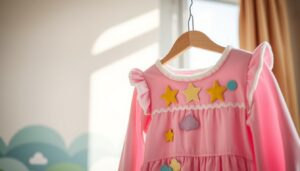
We’re surrounded by a culture of disposability, where Halloween costumes end up in landfills. These plastic outfits cost us money and harm our planet. They tell a scary story for our kids’ future.
But there’s a positive twist. Making sustainable costumes isn’t about being an extreme eco-warrior. It’s about making choices that save money and create lasting memories. It’s a clever way to teach kids about the environment through creativity.
Imagine turning dad’s old shirt into a superhero cape while talking about taking care of the Earth. We’re not just making clothes; we’re teaching our kids important lessons. This approach cuts down on waste, educates our children, and might save the planet for them to enjoy.
The push for sustainable costumes is more than just saving the planet. It’s about bringing back family creativity and building meaningful traditions. It’s about breaking free from fast fashion and creating lasting memories.
Materials Guide: organic knits, recycled felt, secondhand finds
Think of your costume materials like a political primary. You have new fabrics, organic knits, and secondhand finds. Each has its own benefits for a sustainable costume.
Organic knits are the top choice. They come from farms that avoid synthetic pesticides. This makes them soft and comfortable.
Organic cotton is great for superhero capes and animal costumes. It keeps your child cool and is better for the planet than regular fabrics.
Recycled felt is a big deal. It’s made from plastic bottles or factory scraps. It’s like magic.
Recycled felt is perfect for masks, hats, and decorations. It’s sturdy and keeps its shape well. This makes your costume look great.
Secondhand finds are the final piece of the puzzle. Thrift stores are full of upcycled kids costumes. Old sweaters become yeti costumes, and curtains become princess gowns.
Secondhand materials have a special charm. They tell a story of their own. You’re not just making costumes; you’re continuing a tale.
| Material Type | Best For | Sustainability Score | Cost Factor |
|---|---|---|---|
| Organic Knits | Sensitive skin costumes, base layers | 9/10 | $$$ |
| Recycled Felt | Structured pieces, accessories | 8/10 | $$ |
| Secondhand Finds | Character costumes, statement pieces | 10/10 | $ |
Remember, the best material is often in your home. Do a closet audit before you shop. You might find everything you need.
The journey to find materials is part of the costume’s story. Each choice reflects your values, creativity, and resourcefulness. That’s more valuable than buying something new.
Upcycling Playbook: sheets to capes, sweaters to vests, tees to tutus
Let’s explore the magic of turning old items into new treasures. That old sheet in your closet? It’s not just a piece of fabric; it’s a royal cape waiting to be found.
Your old college sweatshirt? It’s now a detective’s vest. The real magic is in seeing things in a new light.
I’ve turned many organic cotton tees into tutus. It’s a small victory against waste. These costumes tell stories that are unique and special.
Here’s your guide to changing old clothes into new ones:
- Sheets to Capes: A flat sheet turns into a royal robe with a ribbon and some paint.
- Sweaters to Vests: Take off the sleeves of a sweater, add patches, and you have a detective’s vest.
- Tees to Tutus: Cut the bottom of an organic cotton tee, add tulle, and you have a fairy skirt.
Upcycling is more than making costumes. It’s creating keepsakes with stories. “This was mom’s favorite shirt” means more than “This came from a factory.”
Your laundry is full of hidden treasures. It’s up to you to see them. The only limit is your creativity.
Even simple organic cotton items can be transformed. The fabric lasts long, making it perfect for many costumes. You’re not just sewing; you’re making memories that are good for the planet.
Every time you cut or sew, you’re standing up against fast fashion. It’s a quiet act of defiance. Who knew your linen closet held such power?
Low‑Waste Embellishments: scrap appliqués, stencils, fabric paint
Why go to the craft store when your scrap bin is full of possibilities? I’ve found that the best decorations come from what you already have. This way, making costumes becomes a creative journey, not just buying stuff.
Scrap appliqués are amazing. That odd-shaped felt can turn into a superhero emblem. Denim scraps can become perfect patches. Each piece has its own story, like explaining postmodernism to a kid.
Stencils from cereal boxes are the ultimate upcycle. They’re free, customizable, and can be used again. Plus, they save space, unlike my dream of a tidy craft room.
Fabric paint lets you create unique designs. Even leftover paint can make amazing patterns. It’s like combining Jackson Pollock’s art with eco-friendly crafting.
The beauty of zero-waste crafts is in their limitations. With less, you have to think more. A small piece of velvet can become a crown, and leftover paint can create a cosmic design.
Here’s how these methods compare to buying decorations:
| Technique | Materials Needed | Cost | Creative Freedom | Waste Created |
|---|---|---|---|---|
| Scrap Appliqués | Fabric scraps, scissors, glue | $0 | High (unique shapes) | None |
| Cereal Box Stencils | Empty boxes, craft knife | $0 | Medium (reusable) | Minimal |
| Fabric Paint Remnants | Leftover paint, brushes | $0 | High (organic patterns) | None |
| Store-Bought Trims | New materials, packaging | $5-15 | Low (mass-produced) | High |
This isn’t just about decorating. It’s a way to talk about the environment with glue guns. We teach kids that creativity is about seeing the best in what you have, not buying more.
When kids get into zero-waste crafts, they learn a valuable lesson. They see that less can mean more, not less. This lesson is more lasting than any craft project.
Tool Choices: refillable glues, washable markers, mini LEDs
Let’s talk about tools without the corporate jargon. You’ve probably bought cheap craft supplies that broke quickly. I’ve been there too.
Quality tools are about spending wisely, not more. It’s like choosing quality over cheap, flimsy stuff. We’re building a toolkit that lasts.
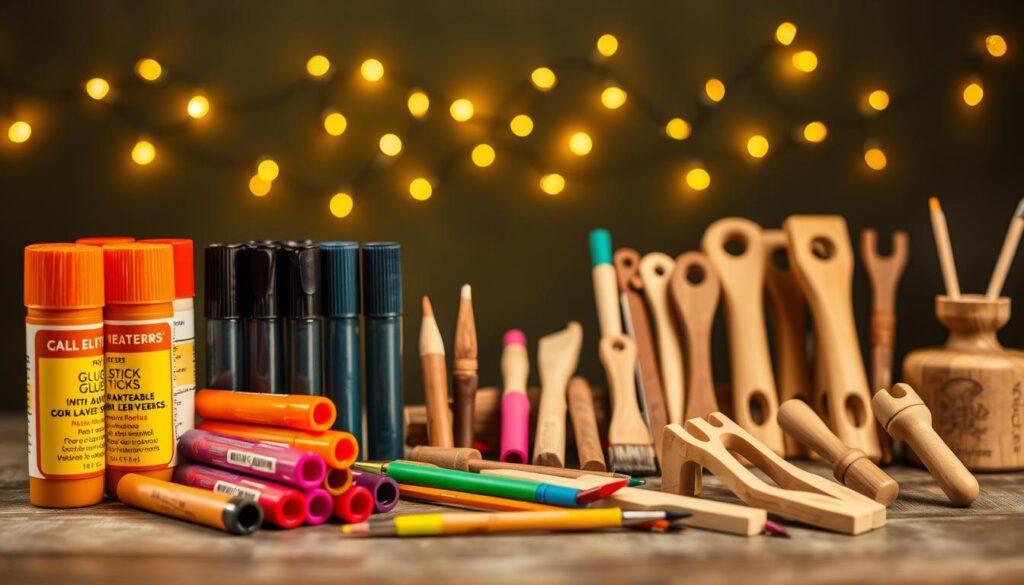
Refillable glue guns are a game-changer. They outperform disposable ones in every way. One quality model will last longer than ten disposables, saving money and reducing waste.
Always pick non-toxic, low-temperature glue sticks for safety. They’re safe for kids and don’t release harmful fumes. It’s about creating a safe space for family fun.
Washable markers are essential for crafting with kids. I’ve learned this from many “artistic experiments” on various surfaces. These markers save clothes, furniture, and sanity.
Quality washable markers wash out completely. No more permanent art mistakes. Plus, they come in refillable sets, reducing packaging waste.
Mini LEDs add magic without waste. These tiny lights can make ordinary crafts special. The best part? They’re reusable for years.
Unlike single-use items, quality mini LEDs have replaceable batteries and durable housings. They’re perfect for many projects, like costumes and decorations.
This tool approach creates a cycle of quality and sustainability. Better tools mean less waste and spending. It’s a win-win for your wallet and the planet.
Your craft toolkit should support you, not hinder you. Choose tools that last, perform well, and match your values. That’s how we build something sustainable.
Teach‑the‑Why: carbon, waste, repair culture for kids
While we’re cutting felt and gluing sequins, we’re teaching environmental science in a fun way. Kids learn about saving the planet by making superheroes. It’s more exciting than just numbers.
Explaining how far a polyester costume traveled makes carbon footprints real. They see fabric scraps become magical capes instead of trash. It’s learning about the environment in a fun way.
Children understand repair culture better than many adults. They’re proud to wear a superhero costume they helped fix. It’s not just fixing clothes; it’s changing our throwaway ways.
Eight-year-olds can explain supply chains better than some adults. They see that making things is better than buying them. The best costumes tell stories, not just look good.
Studies from the University of British Columbia show that making eco-friendly costumes helps kids understand the environment. They remember what they make, not just what they’re told.
We’re not just making costumes; we’re raising kids who care about resources. They see problems as chances to be creative. They know the best things are made with love and care.
That pirate costume is more than just a costume. It teaches about circular economies and creative reuse. The felt eye patch shows a clear vision of sustainability.
Cost Comparison: new vs thrift vs scrap builds
Let’s dive into the numbers behind costume costs. It’s a story more exciting than any Halloween character.
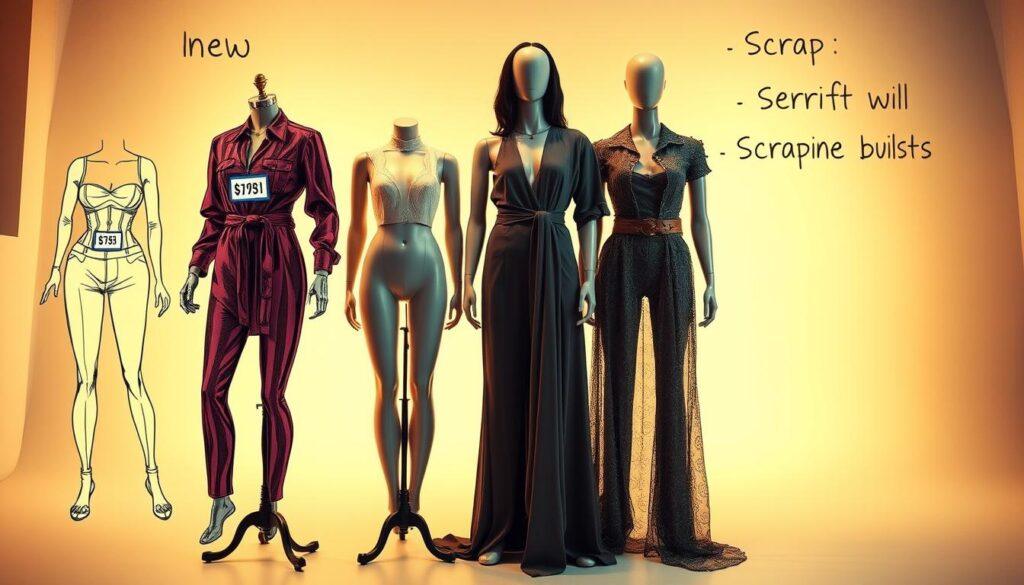
New costumes cost $25-$50 but only last three hours. It’s like buying a sports car for your daily drive. It looks great but doesn’t last.
Thrift flips cost $5-$10. You get more than fabric; you get a story. A big blazer turns into a detective’s coat. Old curtains become a royal gown. It’s magic.
Scrap builds cost nothing. An old sheet is a ghost costume. Cardboard boxes are robot armor. It’s all about creativity without spending.
I’ve done these math problems more than I’ve watched The Nightmare Before Christmas. The results always show the costume industry’s flaws.
It’s not just about saving money. It’s learning about money in a fun way. Each thrift flip is a small fight against waste.
The joy of making something special from trash? That’s priceless. No store can offer that.
Durability & Repair: reinforcement stitches, patching, mending kits
Store-bought costumes don’t last long. They’re made for one night and then end up in the trash. But, handmade costumes are different. They might need some care, but they last longer.
Reinforcement stitches are like building a strong foundation. I add them to high-wear areas before the costume is even worn. This includes shoulders, seams, and where things are attached. It’s like giving your costume a protective shield.
Patching adds to the story of your costume. A tear can tell a tale of adventure. We use contrasting fabric for patches, making the costume even more special. My daughter’s cape now has patches that tell her stories.
Mending kits are more than just a fix-it tool. They’re a symbol of empowerment. Our kit is in a vintage tin and has needles, thread, fabric scraps, glue, and scissors. It’s all about fixing things and learning from it.
- Needles in multiple sizes
- Thread that matches our frequently used fabrics
- Small fabric scraps for patches
- Fabric glue for quick fixes
- Mini scissors that actually cut
When kids help with repair, they learn a valuable lesson. They see that things worth having are worth fixing. It’s about the journey, not just the end result.
| Store-Bought Costume | Reinforced Handmade | Repaired & Patched |
|---|---|---|
| 1-2 uses average | 5-10 uses with care | 10+ uses with maintenance |
| Disposable mentality | Investment mentality | Heritage mentality |
| No repair options | Easy reinforcement points | Character-building patches |
| Landfill destination | Donation or reuse | Family keepsake |
Smart storage helps costumes last longer. We roll them instead of folding to avoid creases. We use containers that breathe and label everything to prevent loss.
This approach teaches kids to see value in things. They learn that repair is not failure, but a sign of worth. It changes how they view damaged items.
In a world that values new over old, we’re teaching appreciation for the well-cared-for. The best costume isn’t one that never gets damaged. It’s the one that’s loved and fixed again and again.
End‑of‑Life Plans: donation, swaps, remnant reuse
Every good story needs an ending, but sustainable costumes get sequels. Donation lets another child enjoy the magic. Swaps bring people together. Remnant reuse sets the stage for next year’s costume.
I’ve seen costumes live on like a cartoon cat. A pirate hat turns into a wizard hat. Fairy wings become angel wings. A cape morphs into five different costumes over three years. It’s not just buying and throwing away; it’s a cycle of giving and taking.
Costume swaps with friends or family make them last longer. It’s like a rotating art exhibit where everyone gets to be both curator and participant. The math is simple: one person’s retired superhero becomes another’s space explorer.
We’re not just making costumes; we’re creating heirlooms, building community, and writing stories that don’t end when Halloween does. The final chapter of one costume becomes the prologue to the next.