Nature’s mood swings can catch you off guard. I learned this at an outdoor summer wedding. My heavy wool suit made me feel like a melting snowman, not a distinguished guest.
Choosing the right material is more than just comfort. It’s about combining meteorology and material science for better style.
Cotton is a summer hero, keeping you cool and comfortable. Wool is your go-to for winter, providing warmth like a cozy hug. Linen is perfect for spring’s unpredictable weather.
Synthetic blends have moved beyond their old polyester image. The secret is understanding fabric swaps for every season. This way, you know how different fibers handle the weather.
This isn’t just about fashion. It’s about dressing smartly through nature’s changes. Let’s dive into how to stay stylish through the seasons.
Temperature Considerations
Ever seen someone melt in polyester at a summer wedding? I’ve seen more fabric disasters than a meteorologist has weather maps. The secret to surviving seasonal shifts is knowing about textile thermodynamics – it’s physics you can wear.
Cotton is like nature’s air conditioning. It has tiny air pockets that let heat out and pull moisture away from your skin. This is why Southern gentlemen have loved seersucker for centuries – they knew about weather-appropriate textiles long before it was trendy.
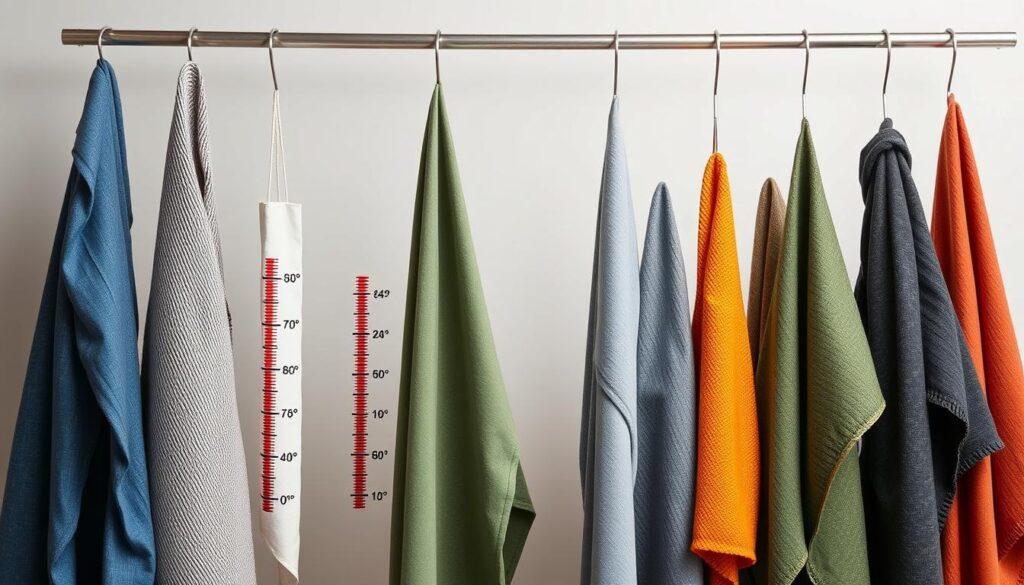
Wool does “climate magic.” It’s not just for winter. Merino wool keeps you cool in Death Valley and warm in Duluth. Its natural crimp insulates without being bulky, making it a top weather-appropriate textile.
Synthetics are the mixed bag of your wardrobe. Polyester can be great or terrible, depending on the weather. Performance fabrics with moisture-wicking tech are good, but cheap synthetics can trap heat like a broken greenhouse.
“The right fabric doesn’t just cover your body – it creates a personal ecosystem that responds to environmental conditions.”
Three key things decide a fabric’s thermal performance:
- Breathability: How well air moves through the fabric
- Insulation: How well it keeps body heat in
- Moisture-wicking: How fast sweat moves away from skin
This isn’t just about feeling comfy – it’s about smart dressing. The molecular structure of each fabric affects its thermal behavior. Natural fibers like linen and cotton are great at letting air through. Wool is top for keeping warm. Synthetic blends often lead in drying sweat fast.
| Fabric Type | Breathability | Insulation | Moisture Control |
|---|---|---|---|
| Cotton | Excellent | Poor | Good (absorbs) |
| Wool | Good | Excellent | Excellent (wicks) |
| Polyester | Poor | Variable | Excellent (wicks) |
| Linen | Superior | Poor | Good (evaporates) |
The real trick is mixing these traits for different weather. A wool-silk mix for spring, technical cotton for summer, and smart layering for autumn’s changes. This is how weather-appropriate textiles become your secret weapon against nature’s mood swings.
Good fabric choice isn’t about following rules. It’s about knowing how materials work with your body’s heat. Because nothing ruins a perfect outfit faster than turning into a human greenhouse.
Examples of Seasonal Favorites
Let’s talk about fabric royalty – those top materials that rule their seasons. They’re not just fabrics; they’re proven winners for many events.
Summer’s top pick is linen. It looks cool and needs ironing, like a joke that’s both easy and hard to make. It’s like a perfect joke that needs skill to pull off.
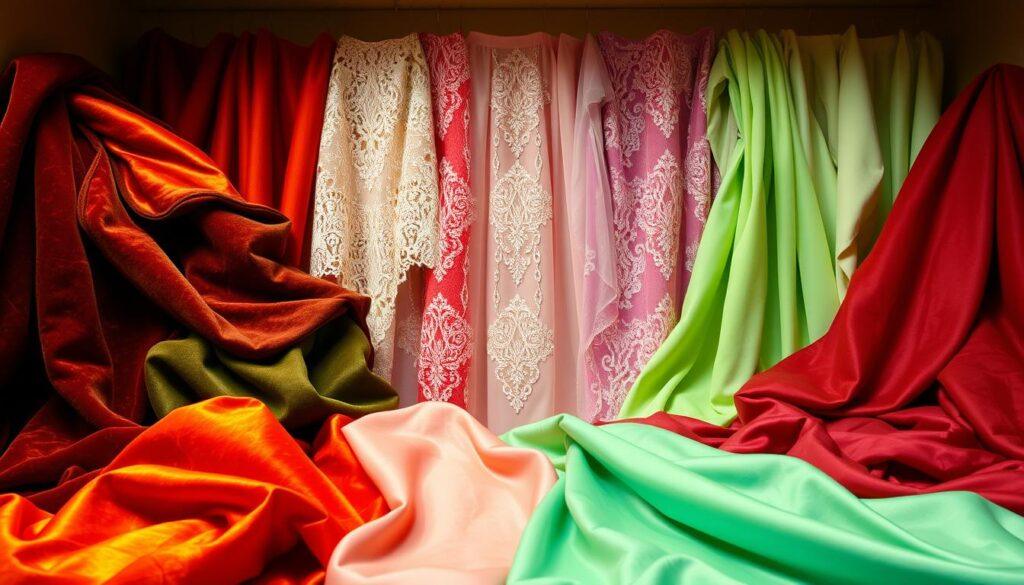
Winter’s hero is wool, keeping you warm. Cashmere is soft and merino wool is technical. They’re like diplomats in cold talks, keeping you cozy.
Spring’s dreamy fabric is chiffon for weddings. It’s light and elegant, like a well-written policy. It’s easy yet structured, perfect for any event.
Neoprene is the surprise hero of costume armor. It’s strong and looks like superhero gear. It’s like a politician who knows their stuff, doing many jobs well.
Rayon blends are like secret agents, changing with the seasons. They’re smooth and flexible, like a diplomat in many roles.
| Season | Fabric Star | Event Wear Application | Performance Benefit |
|---|---|---|---|
| Summer | Linen | Outdoor weddings | Breathable sophistication |
| Winter | Merino Wool | Formal galas | Temperature regulation |
| Spring | Chiffon | Garden parties | Ethereal elegance |
| Fall | Rayon Blends | Corporate events | Transition mastery |
| All Seasons | Neoprene | Costume events | Element protection |
Lycra is the backbone of superhero costumes. It moves well and looks great. It’s like a flexible law that works for everyone.
Organza makes Disney princess costumes magical. It turns any event into a fairy tale. It’s like a campaign that makes promises come true.
These fabrics are great because they focus on what they do best. They’re like Supreme Court justices, making the most of their skills.
When choosing event wear, think about these top fabrics. They’ve proven themselves over time. Pick the right one for your comfort and style.
Tips for Year-round Costume Design
Seasonal costume design is like fighting climate change, but in reverse. You’re not against reality; you’re using it to your advantage. I learned this the hard way, sweating in a wool Doctor Strange costume in 90-degree heat. The right seasonal fabrics are not just comfy; they’re your defense against the weather.
Understanding fabric types is key. Woven fabrics like cotton and linen are great for winter because they keep their shape. Knitted materials, on the other hand, stretch and breathe, making them perfect for summer.
GSM (grams per square meter) is your secret ally. Light fabrics (under 150 GSM) keep you cool, while heavier ones (200+ GSM) keep you warm without being bulky. It’s a mix of science and style.
Layering is what separates the pros from the amateurs. The trick is to have a base layer for moisture, a middle layer for warmth, and an outer layer for protection. This works all year round.
“The right fabric choice turns costume disasters into climate-controlled triumphs”
Staying stylish doesn’t mean you have to sacrifice protection. Use waterproof sprays on natural fibers and choose synthetic blends that don’t shrink in humidity. Always pre-wash fabrics to check for shrinkage before cutting.
Wind resistance is more important than you think. Use bias-cut garments and align fabric grains to prevent your costume from flapping like a flag. This makes all the difference between looking good and looking like you’re in trouble.
Costume design is about working with the seasons, not against them. The right seasonal fabrics turn weather challenges into chances for creativity. Your comfort adds to the character’s authenticity.
Practical tips are essential for seasonal costumes:
- Test fabric breathability by holding it to your mouth and breathing through it
- Check care labels for shrinkage percentages before purchasing
- Always carry emergency layers for unexpected temperature drops
- Consider venue climate control – indoor conventions versus outdoor events
The goal is to create costumes that look amazing and let you enjoy the event. Today’s smart costumer uses fabric smarts and planning to conquer any season.
Seasonal Enhancements and Accessories
Accessories are key to mastering the seasons. They’re not just for looks but also for keeping you comfortable. A lightweight silk scarf in spring can keep you cool and stylish.
Choosing the right textiles is essential. Umbrellas can protect you from rain or sun. Boots can go from practical to fashionable. Hats do more than just cover your head; they also keep you warm or cool.
The right seasonal event enhancements take your outfit to the next level. Smart accessorizing is what makes your look complete and comfortable for any event.
When it comes to event wear, accessories are everything. A cashmere wrap is not just fancy; it keeps you warm at autumn weddings. Wide-brimmed hats are more than stylish; they offer shade at summer parties.
Knowing how to use accessories is a skill. The right ones can make your outfit work harder for you. They’re the final touches that show you’ve got the season’s style down.