Ever wonder why some materials feel magical? It’s not just about their look or feel. It’s the millennia of mythological weight in every fiber.
The Greek Fates spun threads that shaped human destiny. Rumpelstiltskin’s straw-to-gold trick was textile alchemy. It’s a magic that continues to enchant us.
Your fabric choice tells ancient stories. Are you listening? From golden threads to Victorian fabrics, each choice has a story to tell.
This isn’t just about looks. It’s about materials that connect with our cultural roots. For modern fairytale fabrics, the right choice is not just about looks. It’s about the myths they carry.
Creating Enchanted Drape and Flow
Forget what you know about fabric flow – we’re about to unravel the deeper storytelling hidden in every cloth. The right drape doesn’t just hang well; it whispers secrets from forgotten pages.
Consider Penelope’s legendary weaving in The Odyssey. She wasn’t making bedroom decor – she was literally manipulating time itself. Each night’s unraveling stalled suitors while preserving her marriage’s fragile fabric. Now that’s some serious textile storytelling.
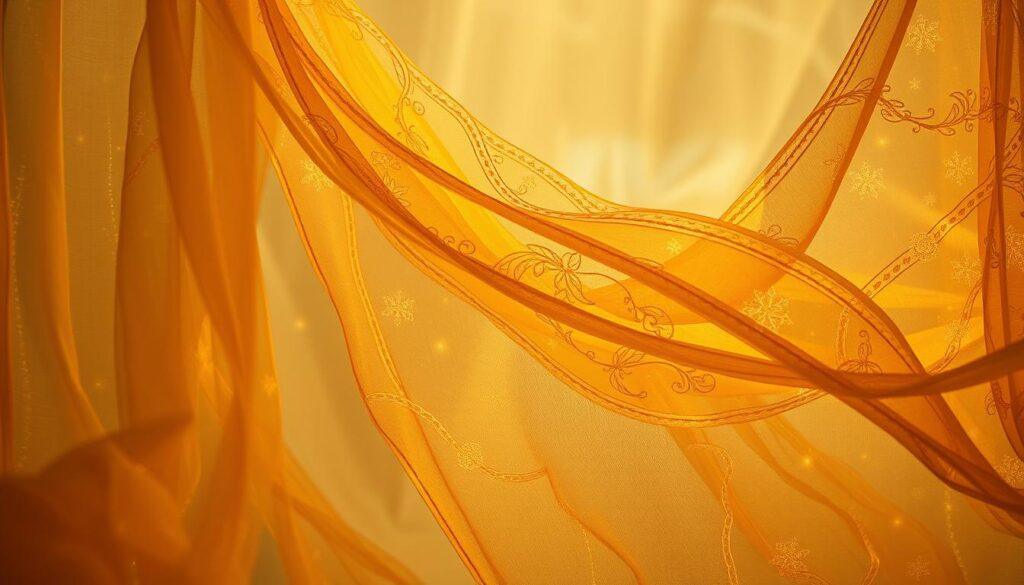
Contemporary artists like Mister Finch understand this instinctively. His use of recycled materials isn’t just eco-virtue signaling. It’s about embedding history into every stitch, creating pieces that feel pulled from some dusty storybook attic.
Remember Ariadne’s thread guiding Theseus? That crimson lifeline through the Minotaur’s maze wasn’t mere string. It was narrative flow made physical – direction and destiny woven into fiber.
Victorian domestic needlework scenes achieved similar magic. Those elaborate samplers weren’t just demonstrating stitch proficiency. They were weaving family histories and social standing into every cross-stitch.
The right storybook textiles don’t just cover bodies. They reveal character. A villain’s cloak should sweep with ominous finality. A princess’s gown ought to cascade like a waterfall of possibilities.
| Drape Style | Narrative Effect | Historical Example | Modern Equivalent |
|---|---|---|---|
| Cascading Flow | Ethereal mystery | Pre-Raphaelite gowns | Alexander McQueen evening wear |
| Structured Fold | Regal authority | Renaissance court dress | Carolina Herrera structured suits |
| Fluid Movement | Dynamic action | Art Deco bias cuts | Iris van Herpen kinetic designs |
| Weighted Hang | Somber gravity | Victorian mourning attire | Rick Owens draped layers |
True storybook textiles carry metaphysical weight. They’re not just what you wear – they’re what you become when the fabric starts telling its tale.
Embellishing with Textures
Ever wonder why spiders keep showing up in textile folklore? It’s not just about creepy crawlies. It’s about the magic in materials themselves. From Arachne’s weaving contest with Athena to Mister Finch’s adorable spiders, textures hint at otherworldly creation.
The Lakota people knew this well. Their story tells of an old woman whose embroidery holds the world together. Texture isn’t just decoration; it’s cosmic maintenance. Ray Bradbury’s “Embroidery” even shows how disappearing stitches mean the end of the world.
When we talk about magical materials, we’re not just talking about feel. They whisper ancient powers and hidden stories. The texture of a woodland creature’s coat tells a different story than fairy wings.
Think of DNA as twisted strands or spider silk’s strength. These aren’t just facts; they’re myths about texture and creation. The right magical materials don’t just look good; they tell stories.
“Texture isn’t decoration; it’s cosmic maintenance.”
Choosing fabrics for fairytale themes changes. We should ask “What stories does this texture tell?” Does rough linen suggest peasant wisdom? Does smooth silk whisper of royal magic? The best magical materials always tell a story.
Modern designers like Mister Finch show how texture tells stories. His textile mushrooms and spiders are more than cute; they’re tiny worlds. Each material choice builds a fairytale reality that’s both whimsical and real.
So, when picking fabrics, remember you’re not just choosing textures. You’re picking the threads that might hold or unravel your world. Choose your magical materials with respect for their powers and stories.
Classic Storybook Inspirations
Ever notice how the real magic in fairytales isn’t in the wands but in the weaves? The Brothers Grimm knew this well. They saw textiles as secret codes, hiding magic systems.
In “Spindle, Shuttle, and Needle,” tools weave destiny. The Sleeping Beauty spindle was more than furniture—it was a curse. These items were not just decorations but key parts of the story.
In other cultures, textiles hold even deeper meanings. The Chinese goddess weaver made the Milky Way with her threads. That’s cosmic-level fairytale fabrics. Japan’s crane wife story shows how weaving can be both a gift and a sacrifice.
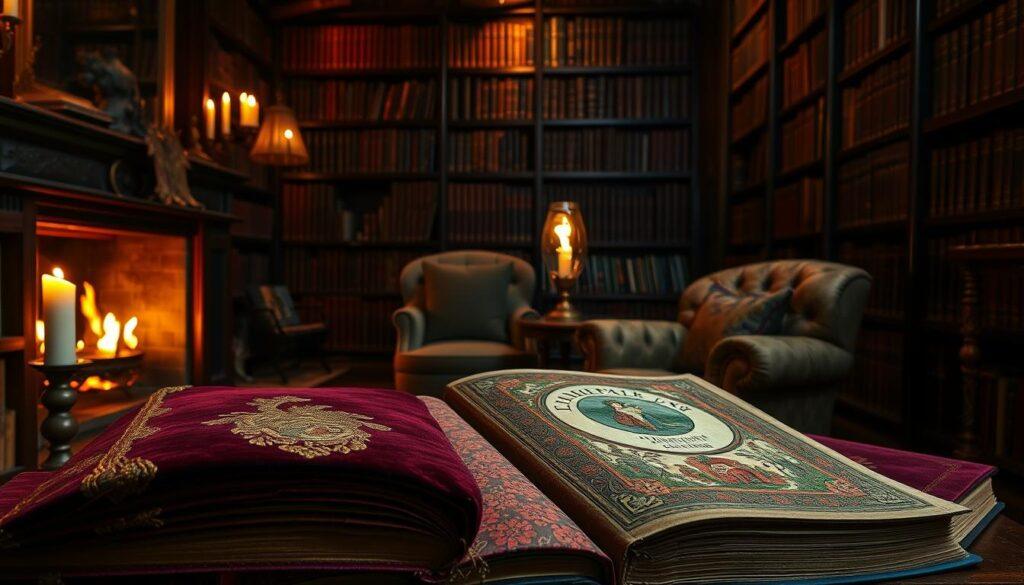
The Victorians used needlework to show their inner struggles. Hawthorne’s Hester Prynne embroidered her scarlet letter as a symbol of rebellion. Wharton’s society women used silk to show their social status.
These stories show that cloth carries cultural memories. Every thread holds:
- Hidden spells (Grimm’s enchanted tools)
- Social commentary (Victorian embroidery)
- Cosmic creation myths (Chinese weaving goddess)
- Personal transformation (crane wife’s sacrifice)
These classic tales show that storybook textiles are more than just background. They are active parts of the story, sometimes heroes, sometimes villains.
Today, when we talk about fairytale fabrics, we’re not just picking materials. We’re connecting to a rich history of symbolism. Every weave and pattern tells a story and whispers secrets.
Designer Tips for Fairytale Realism
To make storybook textiles real, take inspiration from life, not just fantasy. Look at real cultural traditions, not just generic medieval costumes.
Mister Finch’s talent is in using recycled materials that tell a story. Modern “knitting fiction” focuses on community, not isolation. Your textiles should be both ordinary and magical.
Textiles and DNA share a common thread. They both have strands. Your design should reflect this balance.
The best storybook textiles don’t shout “magic.” They hint at it through traditional methods and materials. Real craftsmanship and creative storytelling blend to create fairytale realism.
Your creation should seem like it was there before the story. That’s how you make magical storybook textiles that feel real.