Another Halloween, another blockbuster disappointment. You feel let down by the overpriced, flimsy costume. It’s like a movie that’s just a waste of money.
But what if the best costume is already in your closet? We’re choosing a smarter, more creative way. It’s like your thriftiest relative, “Auntie DIY,” who sees the best in old clothes.
This isn’t just about saving money. It’s a stand against throwing things away. By using what you already have, you’re not just dressing up. You’re doing closet archaeology. That blazer becomes a detective’s coat, and a bedsheet, a toga.
This guide will help you find the superhero in a thrifted blazer. And the galactic empress in a bedazzled sweatshirt. Let’s make our own magic, not buy cheap sequins.
Inventory Walkthrough (Shirts, Skirts, Hoodies, Jeans)
Think of your closet as an archaeological dig site. You’re not just looking at old clothes; you’re finding hidden treasures. This isn’t about shopping; it’s a thrift flip philosophy. You’re seeing the hidden character in everyday items.
Forget the mall—your next great costume is already hanging in your closet. It’s waiting for its story to be rewritten.
The Closet Archaeology Dig
We’re not getting dressed; we’re on a dig. Your mission is to see each garment not for what it is, but for what it could be. This is the art of closet archaeology.
It’s about seeing a button-down shirt not as office wear, but as a pirate’s tunic or a steampunk accessory. A simple cardigan can become Marla’s signature scarf in a famous film. A basic skirt can become a heroic capelet.
Every piece in your closet is a costume component in disguise. Here’s a field guide to your own wardrobe’s hidden talents.
| Garment Type | Costume Component | Quick Thrift Flip Tip |
|---|---|---|
| Button-Down Shirt | Lab coat, pirate blouse, steampunk aviator jacket, or a deconstructed vest. | Use fabric markers for “lab notes” or distress the hem for a post-apocalyptic look. |
| Midi Skirt | Fairy queen gown, elven cloak, or a regal toga. The Misa costume from our case study used a simple skirt as a core piece for a layered, elegant look. | Add a brooch to cinch it as a one-shoulder toga, or layer over a dress for a peasant look. |
| Hoodie | Base for a creature costume (dragon, monster) or a quick ninja outfit. | Add felt spikes along the hood for a dragon, or safety-pin a dinosaur spine down the back. |
| Old Jeans | Adventurer’s vest, rugged chaps, or a deconstructed tote. Distressed jeans are already halfway to a post-apocalyptic scavenger look. | Cut off the legs to make a vest, leaving the raw edges for a “wasteland wanderer” aesthetic. |
Take the “James from Team Rocket” look. It’s not a store-bought jumpsuit; it’s a thrift-flipped masterpiece. A white button-down becomes the crisp Team Rocket uniform base. A basic pair of white pants gets the same treatment.
The iconic “R” is just felt and fabric glue away. The genius is in seeing the uniform, not the separate pieces.
Here’s your starter’s guide to the dig:
- Excavate: Pull everything out. Sort by type and color.
- Analyze the Artifact: Look at lines and shapes. A large skirt can be a cape. A hoodie is a creature in waiting.
- Contextualize with the Case Studies: Remember Marla’s cardigan-scarf. It wasn’t a scarf; it was a cardigan worn as a scarf. This is the mindset.
Your quick-thrift arsenal should include:
- Fabric scissors & fabric glue: For clean cuts and quick, no-sew hems.
- Safety pins & binder clips: For instant, adjustable fits.
- Fabric markers & acrylic paint: For instant logos, distress marks, or alien script.
- Velcro strips: The key to swappable, no-sew attachments.
The goal isn’t perfection; it’s finding the hidden talent in each piece. That boring black skirt is a witch’s cloak. That oversized hoodie is a yeti in waiting. This is closet archaeology: discovering the epic in the everyday through the art of the thrift flip.
Fast Refashions: Tee to Tabard & Skirt to Capelet
Ever felt the rush of a last-minute costume party? You’re stuck with a closet full of clothes and only an hour to go. This isn’t a problem; it’s a chance to get creative. Forget sewing machines and complex patterns. We’re talking fast, simple hacks that transform your clothes in minutes.
Imagine turning a plain t-shirt into a knight’s tabard or a skirt into a regal capelet. It’s all about quick thinking and clever use of what you have. Let’s turn your wardrobe into a treasure trove of costumes in no time.
The 15-Minute Transformation
Costume magic isn’t about being effortless. It’s about clever, quick hacks. We’re not sewing; we’re using fabric and fasteners to create. Think of it as a DIY puzzle.
Take the example of someone who turned a cardigan into a signature scarf. They didn’t sew a thing; they just repurposed the garment’s look. That’s the spirit we’re embracing.
Perfect for wizards, squires, and space gladiators, this hack is zero-sew. Grab a plain t-shirt and a pair of scissors.
- Lay the tee flat on a table and smooth out all wrinkles.
- Cut a deep, wide U-shape around the neckline, from one shoulder seam, down in a scoop, and back up to the other shoulder. You’re creating a wide, open neck. Discard the neckband you cut off.
- Create the side slits: Make a straight, vertical cut up each side seam, starting from the bottom hem and stopping about 6-8 inches up. This creates the classic tabard flap.
- Define the armholes: On each side, where the sleeve meets the body of the shirt, cut a vertical slit about 4-5 inches long. This is where your arms go.
Now you have a tunic. Belt it, wear it over a long-sleeve shirt and leggings, and you’re ready for a fantasy realm. The raw edges give it a lived-in look.
From Skirt to Capelet: The 5-Minute Regal Hack
Turn a simple skirt into a capelet with a single safety pin or brooch. It’s that easy.
- Grab a flowy, maxi, or A-line skirt from your closet.
- Gather the waistband of the skirt at one point on your shoulder.
- Use a large, sturdy safety pin or a decorative brooch to gather and pin the fabric at that shoulder point, letting the rest of the skirt drape over your back and opposite arm.
This hack is all about the drape. A denim skirt gives a rugged look, while a silky one makes a royal mantle. It’s like turning a cardigan into a scarf, but for a whole garment.
Tools of the 15-Minute Refashionista
Your no-sew arsenal is simpler than you think.
| Tool | Use Case | Pro-Tip |
|---|---|---|
| Fabric Scissors | For clean cuts on t-shirts, felt, and light fabrics. | Reserve these for fabric only. Dull scissors make a mess. |
| Fabric Glue / Hot Glue Gun | For attaching felt, patches, or trims instantly. | Use a low-temp gun to avoid burns and fabric scorching. |
| Safety Pins & Brooches | The true heroes of no-sew. Use to create gathers, close seams, or add flair. | Look for decorative pins that match your character. |
| Fabric Markers & Paints | For adding symbols, heraldry, or distress marks. | Test on a scrap first. Fabric medium keeps paint flexible. |
| Velcro (Hook & Loop) | Ideal for adjustable cloaks, armor plates, or swappable patches. | Stitch (or glue) one side to the garment, the other to the accessory. |
The 15-minute transformation is about quick, clever changes. It’s not about perfection; it’s about turning your clothes into a story. The skirt becomes a cape, the t-shirt a tunic. The only rule? There are no rules, only clever solutions.
Denim to “Adventurer” Vest
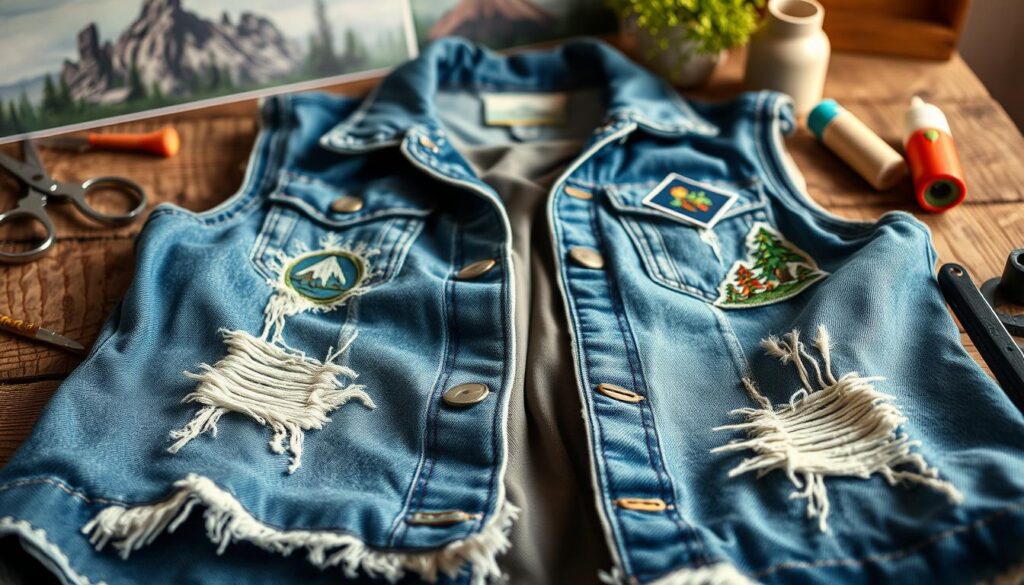
Every closet has old jeans or a denim jacket that’s seen better days. This isn’t a eulogy for old denim; it’s a blueprint. We’re not just cutting and sewing; we’re applying the principle of “hacking” everyday materials.
Think of it like using cardboard and foil for robot costumes, but with a post-apocalyptic twist. The goal is to transform a mundane denim jacket or vest into the ultimate “Adventurer’s” vest. It should look like it has a story, salvaged from a world that no longer exists.
The Art of the “Perfectly Imperfect” Finish
Forget pristine, off-the-rack perfection. The adventurer’s aesthetic is built on “wabi-sabi,” the Japanese philosophy of finding beauty in imperfection. Your goal isn’t a factory-fresh look; it’s a garment that whispers of desert wastelands and urban ruins.
This isn’t about making it look old; it’s about making it look lived-in. Think of it as a narrative in denim: every scuff, every fray, tells a part of the story. The key is controlled chaos—deliberate, artistic damage that looks anything but accidental.
Start with the vest itself. If you’re using a jacket, you can carefully remove the sleeves and collar. This is your canvas. The “perfectly imperfect” finish relies on contrast: areas of heavy wear next to patches of the original, untouched fabric.
The key is asymmetry. Don’t distress both pockets the same way; let one be pristine while the other is frayed. Let one shoulder look more worn than the other, as if a satchel strap has been rubbing against it for years.
Patches, Fraying, and the Art of Distressing
This is where the magic—and the hack—happens. We’re moving beyond the basic scissor-snip. Here’s your toolkit for creating that lived-in, “found in a wasteland” aesthetic:
Strategic Fraying: Use a seam ripper, a small razor, or a heavy-grit sandpaper to wear down the edges of the vest, cuffs, and hem. Don’t be neat. Let the white threads of the denim’s weft poke through.
For a natural, sun-bleached look on the dye front, you can dip-dye the entire vest in a weak tea or coffee bath after distressing. This gives it a sun-faded, sun-bleached patina.
Patchwork Narrative: This is where the “Velcro story patches” concept gets a rugged makeover. Instead of cutesy iron-ons, think tactical. Sew on a mismatched patch of heavy canvas, a scrap of leather, or a piece of an old cargo pocket.
Use a strong, visible stitch—a thick, contrasting thread in a color like orange or yellow—to make the repair look functional, not decorative. This isn’t just a patch; it’s a field repair, a story of survival.
Controlled Distressing: Don’t just attack the fabric randomly. Think like an archaeologist of a future wasteland. Sand the knees of the denim (if it’s a jacket-turned-vest, focus on the front where a tool belt might rub).
Use a small, sharp blade to create tiny, intentional nicks and slices. The goal is to mimic the wear of a scavenger who’s climbed, crawled, and bartered their way across a broken landscape.
To transform the vest’s color entirely, fabric dye is your most powerful tool. A dark, mottled grey or a deep, mottled green can instantly age the denim and unify all your distressing efforts. For a truly unique, post-apocalyptic look, consider a quick, uneven dip-dye to create an ombré effect, as if the vest was stained by the strange, irradiated earth of its fictional world.
| Distressing Technique | Tools Needed | Intended Effect | Pro-Tip |
|---|---|---|---|
| Sandpaper Abrasion | Coarse sandpaper, sanding block | Worn-in, faded look on high-wear areas (elbows, collar, pockets) | Focus on edges and seams where wear naturally occurs. |
| Razor Blade Slicing | Utility knife or seam ripper | Creates authentic-looking rips and tears. Slash horizontally across the grain of the fabric. | Cut a small hole first, then pick at the threads with a pin to create natural fraying. |
| Bleach or Dye Application | Fabric dye, bleach, spray bottle | Creates faded, sun-bleached, or tie-dye effects. Can be used to create “drip” or “stain” effects. | For splatter effects, use a spray bottle. For an all-over dip, use a dye bath. |
| Strategic Ripping | Scissors, tweezers | To create larger, more dramatic holes or frayed edges. | Cut a small hole, then use tweezers to pull out horizontal threads for a more natural rip. |
The final touch is the accessories. A scavenger doesn’t travel light. Add functional-looking D-rings, a carabiner, or a few non-functional buckles. The vest isn’t just clothing; it’s a utility belt of a garment.
The beauty of this project is that there are no mistakes, only more history. The more you “wreck” it with purpose, the more authentic your adventurer’s vest becomes.
Hoodie Creatures: Crafting Your Mythical Beast
Imagine turning your favorite hoodie into a mythical creature with a few simple steps. Welcome to the world of hoodie creatures, where fashion meets fantasy. You don’t need fancy sewing or expensive materials. Just see your hoodie as a canvas for scales, fur, or other magical features.
Our style is all about simple yet cool ideas. Use items like Daiso finds for antennae or a wild wig for a hood. Makeup can make eyes glow. The goal is to make a big impact without harming your hoodie.
Ears, Spikes, and Felt Fangs
Let’s talk about making a hoodie creature. You’ll need a few basic things. Craft felt is great for making different parts:
- Ears: You can make simple triangles or fancy lynx points. Use safety pins or stitches to attach them.
- Spikes/Dorsal Ridges: Felt triangles down the hood and spine make your creature look like a dragon or dinosaur.
- Fangs & Claws: Use white felt for sharp shapes. Glue or pin them around the hood or sleeves.
Fabric markers are key for adding details. They’re great for drawing scales, spots, or stripes. Think about how scales would overlap and how light would hit them.
For small details, fabric markers offer control paint can’t match. Sketch glowing runes or eye designs on the hood. This approach is like the DIY Greek goddess costume, where details tell the story.
The Art of the Hoodie Hack
The real magic is in the hack, not damaging the hoodie. We’re adding to it, not taking away. See the hood as a head shape and the pocket as a secret space.
Here are some hack tips:
- Pin, Don’t Sew: Use safety pins and brooches for removable parts. This way, you can change your creature easily.
- Layer Smartly: Wear a contrasting shirt under the hoodie. Roll the sleeves to show patterns drawn with fabric markers.
- Embrace the Drawcord: Use the string as tentacles or vines with felt bits.
Using fabric markers makes your hoodie more than a project. It’s a design challenge. You’re adding texture and depth with just a few lines.
This is about layering your costume design. Start with the hoodie, add felt shapes, then use markers for details. Add accessories like a necklace or gloves. Your creature is now ready for its close-up.
Dye & Fabric Marker Safety + Setting Color
Do you dream of a hoodie that glows in the dark or jeans that look like they were dipped in a sunset? Great idea! But first, let’s talk about safety. We want your creation to last and for you to stay safe while making it.
The Chemistry of Color, Sans the Lab Coat
Don’t be scared. Working with fabric dyes and markers is easy. It’s like following a good recipe. We aim for bright, lasting colors that won’t ruin your couch.
Safety and Setting
This part is very important. We want you to be like an artistic alchemist, not a hazardous materials technician.
Ventilation is Non-Negotiable: Dyes and chemicals are not air fresheners. Always work in a very well-ventilated area. Open windows, use a fan, or take the party outside. Those fumes are for the fabric, not your lungs.
Skin is Not Fabric: Your skin is not a textile. Always wear disposable gloves. This protects your hands from stains and prevents skin irritation. An apron or old shirt is also a good idea—this is a messy, glorious process.
The Patch Test is Your Friend: Before you color your whole project, test your dye or marker on a hidden seam or scrap of the same fabric. This is your dress rehearsal. It reveals the final color and tests for colorfastness before you commit.
Once your creation is colored, the real magic—the setting—begins. This is where your costume goes from “arts and crafts project” to a durable, washable piece of wearable art. Heat is your new best friend. For most dyes and fabric markers, the color is set by heat. This is non-negotiable for longevity.
| Dye/Ink Type | Best For | Setting Method | Longevity & Notes |
|---|---|---|---|
| Permanent Fabric Dyes (e.g., Rit, Dylon) | Natural fibers (cotton, linen, silk). | Wash the finished item in a hot cycle (or as per dye instructions) to set the color. Some require a fixative or salt solution. | Excellent, colorfast results. Follow package instructions for sustainability to avoid re-dyeing. |
| Fabric Markers & Paint | Detailed designs on any fabric. | Heat set with a hot, dry iron (no steam) for 3-5 minutes. Place a cloth between iron and design. | Wash inside-out on cold. The heat from ironing bonds the ink to the fibers. |
| Fabric Paints | Bold, opaque designs. | Air dry for 24-72 hours, then heat set with an iron (check paint instructions). | Once heat-set, very durable. Can be hand-washed gently. |
This isn’t just about the costume surviving the night; it’s about it surviving the next Halloween, and the one after that. The most sustainable costume is one that doesn’t end up in a landfill after a single use. By choosing the right dyes and setting them properly, you’re not just making a costume; you’re building a reusable piece of your personal sustainability story.
Think of it this way: proper setting is the difference between a one-night-stand costume and a recurring character in your personal lore. The extra 30 minutes with an iron or a final wash cycle is the secret handshake of the seasoned upcycler. It’s the step that transforms a fun project into a durable artifact, a piece of wearable history. This is the sustainability of costume creation: building a piece that lasts, reducing waste, and investing in a piece of your imagination.
So, suit up in your safety gear, embrace the process, and set that color with confidence. Your costume—and the planet—will thank you for it.
Patch Systems: Velcro Story Patches for Swappable Flair
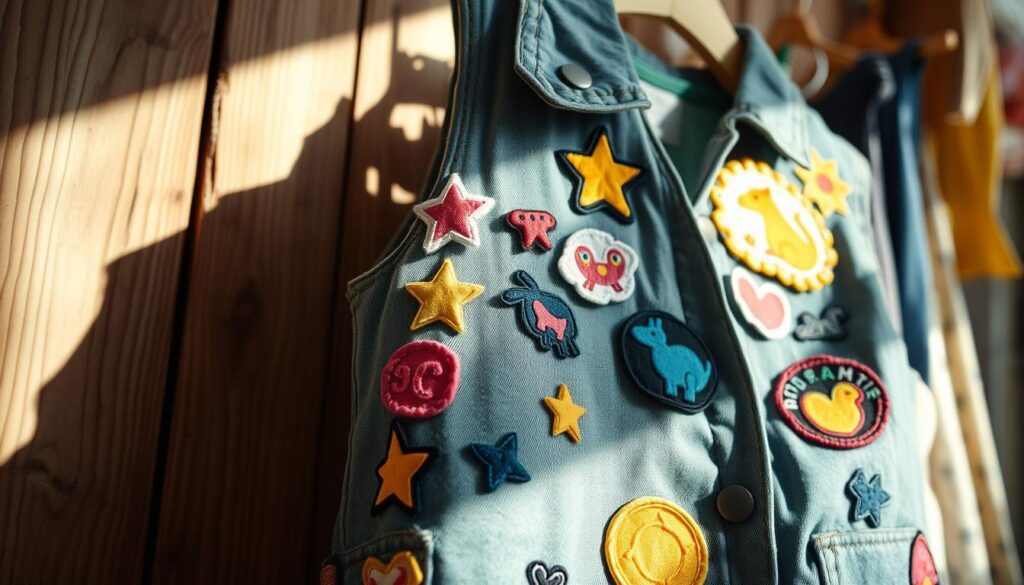
Forget the static, one-and-done costume. The true magic of a thrift flip costume lies in its ability to evolve. Imagine a costume that grows with your character. A scavenger can earn a new patch for a hard-won barter deal, or a space captain can change insignia to reflect a new rank.
This isn’t just sewing; it’s systems thinking for your closet. Welcome to the world of modular, Velcro-based story patches.
This approach transforms a single, static garment into a dynamic storytelling tool. It’s like a modular synthesizer—swap out the modules (patches) and you get a whole new sound, or in this case, a whole new character beat. It’s world-building you can wear.
The Velcro Narrative
Think of your costume as a book and each patch as a chapter. A post-apocalyptic scavenger might start with a grimy “SCRAP HAULER” patch, later adding a “Bottle Cap Baron” patch after a big trade. A cyber-runner might have a patch for a “Neon Nexus” faction, which they can swap for a “Data Ghost” patch after a key story moment.
This system elevates a costume from a thing you wear to a story you’re telling. The Instagrammer’s simple “R” logo for “Team Rocket” is a perfect, minimalist example—one patch, a world of narrative.
A System for Swappable Flair
This isn’t just about aesthetics; it’s about a functional, customizable system. Here’s how to build your own narrative patch system:
- The Base Layer: Start with a vest, jacket, or bag as your “canvas.” Sew or iron-on a large panel of the hook side of hook-and-loop (Velcro) tape onto the garment.
- The Patches: Create your story patches on a stiff fabric. Sew the loop side of the Velcro onto the back of each patch. Now, they’ll stick securely to your base garment.
- The Narrative Arsenal: Design patches that tell a story. For a space explorer: a mission patch, a “hazardous environment” warning, and a corporate faction logo. For a fantasy rogue: a guild crest, a bounty notice, and a map fragment.
This system is the ultimate thrift flip hack. A single, thrifted denim vest becomes a post-apocalyptic scavenger’s jacket, a spacefaring captain’s tunic, or a fantasy adventurer’s jerkin, just by swapping the patches.
| Patch Type | Character Example | Suggested Patch Ideas |
|---|---|---|
| Faction/Group | Post-Apoc Scavenger | “Barter Guild Member,” “Water Baron’s Militia” |
| Skill/Achievement | Space Marine | “Expert Marksman,” “Zero-G Combat Certified” |
| Story Milestone | Fantasy Rogue | “Dragon’s Maw Survivor,” “Key to the Crystal Caves” |
| Functional | Cyberpunk Netrunner | “Neural Jack Port,” “Signal Booster Active” |
This modular, narrative-driven approach turns a simple thrift flip into a living, breathing part of your character’s story. It’s not just a costume; it’s a system for storytelling.
Fit Tricks: Elastic, Drawcords, and Gussets, Oh My!
Forget the sewing machine and the tailor’s chalk. The most transformative costume refashion often happens with clever, no-sew hacks. We’re moving beyond basic safety-pin tucks. This is about using tension, geometry, and physics to make a costume fit perfectly.
Think of your costume as a dynamic system, not a static garment. The goal isn’t to create a museum piece, but a wearable, movable, and convincingly real piece of character armor. This is where the no-sew tailor’s kit comes into play, turning baggy, ill-fitting cast-offs into bespoke costume pieces.
The No-Sew Tailoring Kit
This isn’t about minor adjustments. This is about structural re-engineering. We’re using simple tools—elastic, cord, and a bit of geometry—to perform what looks like costume alchemy. It’s about understanding how fabric, tension, and the human body interact. Forget the needle and thread; your new best friends are grommets, toggles, and a roll of quarter-inch elastic.
Elastic Casings: The Cinched Silhouette
Elastic isn’t just for waistbands. It’s the secret to a dramatic, custom fit. The key is the casing: a simple tunnel of fabric you create without a single stitch. Use safety pins or fabric glue to create a channel along a hem, sleeve, or neckline. Thread a piece of elastic through, and you have an instant, adjustable cinch. This can transform a billowy tunic into a belted tunic-dress or create a gathered, puffed sleeve worthy of a fantasy rogue. It’s the difference between wearing a sack and wearing a garment with intention.
Drawcords: The Cinch-and-Go Solution
A drawcord is the Swiss Army knife of the no-sew refashion. It’s a pulley system for your clothes. For a quick refashion, simply create a series of small, reinforced holes (using grommets or even sturdy eyelets) up the side of a tunic or dress. Lace a sturdy cord through, and you have an instant, adjustable side-lacing corset effect. This technique can transform a baggy tunic into a fitted bodice in seconds, creating a dramatic silhouette change without a single stitch.
Gussets: The Geometry of Movement
This is the advanced class. A gusset is a diamond or square of fabric inserted to add room and mobility. The no-sew version? Think of it as strategic draping. For a quick, no-sew gusset, find the point of tension—the underarm of a restrictive shirt, the crotch of a pair of pants. Use a strong fabric glue or fabric fusion tape to attach a diamond-shaped piece of stretchy fabric (like spandex or a contrasting color) into a slit you cut. This adds a diamond-shaped panel that allows for incredible movement. It’s the difference between a costume that restricts and one that lets you duel, dance, or make a dramatic exit.
| Technique | Best For | Key Materials | Key Benefit |
|---|---|---|---|
| Elastic Casing | Creating gathers at cuffs, hems, and waists for a cinched, fitted look. | Elastic cord, safety pins, fabric glue | Creates instant, adjustable shaping without permanent alteration. |
| Drawcord Lacing | Dramatic waist, sleeve, or bodice shaping on tunics and vests. | Paracord, grommets, metal eyelets | Provides a “corseted” or laced-armor look with adjustable fit. |
| No-Sew Gusset | Adding mobility to restrictive sleeves, underarms, or pant legs. | Stretchy fabric, fabric fusion tape, sharp scissors | Adds range of motion; perfect for “armor” or restrictive costumes. |
This approach to refashion is less about mending and more about mechanical design. It’s the difference between a costume that looks like a collection of old clothes and one that looks like a character stepped off the screen. You’re not just dressing up; you’re engineering a second skin for a new persona.
Safety Check: Choking Hazards & Visibility
Let’s talk about the backstage of your DIY costume masterpiece: the safety inspection. It’s the final check before the runway. We’ve spent time crafting, stitching, and accessorizing. But the most sustainable costume is one that’s safe to wear for years.
True sustainability in costuming means creating something safe. It’s not just about beauty, but also about safety. Let’s get pragmatic.
The Glamour vs. The Gory Details
Every great costume has a story, but the best stories don’t end with a trip to the ER. The Instagrammer’s vest and the Auntie DIY-er’s hot glue creation are safe to wear. This isn’t about fear; it’s about smart, thoughtful creation.
The glamour is in the final look; the grit is in the invisible safety net you build into it.
Choking Hazards & Trip Wires (The Unseen Villains)
Your costume is a world you build. But like any world, it has its hazards. The “unseen villains” aren’t just goblins and ghosts.
They’re the tiny, shiny bauble that looks like a perfect jewel for a fairy crown but is the perfect size to choke a toddler. They’re the long, trailing ribbons on a medieval gown that could snag on a doorknob, or the loosely-glued sequins that look like dragon scales but are, in fact, toddler-grade projectiles.
The Auntie DIY ethos is brutally practical here: if it can come off, it will. If a child can fit it in their mouth, they will. So, the rule is simple: if it’s smaller than a golf ball, it’s a choking hazard. If it’s a cord, tie, or ribbon longer than six inches, it’s a trip wire or strangulation risk. Secure. Everything.
The No-Sew Tailoring Kit for Safety
This is your no-sew, no-fuss safety kit. It’s not as fun as a hot glue gun, but it’s your insurance policy.
| Hazard Zone | Common Culprit | Auntie’s No-Nonsense Fix | Sustainable Swap |
|---|---|---|---|
| Small Parts (Buttons, Gems) | Hot-glued gems, sequins, small toggles | Stitch or use fabric glue for a bond that laughs at a toddler’s grip. For the truly tiny, embroider a bead instead of gluing a gem. | Use fabric paint for “gems,” or embroider details with sturdy thread. |
| Loose Cords & Ties | Long cloak ties, hanging sashes, drawstrings | Secure ends with a knot inside the hem, or use breakaway fasteners. For kids, replace long ties with snaps or Velcro for the look without the risk. | Use upcycled Velcro or magnetic clasps from old clothes. |
| Vision & Mobility | Masks, large headpieces, trailing fabric | For masks, ensure peripheral vision is clear. For capes or cloaks, hem them well above the ankles. | Use light, breathable fabrics that don’t restrict movement or sight. |
| Flammability | Non-FR treated tulle, synthetic sheens | Keep away from open flames (jack-o-lanterns, candles). Treat fabrics with a flame-retardant spray (test first!). | Opt for natural fibers like cotton or wool, which are less flammable. |
The Auntie in me must also mention fire. That epic, floor-length organza cape is a dream until it’s near a candle-lit pumpkin. Prioritize natural, tightly-woven fabrics and always keep a safe distance from open flames. It’s the ultimate in sustainability—keeping your masterpiece (and its wearer) intact for many Halloweens to come.
So, before you send your hero or villain out into the world, give them the final, most important accessory: a safety check. Secure, see, and move freely. That’s the real magic.
The 10-Piece Capsule Dress-Up Wardrobe
Now that you know how to upcycle individual items, it’s time to put it all together. Imagine your closet as a chessboard. Each piece, like a black turtleneck or a thrifted corset, opens up new possibilities for characters.
The Strategic Closet
Think of a costume capsule wardrobe, like a minimalist Instagrammer’s collection. It’s not just clothes; it’s a system. A black skirt can be a Victorian maid’s uniform or a space cadet’s tunic with the right accessories.
This is the secret to upcycling costumes: a few versatile, upcycled pieces.
The 10 Commandments of a Capsule Costume Closet
Leave behind fast fashion and disposable outfits. Your new rules are simple yet powerful. Start with basics like black and white tees and dark skirts.
Invest in a few key items from thrift stores, like a blazer or a corset. Master the art of accessories, like a wig or statement gloves, to change a look. The goal is to make more from less, not to have more.
Combine everything you’ve learned. Use that denim vest, dyed tee, and safety-pinned tabard to create different characters. With a strategic capsule, a few items can become many characters. The real magic is in the act of creating.
So, look at your closet with a strategic eye. Your wardrobe is now a place for endless imagination.