The princess industry hasn’t been great at creating feminist icons. We’ve been fed a tale where the most thrilling part is waiting for someone to save us.
But what if we could make gowns that teach more than just waiting? I’m talking about DIY princess dress creations that say “you’re the hero of your own story” with every thread.
Princess costumes are the top pick for Halloween every year. But being authentic isn’t just about copying movie scenes. It’s about making magical adventures that celebrate bravery over being polite.
Let’s move away from “someday my prince will come” and towards “someday I’ll build my own castle.” Modern royalty needs a better image. It starts in the dress-up bin with creativity and kindness as the true treasures.
Fabric Choices for Comfort & Safety: cotton knits, stretch wovens, tulle alternatives
The fabric revolution starts here. We’re moving away from itchy costumes and towards materials that are kind to kids. I’ve seen more tears from itchy necklines than from broken wands. The change begins with the type of fabric we use.
If it can’t survive a spin cycle after a spill, it’s not playwear. Washable dress-up is a must.
We’re saying goodbye to scratchy polyester. Instead, we’re choosing fabrics that move with kids, not against them.
Here’s a quick guide to fabrics that are both magical and practical:
| Fabric Type | Best For | Care & Durability | Weight Recommendation |
|---|---|---|---|
| Cotton Knits | Bodices, sleeves, everyday wear | Machine washable, gets softer with time | 125GSM+ for opacity |
| Stretch Wovens | Dragon-slaying, impromptu cartwheels | Holds shape through multiple washes | Medium weight for structure |
| Tulle Alternatives | Skirt volume without the itch | Non-shedding, less microplastics | Lightweight but layered |
| Cotton Blends | Comfort with durability | Breathable yet sturdy | 125GSM+ for optimal wear |
| Satin Overlays | Luxurious look without sacrifice | Survives juice box incidents | Lightweight yarn base |
Cotton knits are like second skin. They’re perfect for playwear. At 125GSM or heavier, they’re breathable and modest.
Stretch wovens are great for adventures. They’re not too stiff or too flimsy. They’re just right for kids who love to move.
Tulle alternatives are a game-changer. They offer volume without shedding microplastics. This is good for the environment and for kids’ comfort.
Lightweight yarn fabrics create a princess silhouette without being heavy. They’re breathable and full of drama.
Satin overlays add luxury to cotton blends. They create a royal look without the discomfort.
When these fabrics work together, magic happens. A cotton knit bodice with stretch woven sleeves and tulle-alternative skirts is the ultimate washable dress-up experience.
Remember, if it feels like punishment, it’s not playwear. Choose fabrics that respect kids and their big dreams.
Pattern Basics: bodice, sleeves, skirt fullness, movement-friendly hems
Most kids costume patterns make kids look like dolls, not real kids. They forget that kids need to move and play. The best patterns let kids twirl and play without getting stuck in their clothes.
The bodice is like the control center, not a tight corset. It needs to fit right at 30+ points to match a child’s shape. This way, kids can breathe and look royal at the same time.
Sleeves are key. They must let kids wave wands and grab snacks easily. The right armhole depth and sleeve cap height are essential. Too tight, and kids can’t move; too loose, and they look sloppy.
Skirt fullness is important for twirling. We aim for 2.5 times the waist measurement. This creates a fluffy look without making kids look like they’re wearing a tent.
Movement-friendly hems are a must. They should be 1.5 inches off the ground. This lets kids move freely without tripping over things.
| Pattern Element | Traditional Approach | Modern Solution | Why It Matters |
|---|---|---|---|
| Bodice Construction | Rigid seams | Double-stitched flexibility | Allows for breathing and movement |
| Stress Points | Single stitching | Reinforced seams | Withstands playground testing |
| Skirt Fullness | Maximum volume | Calculated twirl ratio | Balances drama with mobility |
| Hem Length | Floor-length | Movement clearance | Prevents tripping hazards |
The magic is in the details. Double-stitched seams and reinforced areas help a lot. Plus, three-dimensional decorations add flair without getting in the way.
Being able to climb monkey bars in style is key. These patterns aren’t just dresses. They build confidence in kids.
Closures for Independence: snaps, Velcro, elastic
Let’s break free from the hassle of tiny buttons and tricky zippers. Why do we make clothes that need grown-ups for simple tasks? It’s time for a change in how we close kids’ clothes.
We’re choosing closures that let kids be in charge. Snaps that click into place. Velcro closures that tear with a sound of freedom. Elastic that stretches for sudden growth. It’s more than getting dressed; it’s about letting kids decide for themselves.
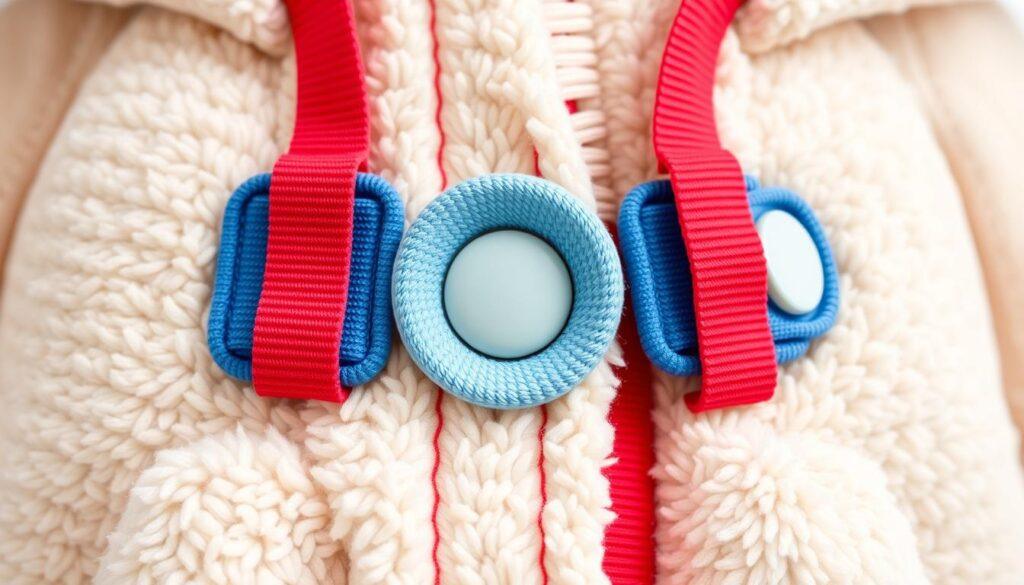
When kids dress themselves, they’re showing they can rule their own world. Adjustable parts like corset backs and elastic panels make dressing easier. Toddler costumes with simple closures help build confidence.
Which closure is the best? Let’s look at the top contenders:
| Closure Type | Independence Factor | Best For | Durability |
|---|---|---|---|
| Snaps | High – satisfying click feedback | Formal wear, layered costumes | Excellent with reinforced stitching |
| Velcro | Maximum – easiest for small hands | Quick changes, sensory-friendly designs | Good (replaceable strips) |
| Elastic | Medium – requires some assistance | Growth accommodation, comfort focus | Varies by quality |
The right closure does more than hold clothes together. It builds a child’s confidence. Velcro closures are great for kids learning to use their hands. That sound of ripping? It’s the sound of growing confidence with each change.
Elastic and adjustable parts make clothes that grow with the child. In the kingdom of childhood, every kid should have the right to choose what they wear.
Grow‑With‑Me Fit: side ties, hem tucks, adjustable straps
Kids grow fast, like startups. A dress might fit perfectly one day and too small the next. This is because they can grow up to 2 inches in just a few days.
Side ties are like a flexible budget for clothes. They adjust without needing to change the whole dress. Just loosen them when your child grows taller.
Hem tucks are like special growth zones for dresses. We make them with extra fabric and temporary stitches. Then, when your child needs more length, just cut the stitches and extend the dress.
Adjustable straps are a game-changer. They use buttons or buckles to grow with your child. This way, you avoid the problem of clothes that are too tight.
This isn’t just about clothes; it’s about sustainable fashion. It shows that kids are always changing, and clothes should too. Clothes shouldn’t have an expiration date.
| Adjustment Method | Growth Accommodation | Ease of Use | Best For |
|---|---|---|---|
| Side Ties | 1-2 inches width | Simple knot adjustment | Bodice and waist fit |
| Hem Tucks | Up to 3 inches length | One-time thread removal | Skirt and dress length |
| Adjustable Straps | 1-2 inches length | Buttonhole or buckle slide | Shoulder growth and comfort |
These solutions make clothes more than just things we wear. They become friends for the unpredictable journey of childhood. And what’s more magical than a princess dress that fits perfectly?
Low‑Sew and No‑Sew Options: heat‑hem tape, pre‑gathered trims
Let’s face it, not every parent has time to sew. Heat-activated tape is like a fairy godmother, making things fast.
Heat-hem tape is a quick fix. Iron it between fabric layers for a strong bond. It’s great for fixing long gowns without sewing.
Pre-gathered trims are a big help. They’re ready to use, saving hours of sewing. They’re like instant magic for DIY princess dresses.
Why sew when you can use adhesive? These options let you create without the hassle of sewing. It’s like waving a magic wand.
| Method | Time Required | Skill Level | Best For |
|---|---|---|---|
| Heat-Hem Tape | 5 minutes | Beginner | Hem adjustments |
| Pre-Gathered Trim | 2 minutes | No experience | Skirt embellishments |
| Fabric Adhesive | 3 minutes | Beginner | Appliqués & decorations |
These methods are not just easy—they change the game. They make dress-making open to everyone, no matter their sewing skills.
The best part? Seeing a child’s joy when they see their favorite adult made something beautiful. All without sewing.
Durable Embellishments: appliqués, fabric paint, non‑shedding sparkle
Let’s face it: nothing ruins the princess dream like finding glitter in your coffee months later. We’re not just decorating dresses; we’re creating tiny works of art that last through tough times.
Appliqués become your secret weapon when they’re well-attached. Say goodbye to the weak iron-ons that fall off after one wash. We’re talking about decorations that are triple-stitched or fused with strong adhesive. They should not only survive the wash but also look brand new.
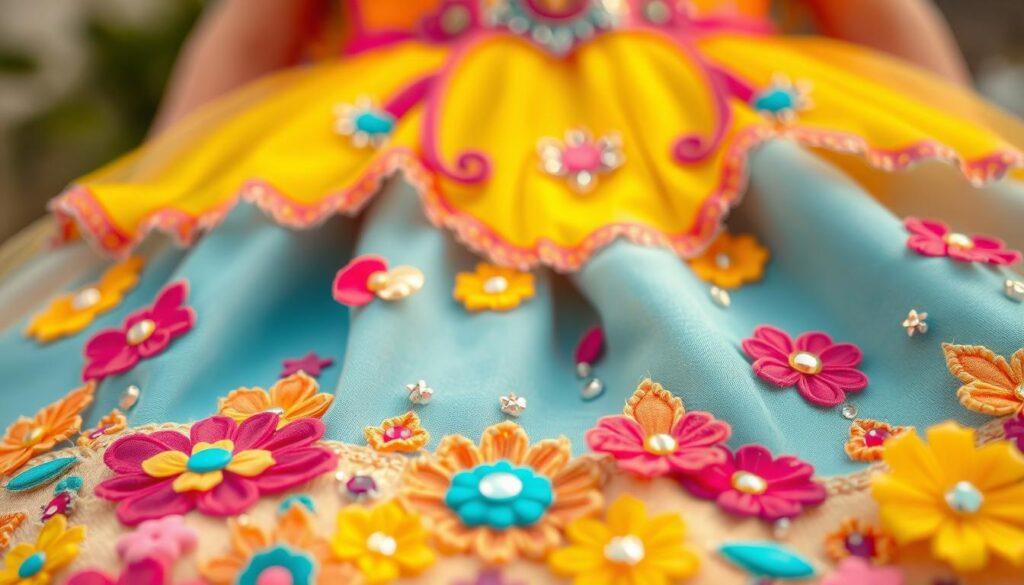
Fabric paint has come a long way from the old days of fading and cracking. Today’s paints move with the fabric, making designs that stay put. The key is in the drying time – when done right, these designs flex and bend without breaking.
Three-dimensional flowers add texture without the hassle. Those delicate fabric flowers now have flat backs and secure stitching. This means they add beauty without the risk of skin irritation.
Non-shedding sparkle is the ultimate goal for princess dresses. We’re talking about sequins that are heat-sealed or stitched with precision. The aim is to have all the sparkle without the mess. Glitter shouldn’t be a problem.
These durable embellishments turn ordinary costumes into lasting treasures. They’re not just decorations; they’re tests of durability that show true quality.
Inclusive Styling: pants under dresses, soft linings, sensory‑aware trims
The princess industrial complex hasn’t always focused on comfort. Those scratchy tulle dresses are like a pumpkin carriage that looks great but feels bad. Can we make royal wear that feels good?
Now, we have sensory-friendly dresses that are both magical and comfy. No child should have to pick between feeling like a princess and feeling at ease.
The pants-under-dresses trend is a game-changer. It’s about wearing costume-colored tights or fleece-lined leggings under dresses. This way, kids can play without worrying about their clothes.
We’re creating designs for all bodies and needs. No more itchy tags or scratchy fabrics ruining the fun.
The Comfort Revolution Starts Here
Soft linings make dresses feel like a second skin. Imagine:
- Cloud-soft cotton against delicate skin
- Breathable fabrics that move with the child
- Seamless construction that eliminates irritation
These details show that comfort and fantasy can go hand in hand. Everyone is welcome, no matter their sensory needs.
Sensory-aware trims are the next step in inclusive design. We’re saying goodbye to:
- Scratchy lace that feels like punishment
- Shedding sequins that trigger overwhelm
- Stiff embellishments that restrict movement
Instead, we’re finding sparkly alternatives that don’t overwhelm. The best magic is the kind you can enjoy.
This isn’t just about clothes; it’s about designing for all human experiences. Every child should feel royal without the discomfort.
Literacy Tie‑Ins: character values, journal prompts, read‑alouds
Imagine if princess dresses came with built-in book clubs. We’re talking about clothes that turn playtime into learning. No more just wearing costumes; these dresses spark imagination and more.
Belle’s famous dress is more than just a pretty gown. It’s a character values statement. We add messages of empowerment and ethical questions to the dress. It’s like wearing a lesson in beauty and the beast.
Journal prompts hide in secret pockets. Picture finding “What would you change about your castle?” inside a hidden pouch. These dresses aren’t just for show; they start important conversations.
The magic really happens with read-aloud books. Each dress comes with a list of books to read. That Cinderella-blue dress? It’s paired with stories about being brave and smart money choices.
| Literacy Element | Garment Implementation | Developmental Benefit |
|---|---|---|
| Character Values | Empowerment messages on lining | Ethical reasoning development |
| Journal Prompts | Hidden pocket questions | Self-reflection skills |
| Read-Aloud Pairings | Tagged book recommendations | Literary analysis foundation |
| Narrative Elements | Story-sequence appliqués | Sequential thinking practice |
We’re making literacy tie-ins that do more than magic spells. The dress is like a book, with stories on the sleeves and character journeys in the skirt.
These aren’t just clothes; they’re learning sessions in disguise. They reach a child’s heart through their clothes and books.
Laundry & Storage: stain treatment, wash cycles, garment bags
No fairy godmother magic can save a costume from the washing machine. The real test is after the adventures end. We face glitter glue mishaps, grass stains, and mysterious substances at tea parties.
Stain treatment needs a royal protocol. Always treat stains before washing. Know your enemy: organic stains need enzyme treatments, while synthetic stains need solvents.
| Stain Type | Immediate Treatment | Pre-Wash Solution | Success Rate |
|---|---|---|---|
| Glitter Glue | Scrape excess | Rubbing alcohol soak | 90% |
| Chocolate | Cold water rinse | Enzyme pre-treatment | 85% |
| Grass | Blot don’t rub | Vinegar solution | 80% |
| Juice | Cold water flush | Lemon juice + sun | 95% |
Wash cycles need careful thought. Cold water preserves colors and prevents shrinkage. Gentle cycles protect embellishments. Always turn costumes inside out before washing.
Storage solutions are key for washable dress-up. Garment bags protect against dust and damage. They keep costumes looking great.
Professional cleaning is vital for special pieces. Hand-beaded bodices and silk-lined capes need expert care. It’s like sending your costume to finishing school.
Air drying is better than any hero. Heat damages elastic, sequins, and fabrics. Lay flat or hang dry to keep your dress in shape.
This care approach is more than cleanliness. It’s about making memories that last. For more tips, see our guide on how to care for kids clothes properly.
Budget Tips: thrift flips, remnant bins, modular overlays
Who says royalty requires a royal treasury? Not us. We’re flipping the script on costume costs with thrift store magic. That Forever 21 dress? It’s a princess gown waiting for a pair of scissors and some imagination.
Remnant bins are your best friend. Designer fabrics at peasant prices mean you can craft a twirl skirt worthy of a coronation without the crown-sized bill.
Modular overlays let one base dress play multiple roles. Add a detachable overskirt for drama, or swap sleeves for a new character. An elastic waist ensures it grows with your tiny royal.
Creativity should be the most expensive part of any costume. It’s not about what you spend. It’s about how cleverly you repurpose what already exists.