Welcome to the literary wardrobe. Forget alphabetical order by author. We’re organizing literature by sartorial (clothing) style.
Think of this as your guide to dressing up. The Dewey Decimal system meets your dressing-up box.
Our source material ranges from Dr. Seuss’s bold stripes to Little Red Riding Hood’s red cloak. That’s twenty iconic characters ready to be dressed up.
We’re not just slapping on a sheet and calling it Hamlet’s father. This is a deep dive into character archetypes. We turn prose into fabric with sharp wit.
I’ll be your guide through this culturally rich journey. We’ll explore the absurd and profound. From cozy onesie philosophy to Regency-era social commentary, every choice has a story.
This index reimagines the classic book canon. We’re sorting by costume possibilities, not publication date. Let’s start the analysis.
20 classics with quick build notes
Did you know Frodo’s waistcoat tells us more about Middle-earth’s economy than elvish poetry? Costume isn’t just fabric; it’s a way to show a character’s psychology. Let’s look at twenty literary icons through their clothes.
Each entry below breaks down the uniform. I’ve included the core components you need and what those pieces actually communicate. This is literary analysis for the time-pressed cosplayer.
| Character | Core Components | Sartorial Analysis |
|---|---|---|
| The March Sisters (Little Women) | Modest day dresses (different colors per sister), aprons, simple updos. | A masterclass in 1860s sibling differentiation. Jo’s ink-stained cuffs versus Amy’s delicate lace—this group costume is about economic constraints and personality rebellion. |
| Frodo Baggins (Lord of the Rings) | Vest/waistcoat, linen shirt, breeches, bare feet. | The waistcoat isn’t quaint—it’s the uniform of Middle-earth’s most reluctant entrepreneur. It signals “I run a household” while carrying the weight of literal destiny. |
| Waldo (Where’s Waldo?) | Red-and-white striped shirt, blue jeans, red-and-white bobble hat, glasses. | This isn’t hiding. It’s the existential crisis of being perpetually sought. The stripes scream “seek me” in a way a plain red hoodie never could. |
| Coraline | Yellow raincoat, blue hair, sturdy boots. | The raincoat is armor against both weather and other mothers. Its bright yellow is a beacon of stubborn curiosity in a gray world. |
| Nancy Drew | Trench coat, sensible skirt, notebook, magnifying glass. | The trench is the original detective’s uniform—practical, authoritative, and ready for both clue-hunting and tea with Carson Drew. |
| Peter Pan | Green tunic, tights, pointed shoes, feather cap. | The ultimate refusal to dress for adulthood. That green says “I’d prefer to fight pirates than wear a three-piece suit.” |
| Pippi Longstocking | Mismatched stockings, oversized dress, braided hair sticking out. | A deliberate rejection of matching. Each piece declares independence from Swedish bourgeois norms and adult supervision. |
| Alice (Alice in Wonderland) | Blue dress, white pinafore, black headband, striped stockings. | The pinafore is Victorian childhood containment. Alice’s journey begins the moment she chases a rabbit in full, proper dress. |
| Sherlock Holmes (as a junior) | Deerstalker cap, magnifying glass, tweed cape, pipe. | Compare this deerstalker to a modern detective’s hoodie. Both say “observer,” but the cap adds a layer of theatrical deduction the hoodie lacks. |
Notice patterns? The waistcoat appears repeatedly—Frodo, various Victorian gentlemen. It’s the pre-modern equivalent of a blazer. It says “I have pockets for important things” without screaming “I have a smartphone.”
Alice in Wonderland offers the perfect case study. That blue dress and pinafore represent ordered, logical childhood. The costume’s power comes from seeing this proper attire in Wonderland’s chaos.
On the other hand, Sherlock junior‘s deerstalker has been so thoroughly meme-ified that it now signifies “detective” faster than any dialogue could. It’s visual shorthand for obsessive observation.
Group costumes like the March sisters work because they show variation within strict parameters. Each sister’s dress color and minor accessories tell their story within 1860s fashion limits. It’s sibling rivalry through fabric choice.
Waldo’s costume raises philosophical questions. Is he hiding or begging to be found? The stripes create high visual contrast—he’s actually making himself easier to spot. This is the outfit of someone who craves discovery while pretending not to.
Quick-build means understanding the one essential piece. For Frodo, it’s the waistcoat. For Waldo, the striped shirt. For Coraline, the yellow raincoat. Nail that, and you’re 80% there. The rest is historical or psychological context.
These twenty classics give us a blueprint. Literature’s greatest characters wear their motivations, era, and conflicts. Your sewing kit is just the analytical tool.
DIY Tutorials
Moving from literary analysis to hands-on creation, the DIY tutorial represents the beautiful, messy process of bringing a character to life. This is where intellectual property becomes physically yours to glue, stitch, and assemble. Think of it as a practical seminar in applied literature.
Let’s take Tom Sawyer as our case study. His get-up isn’t just straw and suspenders. It’s an essay on performative childhood and the aesthetics of mischief. We’re constructing more than a costume here.
Every element of a Tom Sawyer costume telegraphs a specific narrative. Your fabric choices matter as much as your prop selection. Here’s how each component contributes to the character’s essence:
| Costume Element | Practical Source | Symbolic Meaning |
|---|---|---|
| Straw Hat | Thrift store or craft foam | Freedom from adult supervision |
| Suspenders | Vintage shop or adjustable clips | Working-class authenticity |
| Dirt-Stained Pants | New pants + coffee/tea dye | Evidence of adventure |
| Piece of Chalk | Hardware or art store | Tool for sidewalk manifestos |
Certain fabrics simply telegraph ‘adventure’ better than others. Rough cotton and denim outshine polyester every time. The texture tells a story before you even speak.
Your local thrift store is a goldmine for authentic-looking pieces. Look for trousers one size too large. Seek out shirts with slightly frayed collars. These imperfections become assets in our creative process.
Now for the subtle art of distressing. New clothes must earn their Huck Finn-adjacent credibility. Rub knees and elbows with sandpaper. Drag hems across concrete. Soak sections in weak tea for that Mississippi riverbank patina.
Sourcing props that tell stories requires equal attention. That piece of chalk isn’t just chalk. It’s the instrument for Tom’s famous fence-painting scheme. A simple fishing pole suggests lazy afternoons, not sport.
The final result should look lived-in, not costumed. Your Tom Sawyer ensemble must appear pulled from a drawer, not a package. This authenticity separates DIY from store-bought every time.
Remember what we’re really building here. It’s not just a Halloween outfit. It’s wearable literary criticism. Each stitch questions what childhood represents in American mythology. Every distressed seam comments on class and freedom.
The satisfaction comes not from perfection, but from intention. Your hands made this. Your understanding of the character guided each choice. That connection transforms fabric into philosophy.
Straw hat+red braids, pocket watch waistcoat, explorer satchel
Some literary costumes are more than just clothes. They’re statements of rebellion. Anne Shirley’s outfit is a perfect example. It’s not just about dressing up; it’s about challenging the status quo.
Straw Hat+Red Braids
The straw hat and red braids are key to Anne of Green Gables’ look. The hat isn’t just for sun protection. It’s a symbol of her boundless imagination. It frames her face and challenges Avonlea’s dullness.
Choose a real straw hat with a wide brim. Stay away from cheap hats. For the braids, red is essential. Use temporary spray or a good wig. Braid tightly but with a hint of freedom.
Pocket Watch Waistcoat
The pocket watch waistcoat goes beyond Anne of Green Gables. It’s a nod to Victorian tradition. It represents order and intellect. It’s for those who seek to understand the world.
Thrift stores are great for waistcoats. Look for tweed or wool. Add a pocket watch chain. It shows someone who values punctuality and mystery.
Explorer Satchel
The satchel is for the curious and adventurous. It’s a symbol of Anne’s dreams and curiosity. What does she carry? Books, maybe a slate, and big dreams.
Leather satchels can be expensive. Canvas bags are a good alternative. Distress it a bit. Fill it with prop books or parchment. It should look like it’s been on many adventures.
Literacy Extensions
Dressing up as Sherlock Holmes is fun, but becoming a junior detective is even better. The costume is just the start. It’s about making the story come alive in your play.
Think of it as educational theater. Your child isn’t just wearing a classic book costume. They’re stepping into a role that demands new vocabulary and follows clues. The goal is to engage their mind.
- Quote Cards: These are not your average flashcards. They’re pithy, character-defining lines on sturdy cards. For our Sherlock junior, a card might read: “You see, but you do not observe.” The child carries it, practices it, and becomes it.
- Vocabulary Tags: This is where we get surgical with language. A simple paper tag on a costume element introduces a challenging word in context. That “deerstalker” hat? It now carries the tag “avid.” The “evidence satchel” gets tagged with “meticulous.” Suddenly, the accessory is teaching the adjective.
- Reading Bingo: This turns passive reading into an active scavenger hunt. A bingo card for a mystery novel might have squares like: “Find a red herring,” “Spot the foreshadowing,” or “Identify the Watson character.” The game makes literary devices tangible.
The implementation requires a light touch. These tools should feel discovered, not assigned. Leave a quote card on the detective’s “case file” (a manila envelope on their desk). Let the vocabulary tag “appear” on a prop as if by magic. The bingo card should be presented as a mission, not homework.
Which classic book costumes offer the richest soil for this approach? Let’s analyze:
- The Intellectual Detective: The Sherlock junior archetype is a goldmine. The costume demands observation, the props suggest evidence, and the narrative naturally bends toward problem-solving. Vocabulary tags here can explore deduction, hypothesis, and alibi.
- The Historical Explorer: Think Laura Ingalls Wilder or a young knight. These costumes immerse the child in a specific time period, making historical vocabulary and social concepts concrete.
- The Anthropomorphic Animal: From Peter Rabbit to the Cheshire Cat. This category leverages a child’s natural affinity for animals to explore complex traits like mischief or curiosity through the creature’s actions.
The result is what I call stealth education. The child is having too much fun to notice they’re building analytical frameworks. They’re not memorizing quotes; they’re collecting verbal tools. They’re not studying vocabulary; they’re cracking a code. The classic book costume becomes the key that unlocks not just the character, but the character’s entire world.
So, go ahead. Build the deerstalker. But remember to build the detective’s mind that goes under it. That’s where the story truly begins.
Quote cards, vocabulary tags, reading bingo
Costumes can do more than just cover up. They can invite us to play with words and ideas. Let’s use tools that turn dressing up into a fun learning experience. It’s like turning clothes into lessons, where the material is as important as the message.
Costumes can spark more than just visual recognition. A child in a Sherlock Holmes cape isn’t just solving mysteries. They’re also learning new words. Someone dressed as Hermione isn’t just holding a book. They’re discussing magical theories.
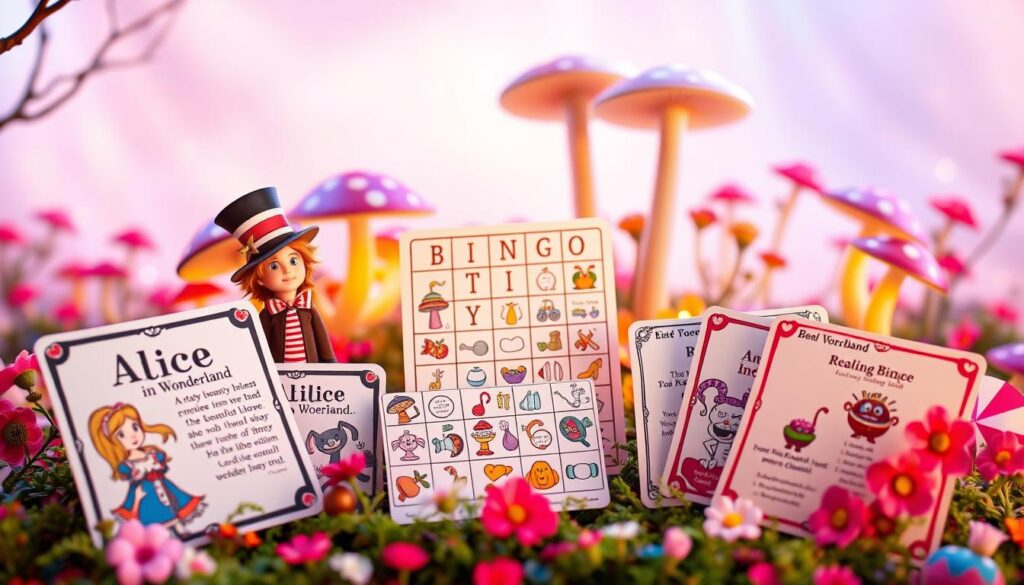
Quote Cards
Imagine a Mad Hatter with a card asking, “Why is a raven like a writing desk?” It’s not just a costume anymore. It’s a doorway to deep thinking.
Make these cards impactful. Keep them small for easy use. Use bold fonts that match the character’s spirit. The goal is to start interesting conversations, not just to look good.
Context makes a big difference. A White Rabbit’s quote about time is more meaningful when you’re wearing the outfit. It turns words into a part of the story, not just text.
Vocabulary Tags
Pin “curiouser and curiouser” to an Alice pinafore and watch the conversation start. It’s a fun way to learn about words without feeling like you’re in school.
This method is playful, not boring. A wizard’s robe might have “transfiguration” or “alchemy” on it. A pirate’s coat might have “mutiny” or “plunder.” The word becomes memorable because of its setting.
Think of the Alice in Wonderland possibilities. “Unbirthday” on a hat, “nonsense” on a card, “evidence” on a detective’s notebook. Each tag is a mini lesson that follows the wearer, ready to teach at any moment.
Reading Bingo
Create bingo cards for your mystery night. Squares can be “red herring spotted,” “monologue delivered,” or “sidekick assists.” It turns reading into a fun game where costumes are part of the play.
Reading bingo is flexible. For a Alice in Wonderland tea party, squares might include “nonsense riddle shared,” “size change mentioned,” or “rule questioned.” It turns dressing up into a hunt for literary clues.
This method makes reading more interactive. Instead of just listening, kids become detectives searching for plot points. The costume becomes their tool for exploring stories, making them part of the story.
It’s like the difference between watching a play and being in it. Bingo cards guide the experience but leave room for creativity. It’s a mix of theater and treasure hunt, with stories as the map.
Event Planner
A literary costume needs a stage to shine. Without it, your outfit might not make sense. It’s like turning fabric into fiction with a special event.
Think of yourself as a director, not just a costumer. Your living room becomes a scene from a favorite book. Your task is to bring the story to life, complete with characters and setting.
To create a memorable event, start with the book. Choose a scene that calls for action. Is it a quiet detective’s study or a wild tea party? Your event is the answer.
Imagine a Family Read-Aloud Night where everyone dresses up. Assign roles and give out props. Stop reading to act out key moments. Suddenly, you’re not just reading Tom Sawyer—you’re watching it happen.
The Library Parade is another idea. It’s not just a march. It’s a fashion show that critiques children’s books. Each costume is a review in motion. The goal is to start a conversation, not win a prize.
Tom Sawyer would plan a whitewashing party. But the music matters. Choose tunes like banjo songs, not pop. The guest list should include both eager painters and skeptics. The fun is in convincing friends to help paint the fence.
For a Gatsby party for kids, think flapper dresses and newsboy caps. Offer a Charleston lesson, a bling-making station, and fancy lemonade. The focus is on dreams and aspirations, not just the party.
Event planning meets literary analysis here. You’re turning reading into an active experience. You’re creating a world from the book and inviting everyone to explore it. The costume is just the beginning of the adventure.
So, what story does your outfit tell? Build an event around it. It’s more than a Halloween party. It’s bringing literature to life in your home.
Family read‑aloud night, library parade
Most literary events are either too academic or too sweet. Our events find a perfect balance. They turn reading into a fun event for everyone.
Think of these events as the book’s living appendix. The Family Read-Aloud Night is like a cozy workshop. The Library Parade is like a public show. Both make stories you’ll remember for years.
Family Read-Aloud Night
The idea is simple yet full of life. Dress up as a character from the book. It’s not just reading; it’s a fun, messy show in your living room.
Imagine a family, each playing a character from Anne of Green Gables. Debates over puffed sleeves happen right then. It’s like a mix of a book club and a cozy night in.
Here’s a tongue-in-cheek guide to a perfect night:
- Book Selection is Everything: Pick a book with characters you can easily dress up as. Anne of Green Gables is perfect because of its iconic characters.
- Cast Your Family Wisely: Choose characters based on who fits the role best. The outgoing one is Anne, and the quiet one is Marilla. It’s like acting.
- Set the Stage: Move furniture to make a “stage” area. Use dim lights and lamps for a cozy feel. It should feel like Avonlea.
- Embrace the Detours: The reading will get interrupted. That’s okay. When Anne talks about the Lake of Shining Waters, pause. Let your “Anne” describe it. It’s interactive.
When your “Gilbert Blythe” turns into a dragon, just go with it. “And then, a dragon flew over Avonlea…” Improvisation is part of the fun.
Library Parade
The Read-Aloud Night is like a rehearsal. The Library Parade is the big show. Your costume makes a statement in the library.
This isn’t about getting attention. It’s about connecting with the book. Walking around dressed as Anne is like becoming a book recommendation come to life.
Organizing this event is different. It’s more about being polite and respectful.
- Coordinate with Your Library: Call the children’s librarian first. They’re usually excited. They might even plan a special event around your theme.
- Keep it Small and Purposeful: A small group of costumed readers is best. Too many feels like an invasion.
- Plan a Route: Don’t just wander. Have a plan. “We’ll walk from the children’s section to the classics, then pause by the display window.” Give your parade a story.
- Be Prepared to Engage (Briefly): People will ask who you are. Have your young “Anne” ready with a simple answer. It’s a charming way to talk about books.
- The Exit Strategy: After 15-20 minutes, leave gracefully. The parade should leave people smiling and curious. End at the checkout desk with your books in hand. The circle is complete.
The real success is when you see Anne of Green Gables checked out next week. Your costume wasn’t just fabric. It was a powerful argument for a story.
Budget Matrix
Before you can become Jay Gatsby at your next party, you must first become an accountant of costumes. Every literary aspiration meets its budget constraint. Let’s get analytical about the economics of imagination.
I’ve constructed a cost-benefit matrix that goes beyond mere dollars. We’re weighing four key metrics for your classic book costumes:
- Cost: The actual cash outlay
- Authenticity Points: How true to the source material
- Time Investment: Hours spent hunting or crafting
- Creative Satisfaction: The pride factor
Consider the $70 ready-made Daisy Buchanan flapper dress. It arrives perfectly packaged. But does it capture the tragic emptiness of the American Dream better than a thrifted beaded gown for $15? The matrix helps answer this.
| Costume Approach | Avg. Cost | Authenticity | Time | Satisfaction |
|---|---|---|---|---|
| Premium Ready-Made | $55-$70 | Medium | Low | Low |
| Thrift Store Assembly | $10-$25 | High | High | High |
| DIY from Scratch | $5-$15 | Variable | Very High | Very High |
| Closet Raid | $0 | Low | Medium | Medium |
The numbers tell a story. That Thing 1 costume for $55 gets you out the door fast. But where’s the creative joy? Compare it to a DIY Captain Underpants made from an old t-shirt and marker.
You invest thirty minutes and $3. The satisfaction score skyrockets. This is personal finance through a literary lens.
Your budget for classic book costumes becomes a philosophical choice. Are you buying a product or crafting an experience? The matrix doesn’t give one answer. It gives you the data to choose your own adventure.
High-end Lord of the Rings replicas have their place. So does the closet raid for a Jane Austen heroine. The key is knowing what you’re trading: money for time, convenience for authenticity, ease for creative fulfillment.
Run your own numbers. The best costume isn’t always the most expensive. Sometimes it’s the one where you can feel the story in every thrifted stitch.
Thrift finds vs ready‑made pieces
Creating a character from scratch in a thrift store is like literary criticism. You’re interpreting clues left by previous owners. Every stained blazer tells a story, and every too-long skirt holds a surprise.
This isn’t about right or wrong. It’s about seeing costuming as a verb. We’ll compare the thrill of discovery to the relief of a confirmed delivery. We’ll look at aesthetics versus economics.
Thrift finds
The hunt is half the story. You’re not just looking for a blue dress. You’re looking for the feeling of a blue dress.
A proper tweed jacket in a Goodwill isn’t just a coat. It’s the costume for Sherlock Holmes’s less successful, but more interesting, younger brother—let’s call him Sherlock junior. The joy is in the interpretation.
That oversized men’s shirt? With a strategic tuck and a wide belt, it becomes the perfect billowy base for a literary detective.
I approach the thrift store rack as a text itself. The plot is often chaotic, but the character development is unparalleled. Finding that one perfect piece feels like solving the mystery before the party even starts.
Need a field guide? Start with the blazers and dresses sections. Ignore the “costume” rack entirely. Look for texture, for color, for a shape that suggests a story.
A simple blue jumper can become Alice’s iconic pinafore with a bit of white fabric and ribbon. A structured black coat can be the foundation for a hundred different characters. The cost is low, but the creative investment is high.
For a full walkthrough of this philosophy, see my guide on thrift DIY Halloween costumes.
Ready‑made pieces
The mass-market costume industrial complex offers a solution in a shiny polybag. The cost? About $17 for a Waldo set, $40 for a Madeline cape and hat. The price is clear, upfront, and often shockingly low. The time saved is immense. But what have you surrendered?
Is that Amazon Sherlock junior detective kit a clever shortcut for a busy parent, or a creative surrender? The pre-fab costume speaks a single, shouted sentence: “I am Waldo.” The thrifted assemblage, on the other hand, can whisper, “I am a man who gets lost in crowds.” One is a product. The other is a proposition.
We’ll examine the quality, the fit, and the cultural baggage of these ready-made pieces. That cheap polyester Alice in Wonderland dress isn’t just a dress; it’s a statement about convenience versus character. And that statement might be louder than the one you intended to make.
| Aspect | Thrift Finds | Ready‑Made Pieces | Creative Verdict |
|---|---|---|---|
| Cost | $3‑$15 per major piece | $17‑$40 for a full set | Thrift wins on budget. |
| Creativity | High (you are the author) | Low (you are the consumer) | Thrift wins on originality. |
| Time Investment | High (the hunt is part of it) | Low (click and done) | Ready‑made wins on speed. |
| Uniqueness | Very High | Very Low | Thrift wins on personality. |
| Character Fit | You adapt the piece to the character. | The character is adapted to the piece. | Thrift wins on narrative control. |
So, which path? The one filled with dust and delightful uncertainty, or the one paved with plastic certainty? The answer, like any good literary analysis, depends on the question you’re asking. Are you asking for a costume, or are you asking for a character?
Photo & Pose Prompts
Think of this section as your director’s chair for bringing literary characters to life. The costume isn’t complete until it’s photographed with care.
We’re moving away from stiff smiles and awkward poses. This is about using visual language. A character’s stance can tell their story before they say a word.
Take Tom Sawyer. His true self isn’t just in the straw hat. It’s in his relaxed, nonchalant pose. He stands with one foot on a pretend fence, shoulders slightly slumped. His look says, “I’m not trying, but you’re watching.”

Great costume photography does two things. It shows the outfit and supports the story through composition. It’s like amateur cinematography for scholars.
Lighting is as important as pose. A Gothic heroine needs shadows for mystery. A Victorian detective needs sharp contrasts. The right lighting sets the mood before you add filters.
| Character Type | Signature Pose | Prop Interaction | Lighting Mood |
|---|---|---|---|
| Tom Sawyer | One foot on elevated surface, hands in pockets | Fishing pole leaning against leg, apple in hand | Golden hour, slightly overexposed |
| Gothic Heroine | Looking over shoulder, hand on forehead | Candle holder, ancient book clutched to chest | Low-key, single light source |
| Victorian Detective | Leaning forward, magnifying glass poised | Pocket watch dangling, notebook open | High contrast, directional shadows |
| Fantasy Warrior | Weight on back foot, weapon resting on shoulder | Map unfurled, compass in other hand | Epic, slightly desaturated |
| Sci-Fi Explorer | Crouching, looking at unseen horizon | Gadget emitting “scanning” light, helmet under arm | Cool tones, subtle lens flare |
Create scenes, not just snapshots. A tea party scene tells a different story than a detective’s work. The setting is part of the costume.
For modern inspiration, check out creative costume ideas that focus on personality. The best photos capture essence, not just looks.
Your camera is now a literary critic. It looks at posture, composition, and lighting to judge character authenticity. The fence is more than wood; it’s Tom Sawyer’s stage.
Remember: The best Tom Sawyer photo looks like you caught him off guard. Not like he’s waiting for you. That’s the difference between a photo and art.
Tea party tableau, detective stance
Forget dialogue; sometimes a character’s entire worldview is encoded in how they hold a teacup or lean into a magnifying glass. These two poses aren’t just physical positions—they’re entire narratives compressed into posture. Master them, and your costume transcends fabric. Get them wrong, and you’re just a person in a coat.
Tea Party Tableau
The tea party is literature’s ultimate social microcosm. Is it the Mad Hatter’s anarchic sprawl or Anne of Green Gables‘ painfully proper cordiality? Your body must answer this question before you speak.
For chaotic energy, think asymmetrical slouch. One elbow on the table, leaning in as if sharing a conspiracy. The prop cup should be held loosely, tea sloshing toward the rim. This isn’t refreshment—it’s barely contained chaos.
For Anne Shirley’s particular brand of earnest formality, posture is everything. Sit bolt upright, but with a slight forward lean that betrays eager engagement. The teacup is cradled, not clutched. Pinky extended? Debatable. The tension lives in the space between rigid etiquette and bubbling enthusiasm.
Placement creates narrative. Who leans toward whom? Who holds their cup like a shield? The distance between saucers can telegraph intimacy or frosty reserve. I’ll direct you: the cup placed halfway across the table screams social anxiety. Clutched at the chest? You’re guarding secrets with your Darjeeling.
Detective Stance
Now shift from social nuance to intellectual intensity. The detective stance is deduction made physical. It’s not about looking at clues—it’s about being the human instrument of inquiry.
Consider the bent knee. Sherlock Holmes’ version is aristocratic contemplation. One knee bent, weight resting back. The magnifying glass is an extension of his mind, held with detached precision. He’s not searching—he’s allowing the evidence to present itself to his superior intellect.
Contrast this with Nancy Drew’s proactive stance. Knees bent in a ready crouch, weight forward on the balls of her feet. The magnifying glass isn’t a gentleman’s tool—it’s a weapon of mid-century problem-solving. She’s not contemplating; she’s actively hunting.
The hand not holding the glass tells its own story. Holmes might have his other hand tucked behind his back, the picture of Victorian restraint. Drew’s free hand is likely braced against the floor or resting on her knee, ready to spring into action. One pose says “I deduce.” The other says “I’ll find it.”
Your magnifying glass technique seals the deal. Hold it like a toy, and you’re a child playing detective. Hold it like the focal point of your entire being, and you’ve become the sleuth. The difference is in the wrist tension, the angle of the head, the focus in the eyes. It’s the physical embodiment of “just one more clue.”
Adaptations & Accessibility
Most DIY costume guides assume a standard human body, which is unrealistic. Literature should be for everyone. The joy of becoming a character from a classic book should be for all kids.
Adapting a Sherlock junior cape for a child in a wheelchair is not just about making it shorter. It’s about the drape, fabric weight, and how it secures. A heavy wool cape can be restrictive. A lightweight cotton one with magnetic clasps is detective-ready.
Adaptations are just smarter versions of the original. Victorian button hooks were a pain. Modern Velcro closures are a user-friendly evolution. ‘Lightweight props’ are a lesson in ergonomics and safety.
The core principle is simple: design from the need outward. Start by asking what the child needs to do. Do they need to manipulate props? Require clear lines of sight? Need sensory-friendly fabrics? Your Sherlock junior isn’t a statue. He’s an active investigator.
| Traditional Element | Accessibility Challenge | Adaptive Solution | Character Integrity |
|---|---|---|---|
| Long, buttoned coat (Sherlock Holmes) | Fine motor difficulty, overheating | Open-front vest with hidden Velcro; breathable linen | Silhouette remains; investigative look intact |
| Heavy book prop (Hermione Granger) | Weight, grip strength | Hollow foam book, wrapped in book-print fabric | Visual cue is immediate and iconic |
| Lace-up boots (Peter Pan) | Long dressing time, mobility | Slip-on shoes with elastic and printed “lace” detail | Footwear style reads correctly from a distance |
| Dangling necklace (Alice’s Adventures) | Safety hazard, sensory aversion | Pendant printed on a soft, flat fabric choker | Key accessory is represented without risk |
| Full-face mask (Zorro) | Obstructed vision, anxiety | Eye mask only, with elastic or headband strap | Mysterious identity is preserved |
Fabric choice is your first tool. Avoid stiff brocades or itchy wools. Opt for stretch cottons, soft fleece, and fluid linens. They move with the body. They feel good against the skin. A Sherlock junior cape in a jersey knit drapes beautifully and weighs nothing.
Closures are everything. Buttons, hooks, and laces can be barriers. Magnetic snaps, Velcro strips, and elasticated waists are liberators. They grant independence. A child can dress themselves. That empowerment is more magical than any spell.
Consider prop design through a lens of use. A detective’s magnifying glass made from solid wood? Impractical. One crafted from clear plastic and lightweight cardboard? Perfectly functional. The goal is the classic book costume experience, not a museum replica.
Always think about stability and security. Capes and sashes should be attached in a way that doesn’t tangle in wheels or crutches. Use breakaway fasteners or clips that release under pressure. Safety is non-negotiable.
This approach doesn’t dilute the character. It honors them. The essence of Sherlock junior is deduction and curiosity, not a specific coat length. Alice’s wonder is in her expression, not a choking hazard necklace. We’re preserving the magic, not the minutiae.
Inclusive design makes your costume closet more versatile. These adaptations often make costumes easier and faster for everyone to use. That’s not a side benefit. It’s the whole point. Great classic book costumes are invitations. Let’s make sure the door is open to all.
Velcro closures, lightweight props
True costume genius is in the hidden mechanics of inclusion. Sequins catch the eye, but it’s the functional design that matters. It’s about turning barriers into breakthroughs.
Think of this as solving design puzzles, not making compromises. The goal is to make Alice in Wonderland experiences for everyone. This way, we keep the storybook magic alive.
Velcro Closures
Let’s talk about the fastener revolution. Those tiny buttons on a classic Alice in Wonderland pinafore are cute but hard to manage. Velcro is a smart upgrade for independence.
The right placement of Velcro is key. Here’s where to use it:
- Princess Gowns & Aprons: A continuous strip along the back seam works well. It’s easy to manage from different angles.
- Detective Waistcoats: Small, discreet squares behind buttons keep the look intact. Functionality gets a big boost.
- Cape Clasps & Cloaks: Wide Velcro tabs at the collar are a game-changer. They keep the drama without the hassle.
Velcro is a hero for costume democracy. It turns “I need help” into “I’ve got this.” This is a big change in any story.
Lightweight Props
Now, let’s talk about props. The White Rabbit’s oversized pocket watch is a big deal in the story. But in our version, it should be detailed yet light.
Material science meets storytelling here. We’re making iconic Alice in Wonderland items safe and comfy:
- Foam-Core Pocket Watches: Crafted from dense foam, painted, and attached to a light chain. It looks real but won’t weigh you down.
- Acrylic Looking Glasses: Use clear acrylic sheets for a “through the looking glass” effect. It’s safe and effective.
- Cardstock Playing Cards: Laminated cardstock is better than wood for the Queen’s court. They’re dramatic but safe.
The Mad Hatter’s hat is made from papier-mâché over a balloon. The Caterpillar’s hookah is a painted cardboard tube with fabric smoke.
Every choice is about maximum story impact, minimum physical burden. The magic of Alice in Wonderland shouldn’t be weighed down.
This is more than costume design. It’s about making stories inclusive. When the mechanics blend into the magic, you’ve created something special.
Care Tips
After the literary ball, we face a scene like a museum conservator’s challenge. Mud-caked boots, glitter-strewn capes, and grape juice masquerading as potion need careful handling. It’s not just cleaning—it’s preserving history.
Each costume has two stories: the one it tells and the evidence it holds. Your job is to keep the story alive while removing the evidence. Think of yourself as an archivist of imagination.
The Tom Sawyer straw hat is more than a hat; it’s a character witness. Handle it with care. For straw and fabric blends, gently brush off debris and spot-clean with a damp cloth. Let it dry naturally, avoiding sunlight to preserve the adventure.
Velvet capes and satin gowns need special care. Wash them inside out on gentle cycles with cold water. For grape juice spills, mix white vinegar and water. Dab, don’t rub, to remove stains and odors without harsh chemicals.
Storage is key to keeping costumes intact. Avoid plastic bags, which trap moisture and cause mold. Use cotton garment bags or breathable boxes instead. Add tissue paper and dried lavender or cedar chips to protect without overwhelming the fabric.
When Tom Sawyer returns with grass stains, act fast. Make a paste of baking soda and water, apply, and let it sit before washing. For ink marks, use rubbing alcohol on a cotton swab. Test first to avoid damage.
Feathers and delicate trims need extra care. Fluff flattened feathers with a cool hairdryer. For loose beading or sequins, use clear nail polish to prevent further unraveling. Keep a repair kit ready with fabric glue, safety pins, double-sided fashion tape, scissors, and extra buttons.
The secret to keeping costumes alive is not just cleaning. It’s about rotation. Don’t let pieces sit for years. Every six months, air them out and check for weaknesses. It’s about maintaining a relationship with your imagination’s artifacts.
Remember, these are not just clothes. They hold memories, tell stories, and spark imagination. Treat them with respect, and they will reward you for many adventures to come.
Labeling shared costumes, quick fixes
A literary costume is more than just a one-time wear. It’s a character with many acts. The real magic is when your Mad Hatter tea party outfit makes it through three library parades and two family read-aloud nights.
Labeling Shared Costumes
Forget simple Sharpie labels. Think like a scientist. Our family uses color-coded tags: red for heroes, blue for sidekicks, green for villains. Each piece gets a unique code—”AVG-1″ for the main Anne of Green Gables pinafore, “AVG-2” for the backup apron.
This system is like a Dewey Decimal for your dress-up drawer. It stops the mystery of whose detective trench coat is whose.
Quick Fixes
Disaster hits mid-event. The braid on your Anne of Green Gables wig comes undone. No panic. A bobby pin and determination are your allies. Securing it adds a new “wind-swept” look.
Huck Finn’s trousers get a grass stain. That’s not a flaw. It’s authentic riverbank wear. A bit of brown fabric paint makes it part of the adventure.
These aren’t just repairs. They’re narrative patches. Each fix adds to the costume’s story. The goal is to keep the story alive, ready for the next chapter. Your costume doesn’t end with “happily ever after.” It ends with “see you at the next adventure.”